
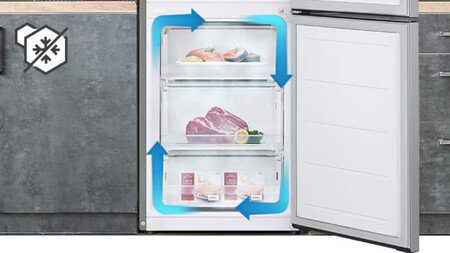
Today, most refrigerators are “No Frost,” but what does this actually mean? While many tend to associate No Frost with the absence of frost buildup, there are several other differences when compared to traditional models. In this article, we will explore the differences between No Frost and cyclic refrigerators, discussing their advantages and disadvantages.
How a No Frost Refrigerator Works
No Frost refrigerators utilize fans that continuously circulate cold air, preventing water vapor from condensing into ice. This constant dry airflow eliminates the need for manual defrosting. Many models also have features to address small ice buildups if necessary.
This No Frost system offers several benefits beyond just frost-free operation. A consistent airflow allows cold air to reach all areas of the refrigerator equally, resulting in better preservation of food over time.
However, there are downsides. The dry air created by No Frost systems can lead to moisture loss in fresh foods such as fruits, vegetables, and meat. Additionally, the energy consumption is slightly higher due to the automatic defrost mechanism.
How a Cycle Refrigerator Works
Cyclic refrigerators, often known as Low Frost, function differently. They employ refrigerant gases that travel through a circuit to reach the desired temperature. Without constant airflow from fans, these refrigerators operate more quietly but can develop frost buildup that must be manually removed.
The benefit of cyclic refrigerators lies in their humid cooling system, which helps keep food, particularly fresh produce, better hydrated and preserved.
The Best of Both Worlds
Hybrid models combine the advantages of both systems. With a No Frost freezer to prevent ice buildup and a cyclic refrigerator section to keep fresh food moist, these models are ideal for users looking for versatility.
Pros and Cons of Both Options
No Frost | Cyclic (Traditional) | |
|---|---|---|
Advantages 🟢 | No manual defrosting, consistent temperature throughout, faster cooling of food. | Better freshness for food, usually quieter, often more affordable. |
Disadvantages 🔴 | Can dry out fresh foods, tends to be noisier, usually pricier. | Ice buildup can occur, potential for uneven temperatures. |
Ideal For: | Frequent freezer users or families with high frozen food needs. | Fresh food enthusiasts or those living in noise-sensitive areas. |
Which One is Right for You?
Choosing between No Frost and cyclic refrigerators largely depends on your individual needs.
- No Frost: Best for those who freeze a lot of food, dislike manual defrosting, or frequently open the refrigerator door.
- Cyclic: Ideal for fresh food lovers looking for quieter operation.
- Geographical considerations: No Frost models are better for humid environments, while cyclic refrigerators may struggle with ice buildup.
Recommended Models
No Frost Refrigerator: LG Combi GBV5240APY
The LG Combi GBV5240APY is a 387-liter No Frost model that excels in energy efficiency. It includes a system designed to preserve fresh food, specifically when placed in designated drawers.
Cyclic Refrigerator: Hisense RT267D4AWE
The Hisense RT267D4AWE is a 206-liter cyclic refrigerator known for its affordability. It offers flexible door opening and LED lighting to reduce energy consumption.
In Conclusion
Ultimately, the decision comes down to personal preference and lifestyle. Consider which type of refrigerator suits your needs best, taking into account factors such as the types of food you consume and how frequently you use your refrigerator.