
The Revival of the Basque Whaling Tradition: The New San Juan
From 1059 to 1901 , Basque sailors launched into the vast unknown with a singular objective : hunting whales. Their relentless pursuit devastated whale populations off the Cantabrian coast, prompting the Basque whalers to explore distant seas . This expansion often led to altercations with local populations, including Icelanders who viewed these whaling expeditions as threats. Ultimately, their adventures took them to Canadian waters , where the storied whale ship, the San Juan , met its fateful shipwreck. Now, a project aimed at reviving this historical vessel seeks to recreate its journey, requiring one critical component: a motivated cook willing to recreate a 16th-century menu.
The New San Juan. In the wake of Christopher Columbus’s voyage to the Americas, the ship San Juan set sail for the Canadian coast. By the mid-16th century, the Basque whaling industry was a powerhouse, holding a significant share of the market for whale blubber and meat in Europe. Their expeditions often necessitated the establishment of settlements and bases across North America. Sadly, during one such expedition in 1565 , the San Juan succumbed to a severe storm, leading to its shipwreck in Red Bay, Canada. The vessel’s remains were unearthed in 1970 and later recognized by UNESCO as an icon of underwater cultural heritage. The discovery prompted the Albaola Maritime Factory to embark on creating an exact replica, utilizing 16th-century materials and techniques.

The Saint John
Handcrafted to the Extreme. The construction of this replica follows a rigorous process aimed at preserving traditional building methods from 500 years ago. This labor-intensive endeavor is notably documented and replicates the original ship’s specifications, which included a weight of 200 tons , a length of 20 meters , a width of 7.5 meters , and a depth of six meters . Remarkably, the reconstruction employs only the same materials originally used.
For instance, a 14.5-meter segment of beech wood was painstakingly hewn from an eight-ton tree to serve as the keel. Additionally, wood from 200 oaks from the *Navarrese Sakana* forests has been incorporated into the ship’s structure. The final result will also include six kilometers of hemp ropes , hand-forged anchors, and 560 square meters of cloth for sails. Not only is this a faithful reproduction, but the new San Juan is designed to be fully functional and seaworthy.
Vintage Wine Cellar. To recreate the original journey to Canada, a vital component will be a cook who can accurately reproduce the historical culinary experiences of the time. The aim is to ensure that the menu incorporates foods such as double-baked bread , dehydrated bread , legumes , sardines , cod , bacon , and oils typical of 16th-century Basque cuisine.
This select assortment included, remarkably, quantities that allowed a ship like the San Juan to transport up to 50,000 liters of traditional cider. The absence of fresh water on board stemmed from the challenges involved in storing and maintaining it adequately, leading to the popular choice of cider and txakoli instead. These beverages were not random; they were functional choices that catered to the sailors’ needs.
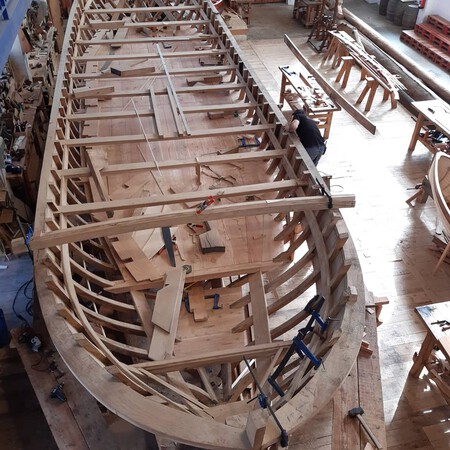
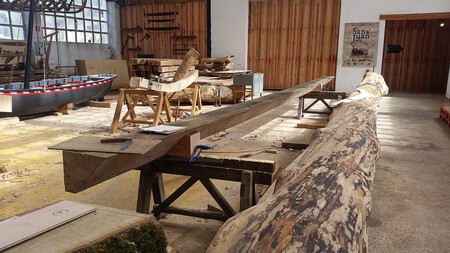
Top Ship Chef. The onboard chef will face unique challenges: a lack of modern amenities , limited ingredients, and a need to create dishes that are authentic to that era. The Albaola factory plans to oversee the chef selection process, ensuring the right fit for this extraordinary expedition. Past demonstrations featuring Michelin-starred chefs have already illustrated the potential simplicity and authenticity of the meals, showcasing traditional dishes made from historical ingredients.
2027. While the search for a chef continues, work at the factory persists. On November 7 , the launching of the ship will take place after a twelve-year construction phase. Once the San Juan is afloat, additional elements will be installed to ensure it is as seaworthy as the original was five centuries ago. In 2027 , the new ship will embark on a journey to Canada, retracing its predecessor’s historic path while sailing in the traditional manner that characterized maritime travel in the 16th century . There is hope that this new voyage will end in a more favorable destination than the original.