

January 1, 2026.
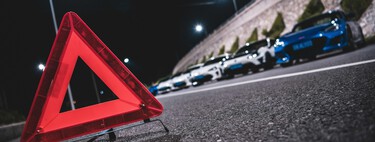
That is the key date. The day from which it will be mandatory to use a connected V-16 light to signal a breakdown on the road. Not only that, that day we will say goodbye to emergency triangles. Because those who use them will be exposed to a fine.
The decision, confirmed in 2021, continues to raise controversy with just a few months left to fully implement it. Until now, the V-16 light could replace emergency triangles, which were no longer mandatory on highways and expressways. However, it will be from January 1 of next year when not only will they not be mandatory, they will also be prohibited.
The New Regulations
The change is very simple. The emergency triangles that have accompanied us until now will be prohibited from January 1, 2026. The Royal Decree 159/2021, published on March 17, 2021, modified annex XI of the General Vehicle Regulations. It specifies all the changes that must be taken into account when having an approved light and how to act with it.
From then on, every driver must have a connected V-16 signal which, in general terms, must comply with the following requirements:
- Radiate light 360 degrees
- Maintain irradiation intensity for at least 30 minutes
- Protection degree of IP54 at least
- Guaranteed operation between -10ºC and 50ºC
- Powered by cell or battery that must guarantee its operation for a minimum of 18 months
- Guaranteed connectivity for at least 12 years, to notify the DGT when the device is activated.
If you have any doubts about whether the purchased device is approved by the DGT, the entity has a list in which all devices are included that have passed the homologation exam.
The real change, as we say, is that the DGT makes the use of this system mandatory and, in addition, bans emergency triangles. They assure that placing triangles on the road increases the risk of being run over and, therefore, it is better to use a light that should be placed on the roof of the vehicle to warn other drivers.
In the case of a motorcycle, it must have an adapter to position it on the handlebars. However, the DGT clarifies that the motorcyclist is not obliged to have this device.
Those who opt for triangles face a fine of 80 euros (a minor offense for “not properly signaling the obstacle created on the road in the event of an accident or vehicle breakdown”, as stated in article 130 of the General Traffic Regulations). Moreover, those who do not have a connected and approved V-16 light (devices that are not connected are valid until December 31, 2025, but not from January 1, 2026) can also be fined 80 euros, similar to the current penalties for triangles.
How Did We Get Here?
This question has raised controversy. Spain is the only country in Europe where these V-16 lights will be mandatory. What happens if we travel outside our borders? In countries that have a full agreement with Spain, the V-16 light is perfectly valid, but if it does not, we must rely on triangles to indicate an emergency. Therefore, it is advisable to carry emergency triangles when leaving Spain.
The DGT argues that the measure was necessary because placing triangles on the road poses too much risk to passengers of a disabled vehicle.
According to data from the DGT between 2018 and 2021, between 18 and 22 people were run over each year after exiting their vehicle. In 2022, there were 58 deaths in similar scenarios. While the agency does not specify if these incidents occurred because of the triangles, they highlight the importance of the new regulations.
To enhance safety, from 2023, it is mandatory for passengers in a disabled vehicle to stay inside with their seatbelts fastened, whenever possible. The V-16 light allows signaling the vehicle without needing to exit, thereby reducing risk.

When activated, the beacon emits a light signal visible from a kilometer away. It automatically contacts the DGT 3.0 platform, which will send information to nearby media, such as light panels, to alert other drivers.
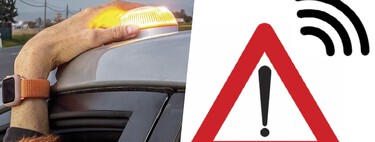
Additionally, the signal will broadcast information to connected vehicles in the vicinity, warning them of the broken down vehicle on the road. This is known as the V-27 signal, depicted by a red triangle with an exclamation mark inside and three curved lines to indicate connectivity.
Importantly, the beacon does not contact emergency services directly; drivers must call to convey their situations, and insurance must be notified if towing is necessary.
The Financial Implications
What will the financial impact be? Currently, connected and approved V-16 lights retail for around 50 euros. This cost includes a data service for a minimum of 12 years.
It’s important to note that the beacons require minimal maintenance. The DGT recommends replacing or charging the battery annually—an expense not required for emergency triangles.
According to DGT’s latest data, there are 25.36 million passenger cars in Spain, 2.47 million trucks, and 2.68 million vans. Therefore, an estimated 30 million vehicles may need this light signal. While not mandatory for every vehicle, it is necessary to carry it, especially if you own multiple cars.
The potential market for connected V-16 beacons could exceed 1.5 billion euros, assuming an average price of 50 euros per unit. The figure may rise to 1.7 billion euros when considering comprehensive costs. This market involves not only manufacturers but also telecommunication companies that must be partnered with these beacon facilities.
The approval process for manufacturers must be conducted by a technical laboratory authorized by the DGT. Presently, only two entities, LCOE and IDIADA, are authorized to approve V-16 beacons.
Initially, the DGT did not clarify the necessity of connectivity for the V-16 lights. This oversight has led to misinformed purchases, with consumers acquiring beacons that won’t meet upcoming regulations.
As for manufacturing, Netun Solutions SL was the first to approve a connected V-16 beacon on December 22, 2022, establishing themselves as a leading player in the market.
The initial idea aimed to offer a quick emergency light for vehicles without messy cables. Over time, with backing from groups like RACE and Andade, the technology gained acceptance, leading to its adoption by the DGT.
Beginning in 2018, the DGT approved the V-16 concept, and its use became mandatory in 2021. Now, with such significant changes in safety regulations, the market is projected to be financially lucrative, with several telecommunications companies poised to benefit from the required connectivity.