

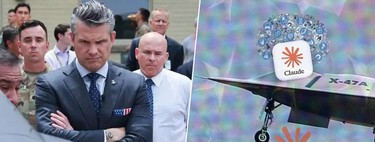
In recent weeks, a significant topic of discussion has emerged surrounding the ongoing civil war in the United States between major AI companies and the government. Anthropic, a key player in the AI landscape, has integrated its artificial intelligence, Claude, into Pentagon systems alongside Palantir. While this collaboration is noted to have aided military operations, including the capture of Nicolás Maduro, it has raised concerns about the extent of U.S. military reliance on AI technology. Following Anthropic’s reluctance to expand its involvement, OpenAI has stepped in, triggering discussions about the potential for blacklisting American firms similarly to how Huawei was treated.
This scenario highlights the complex relationship between technology giants and governments. It emphasizes two key insights: firstly, governments rely heavily on advanced technology to fulfill critical functions; secondly, the technology sector stands to gain immensely from these alliances.
Meanwhile, while turbulence unfolds in the U.S., Europe is quietly witnessing the emergence of a new AI player: Mistral. This French company has been systematically establishing connections within European defense systems, positioning itself as a serious contender in the AI landscape.
A Local AI for the Security of Europe
As American giants like ChatGPT and Claude garner most of the media attention, Mistral has been quietly building multilingual models that have the potential to rival their U.S. counterparts. Founded in June 2023, Mistral is on the cusp of becoming a significant technological asset for France and, by extension, Europe.
With a team composed largely of engineers from Google (DeepMind) and Meta, Mistral has successfully attracted investment from major entities including NVIDIA, ASML, and Microsoft, raising around 15 million euros to incorporate its models into Azure.
Mistral’s policy emphasizes openness. The company is committed to releasing the code of its models for public use and adaptation. This transparency is aimed at accelerating innovation and fostering a collaborative technological environment. Unlike the more robust approaches of American giants, Mistral’s strategy includes the integration of large models alongside smaller, specialized ones.
Recently, the French Ministry of Armed Forces formalized an agreement with Mistral to integrate its AI models into various governmental entities, including the Atomic Energy Commission and the Armed Forces. This agreement entails deploying Mistral’s tools across France’s infrastructure, thereby ensuring full control over sensitive data and crucial technologies.
Such developments may seem remote from public interest unless one considers two critical aspects. First, Mistral is not limiting itself to French contracts; it has ambitions to secure defense contracts globally. Their recent agreement with the German startup Helsing exemplifies this expansion. Arthur Mensch, CEO of Mistral, highlights that their AI models will be vital for developing the next generation of defense systems.
The second point is equally significant. Mensch remarked that Mistral’s tools “will ensure Europe’s strategic advantage on the global stage.” This assertion underscores a shifting paradigm as Europe reassesses traditional alliances and partners.
European Sovereignty
The rising prominence of Mistral aligns with broader movements advocating for independence from American technology. Politically, Europe’s focus on Mistral reflects a quest for European sovereignty in defense systems, emphasizing reliance on homegrown companies.
These developments extend beyond AI alone. In recent months, Europe has been increasingly vocal about establishing its dominance in semiconductors, advanced computing, and the burgeoning space race. Historical narratives suggesting that Europe is often slow to innovate have begun to shift as the continent takes proactive steps to strengthen its technological position.
Consequently, the current climate catalyzes legislative progress alongside tangible technological advancements. This dual approach may soon redefine Europe’s role on the global technological stage.
Images | Mistral AI, Amio Cajander