
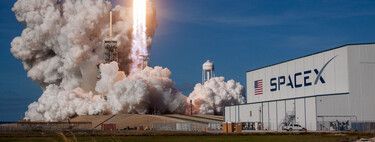
SpaceX has emerged as a trailblazer in the space industry, leading the charge towards commercial space travel. The company is renowned for its rapid innovation and aggressive timelines, resulting in technological advancements that many thought impossible just a decade ago. However, beneath this facade of success lies a startling reality—an alarming rate of workplace injuries.
The Context of SpaceX Operations
At the heart of SpaceX’s ambitions is Starbase, situated in Boca Chica, Texas. This facility serves as the production and testing ground for the company’s flagship project, the Starship. Aimed at transporting humanity to Mars, SpaceX has set grand goals, including launching thousands of missions in the coming decades. While the technological feats accomplished at Starbase are unprecedented, they come at a significant human cost.
Statistics That Shock
Recent analyses, including a deep dive by TechCrunch, reveal that Starbase has a staggering rate of workplace accidents, six times higher than the industry average. This alarming statistic makes it the most hazardous rocket manufacturing site in the United States. Furthermore, SpaceX’s injury rates are four times greater than its closest competitors, reflecting a stark deviation from modern safety protocols.
The official statistics, sourced from the Occupational Safety and Health Administration (OSHA), indicate that Starbase’s Total Recordable Incident Rate (TRIR) was reported at 5.9 in 2023. This means that out of every 100 employees, there were nearly six recorded injuries—shocking when compared to the space vehicle manufacturing sector average of 0.7, and an overall average in the space industry of 1.6.
A Step Back in Time?
Despite minor improvements, such as a TRIR of 4.27 in 2024, the data still harkens back to safety conditions reminiscent of three decades ago. In 1994, the TRIR for the industry was 4.2, a comparable figure to what Starbase faces today. With almost 2,700 employees, the implications are severe: over 3,500 days lost to work restrictions due to injuries and 656 days lost entirely.
Contrasts with Other Facilities
What’s particularly striking is that Starbase’s injury rates are anomalous, even within SpaceX itself. While Starbase’s TRIR stood at 4.27, the Falcon rocket factory in Hawthorne, California, recorded a much lower rate of 1.43. This aligns more closely with competitors like Blue Origin and United Launch Alliance, which reported TRIRs of 1.09 and 1.12 at their respective facilities. Other SpaceX locations, such as the Starlink Terminal Factory and the Redmond satellite factory, also reported lower TRIRs than Starbase, further emphasizing the discordance.
A Philosophy of Rapid Innovation
Elon Musk’s guiding principle of “Move fast and break things” resonates deeply within the culture at SpaceX. While this approach has spurred incredible technological advancements, it appears to raise serious concerns regarding workplace safety. In the face of stories about unreported injuries—including serious incidents like amputations and fatalities—there’s growing scrutiny regarding the treatment of employees under hurried timelines.
In response, NASA has included specific clauses in its contracts with SpaceX, allowing for intervention in the event of “serious security violations” or repeated sanctions by OSHA. However, the high TRIR alone hasn’t been sufficient to activate these safety protocols, raising questions about the robustness of oversight.
The narrative surrounding SpaceX is complex, intertwining incredible progress with pressing ethical concerns. As the company continues to push the boundaries of what’s possible in space exploration, it faces an urgent need to address the well-being of its workers. The juxtaposition of groundbreaking achievements against a backdrop of neglecting safety is a story that can’t be ignored as SpaceX paves the way for interplanetary travel.