
Understanding the LZB System in Relation to the Adamuz Accident
20 seconds. This is the crucial time frame between the derailment of an Iryo train and the arrival of an Alvia train at the same location in Adamuz. According to Álvaro Fernández Heredia, president of Renfe, it remains unclear whether the Alvia collided with the Iryo or another obstruction. The investigation, led by the Railway Accident Investigation Commission (CIAF), will take time to provide clarity.
What Happened During the Accident?
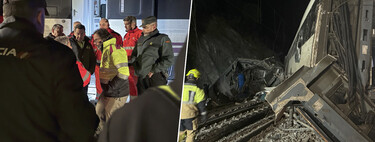
An Iryo and an Alvia train were involved in a tragic incident on the Andalusian high-speed corridor. Preliminary assessments indicate that the Iryo train derailed on a straight track while the Alvia may have collided with it shortly afterward. Current reports detail severe structural damage to both trains, with the Alvia train tumbling down a four-meter embankment. As of now, this disaster has claimed 39 lives, including that of a 27-year-old Renfe driver, with fears that the toll may rise as search efforts continue.
Focus on the 20 Seconds
According to Fernández Heredia, the pivotal 20 seconds are under scrutiny. The Iryo train was traveling at 210 km/h, under the allowed 250 km/h speed, when it derailed. The Alvia train arrived at the scene 20 seconds later, traveling at 205 km/h, also within the legal maximum. These 20 seconds are vital for the ongoing investigation, with the LZB (Linienzugbeeinflussung) safety system coming under particular scrutiny. This system is designed to prevent train accidents by issuing commands for emergency braking when an obstruction is detected. However, the short interval between the two trains complicates matters, making it unlikely that the system could have acted in time.
What is the LZB System?
The LZB is a safety mechanism currently employed on certain high-speed railway lines in Spain. Its core function is to relay information regarding train speed limits and upcoming changes to those limits through a cable that runs along the tracks. If a driver fails to respond to these alerts, the system automatically engages emergency braking. However, it appears that the 20 seconds between the derailment and the Alvia’s arrival was not sufficient for the LZB system to take effect.
The Need for Upgraded Safety Systems
Despite its previous efficacy, the LZB system is often criticized as outdated. Spain remains one of the few European countries still utilizing it on high-speed lines, and efforts are underway to transition to the ERTMS 2 system. This new system employs radio communication for managing train speeds and includes a more robust mechanism for quickly addressing potential collisions.
Significance of Speed in Train Safety
Speed plays a crucial role in rail safety. At 205 km/h, the Alvia train would cover approximately 1,138 meters within the critical 20 seconds following the Iryo’s derailment. The exponentially increasing braking distance at higher speeds poses considerable risks during emergencies, emphasizing the need for advanced safety technologies like ERTMS, which provide better real-time monitoring and traffic management capabilities.
As investigations continue, it is vital to understand the limitations of existing safety systems and the urgent need for modernization in order to prevent such tragedies in the future.