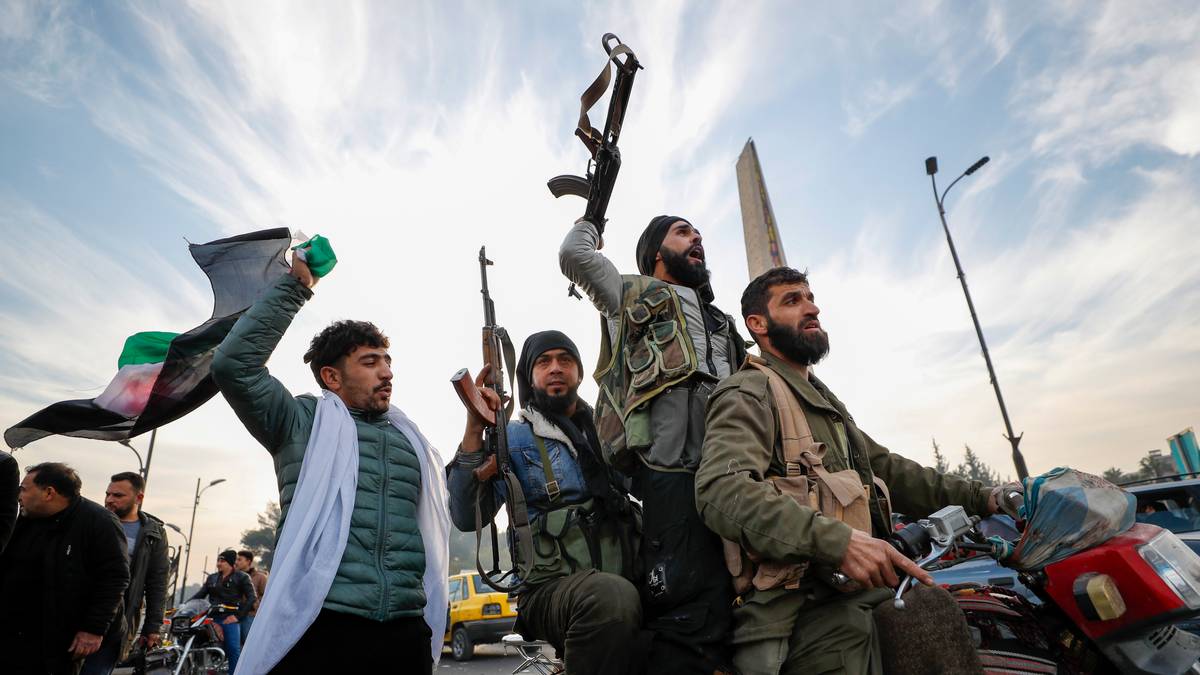
What has happened? Syrian rebel forces have overthrown the regime of President Bashar al-Assad. This is happening 13 years after the civil war in Syria broke out in 2011. In the last twelve days, the rebel forces have taken control of large parts of the country. They have also freed a number of prisoners. President al-Assad has left the country, according to the Syrian Observatory for Human Rights (SOHR). Syrian military sources told Reuters he left Damascus in a plane. The red cities are controlled by various rebel groups. The Blues were under the control of the government forces before the fall of the regime. Why is this happening now? The Syrian regime is weakened by civil war, sanctions and corruption. Al-Assad had a poorly equipped and poorly motivated army. He also depended on the support of Russia, Iran and Iranian-backed militias – such as Hezbollah – to stay in power. But Assad’s allies have focused on other wars, both in Israel and Ukraine. Months of Israeli attacks, particularly against Hezbollah targets, have weakened the militia. Russia is primarily using its military power against Ukraine, where it faces great resistance. Syrian President Bashar al-Assad has reportedly left the country by plane. Photo: AFP Who is behind it? The extreme Sunni Muslim group Hayat Tahrir al-Sham (HTS) is at the forefront of the offensive. The group springs from Jabhat al-Nusra, which was formerly associated with Al Qaeda, and aims to overthrow al-Assad, so that they can establish an Islamic state in Syria. HTS is branded a terrorist group by both Russia, the US, Turkey and other states, but has broken with Al Qaeda. Since the latest offensive started at the end of November, HTS has appeared more moderate than before. Several other rebel groups have also fought against the regime: Why is there war? In 2011, civil war broke out in the country. The conflict started as a popular uprising during the Arab Spring. Al-Assad, who has ruled the country since 2000, cracked down heavily on what had been largely peaceful democratic protests. Since then, approximately 6.8 million Syrians have fled the country. Around half a million people have been killed. Syrians who fled Idlib in northwest Syria in 2019 when Assad’s soldiers advanced in the area. Photo: AAREF WATAD / AFP What happens next? Syrian Prime Minister Mohammad Ghazi al-Jalali says he will work with a new leadership elected by the Syrian people. President Bashar al-Assad has called for a peaceful transfer of power to the rebels, according to Russian authorities. Middle East researcher Dag Henrik Tuastad tells Aftenposten that he envisions two possible scenarios now: The rebel groups manage to gather and together build joint institutions and governance in the country. There will be battles and a new civil war between the groups. People on the ground in the war-torn country feel for the first time “a real sense of freedom”. But no one knows what will happen next. Published 08.12.2024, at 13.22 Updated 08.12.2024, at 13.31
ttn-69