
There are stories that seem written not to be believed. It all starts with a luxury car, a supposed bear attack in California, and a series of images that, at first glance, appear to prove everything. The story fits the bill: damage to a vehicle’s interior, claw marks, and evidence of an animal’s destructive entrance. However, something feels amiss from the beginning—everything seems too perfectly staged to be genuine.
The narrative took a turn when an insurance company closely reviewed a claim submitted on January 28, 2024, in Lake Arrowhead, California, a region known for its bear sightings. The claim described how a bear entered and caused extensive damage to a 2010 Rolls-Royce Ghost. Despite the images provided, the insurer noticed glaring inconsistencies that prompted a formal investigation by the California Department of Insurance.
When the Bear Didn’t Look Like a Bear
The investigation uncovered a peculiar truth: the alleged bear attack was, in fact, orchestrated by a person dressed in a bear suit. According to the California Department of Insurance, the supposed damage was created using claw-shaped kitchen utensils designed for tearing meat, which were employed to simulate bear claw marks on the vehicle’s interior.
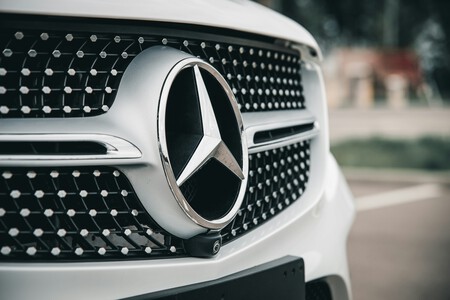
The situation escalated when investigators found multiple claims sharing an eerily similar narrative. More astonishingly, those involved submitted similar requests to two other insurance companies, claiming that a bear damaged two Mercedes-Benz cars at the same time and location. Video evidence offered nearly identical scenes, complete with the fabricated bear making its way through the vehicles.
With several cases in the mix, the investigation was dubbed “Operation Bear Claw.” The goal was clear: to analyze the collective claims, images, and videos presented to determine whether they were authentic or part of a deceptive scheme. Investigators meticulously reviewed the material and compared the reported damage while reconstructing the sequence of events. As they delved deeper, coincidences began to emerge, pointing to a single, deliberate pattern.
The breakthrough came when a biologist from the California Department of Fish and Wildlife examined the footage and concluded that the “bear” was “clearly a human in a bear suit.” This expert analysis shifted the investigation from mere suspicion to concrete evidence.
One expert noted that the alleged animal was “clearly a human in a bear suit.”
The next significant development occurred when investigators executed a search warrant at a residence linked to the suspects. Here, they found what had previously been inferred: a brown bear suit and the kitchen tools resembling those used in the damage. Both matched the injuries seen in the videos, sealing the case with material evidence.
With the evidence now conclusive, the case progressed to the judicial system. In November 2024, the involved parties were arrested. Three individuals from Los Angeles County pleaded “no contest” to charges of insurance fraud—a serious offense—while avoiding a formal admission of guilt. They received sentences of 180 days in jail, approximately six months, along with restitution orders exceeding $50,000 each in some cases.
Ultimately, the fraudulent claims accumulated over $141,000 in insurance payouts. Initially, the scheme appeared to work flawlessly, passing early scrutiny before ultimately being flagged as suspicious. Only then did investigators recognize it as part of a broader operation rather than an isolated instance.
While three of the defendants faced conviction, the investigation remains ongoing, as a fourth suspect, Ararat Chirkinian, 39, has a preliminary hearing scheduled for September. His involvement in the operation will be evaluated as the legal process unfolds. Thus, the story is far from over.
The tale ends as it began, with a meticulously crafted scene that ultimately faltered under investigation. For a time, the deception worked and yielded money from multiple insurers. However, every detail intended to reinforce the story ultimately backfired. The repetition of patterns and the analysis of the evidence dismantled the fraudulent narrative.
Images | Valeriia Neganova | California Department of Insurance | Alexander Bendus
In Xataka | In 2019, Elon Musk promised autonomous driving for all Teslas sold since then. In 2026, it has reversed.