
Earth’s Ever-Changing Climate
The Earth’s climate is anything but constant. Throughout its history, the planet has experienced both glaciations and warm periods. These fluctuations are not solely due to current climate change but rather can largely be explained by the Milankovitch cycles. These cycles describe the slow changes in Earth’s orbit and axial tilt, which are influenced by the gravitational pull of other planets.
The Surprising Influence of Mars
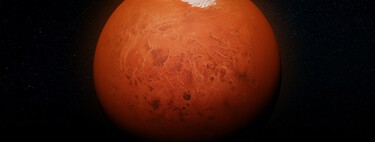
While the significant impacts of massive planets like Jupiter and Venus are well-known, recent findings have highlighted the unexpected role of Mars. According to a study led by scientist Stephen Kane and published in the Publications of the Astronomical Society of the Pacific, Mars—despite having only 10% of Earth’s mass—plays a surprisingly pivotal role in our climate.
The Simulations: A Deep Dive into Mars’ Effects
To investigate Mars’ influence, researchers utilized simulations modeling the solar system over a span of ten million years. The primary variable manipulated in these simulations was Mars’ size, testing scenarios where Mars did not exist up to versions where it was ten times larger than Earth.
Results of the Simulations
The results revealed that Mars is a key player in governing the Earth’s climate cycles. It is responsible for the “Great Cycle,” a 2.4 million-year gravitational pattern that affects Earth’s orbit. This cycle acts like a metronome, controlling solar radiation received by Earth and influencing the frequency of ice ages. As Kane notes, while Mars’ absence wouldn’t eliminate ice ages, it would drastically alter their timing.
What If Mars Were Larger?
Interestingly, if Mars were larger, Earth’s climate dynamics would change even further. Climate cycles would shorten and intensify, leading to abrupt transitions between ice ages and extreme heat waves, complicating life’s adaptation. The study indicates that a more massive Mars wouldn’t affect the long-term gravitational influence of Jupiter and Venus, which governs the stable 405,000-year cycle and remains the “master clock” of Earth’s climate history.
The Implications of Mars’ Influence
Understanding the gravitational effects of nearby planets like Mars is crucial, not only for discerning our planet’s past but also for predicting future climate scenarios. This knowledge is increasingly important in the quest to find habitable exoplanets. Simply discovering Earth-like planets may not suffice; researchers must also consider their neighboring planets and their potential to shape climates in unpredictable ways. A Mars-like planet of significant mass could well lead to chaotic climate conditions, leaving little room for life.
By delving deep into the relationship between Mars and Earth’s climate, we gain insights that enhance our understanding of planetary systems. This study is a reminder of how interconnected our solar system is, and how every planet, no matter how small, can impact the delicate balance of life on Earth.
In Xataka | Mars has just entered the exclusive club of planets with rays. This is discouraging news for NASA.
In Xataka | We had been wondering for decades how Mars could have had water, cold, and life. Today we finally have an answer.
Cover | Image by Planet Volumes on Unsplash