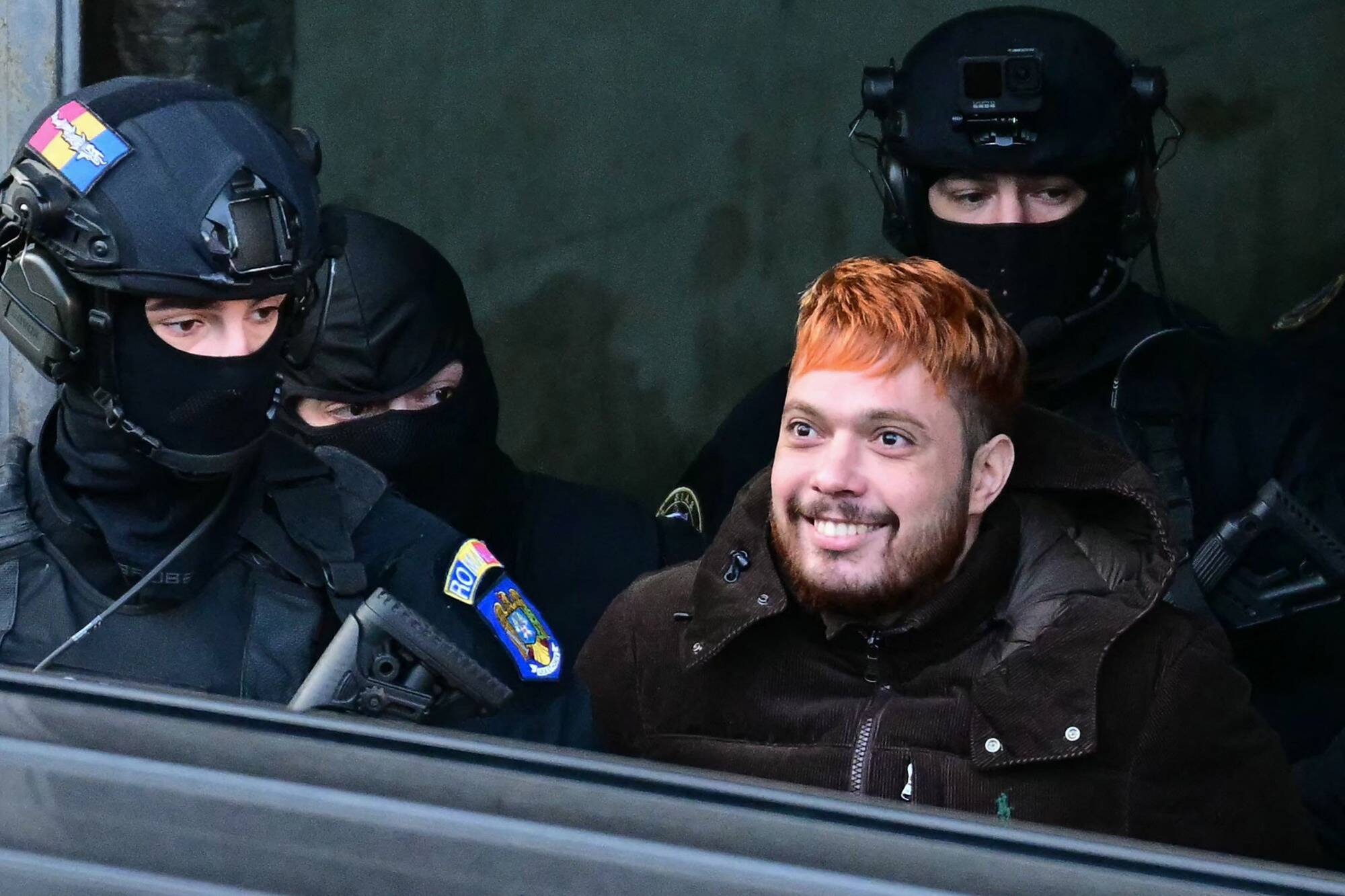
The imminent interrogation of Mohamed Amra, a notorious prisoner whose escape led to the deaths of two prison guards, is stirring significant outrage among penitentiary unions. The 31-year-old narcotrafiquant, previously charged with organized murder , is scheduled to be extracted from his high-security prison next week for questioning by judges. This incident continues to shed light on serious flaws within the French prison system.
The interrogation will take place at the office of judges from the National Jurisdiction for the Fight against Organized Crime (Junalco) in Paris. Amra’s lawyer, Me Lucas Montagnier, confirmed this information but notably refused to disclose the exact date or comment on the extraction itself, which has angered union representatives.
Amra, who has an extensive criminal record , was already incarcerated for other criminal activities when he was previously extracted, leading to the tragic deaths of two prison officers and the serious injuries of three others on May 14, 2024. In a shocking turn of events, he was freed during a violent ambush while in a prison transport vehicle at the Incarville toll booth in Eure.
After spending nine months on the run, Amra was captured in Bucharest, Romania, on February 22 and later extradited back to France. Notably, a total of 38 individuals, including Amra, are facing charges related to his escape and subsequent flight from justice .
Wilfried Fonck, the national secretary of the Ufap Unsa Justice union , expressed his outrage to AFP, stating that the decision to extract Amra shows a blatant disregard for the principles surrounding judicial proceedings. He condemned that the “principle of relying on video conferencing” was being undermined and suggested that the magistrate could have conducted the interrogation in-person at the prison in Condé-sur-Sarthe .
“This is incomprehensible and unacceptable toward our colleagues who lost their lives and were injured in Incarville,” he emphasized. Emmanuel Baudin, general secretary of the FO-Justice union, echoed these sentiments, expressing disappointment that the recent anti-narcotics legislation did not go far enough to ensure safety during such operations.
According to Baudin, current regulations allow magistrates to decide whether a prisoner should be presented physically, without adequately considering the dangers that arise from such extractions. He lamented, “Today, the magistrate decides if we will present the detainee or not,” pointing out a glaring oversight in the system.
Government’s Assurance of Safety
The Justice Minister, Gérald Darmanin , appeared on TF1 and assured the public that “nothing will happen” during the transfer. He emphasized that the Ministry of the Interior , responsible for overseeing this transfer, ensures that it will be handled under “safe conditions,” whether by the GIGN or the Raid, elite units trained for high-risk operations.
Darmanin is waiting for a forthcoming decision from the Constitutional Council, which he believes could pave the way for future interrogations to occur via video conferencing. This potential change might prevent future situations that require costly transfers for individuals like Amra, who he argues does not deserve such special treatment.
Yet, a judicial source had previously conveyed concerns regarding increased demands from the penitentiary administration for video conferencing, which stemmed from the chaos surrounding Amra’s escape. The source explained, “We have to negotiate to be presented with the accused instead of focusing on our cases.” They highlighted that physical interrogations tend to yield more valuable insights for investigations.
“Something more occurs during physical interrogations, and the detainee is more willing to discuss their detention conditions,” the source added. Physical presence allows for a higher level of confidentiality , ensuring sensitive information does not pass through too many hands, unlike video conferencing, which may pose additional risks for data leaks.