
The Intersection of Women, Work, and Writing: Insights from a Panel Discussion
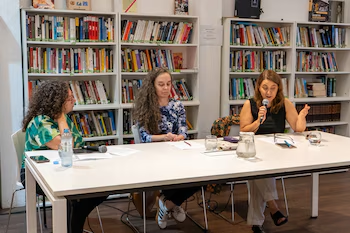
On the eve of International Women’s Day, a thought-provoking discussion was held at the Casa de la Lectura in Buenos Aires, featuring esteemed voices in the realm of women’s studies, literature, and journalism. Organized by Olga Viglieca, the panel comprised historian Graciela Queirolo and writer Débora Mundani, who explored the challenges women face in both paid and caregiving roles.
The Double Shift: A Persistent Challenge
Historian Graciela Queirolo shed light on the longstanding issue of the “double shift” that women endure. She articulated how, since the Industrial Revolution, women’s entry into the workforce has never meant a relinquishing of domestic responsibilities. “Participating in salaried employment has always been marked by this double shift,” she stated, emphasizing the ongoing struggle to balance career and home life. Despite progress, women still grapple with societal expectations that linger, making it difficult to fully embrace either aspect of their lives.
Defining Work in the Modern Age
Writer Débora Mundani offered an insightful perspective on the modern understanding of work, especially for creators. She argued that writing requires carving out time amidst life’s chaos, a sentiment echoed by many in creative fields. “Very few people have a significant block of time to dedicate to writing,” Mundani noted, highlighting the challenge of balancing artistic pursuits alongside societal demands.
The panel discussed the ambiguity surrounding what constitutes labor. Mundani asserted, “Writing is a job,” stressing the importance of economic remuneration within the artistic field. She alerted the audience to the growing uncertainty surrounding intellectual property rights, a topic critical for those engaged in creative endeavors.
The Symbolic Importance of Work
The discussion further delved into the emotional and symbolic dimensions of labor. Mundani stated, “Humans do not live only on food and water; we are made of sensitive matter.” This highlights the value of creative work not just for economic survival, but for cultural and emotional enrichment. Engaging with the symbolic aspects of work, Mundani argued for the importance of protecting and valuing one’s intellectual contributions.
The Role of Trade Unions
Trade unionism emerged as a pivotal theme, with Queirolo reflecting on its historical significance for women. “We enter the unions with elbows,” she said, referring to the barriers women have faced in male-dominated spaces. The panelists discussed the role of unions in advocating for educational opportunities and cultural recognition for women in the workforce.
Collective Action and Future Generations
The panel concluded by emphasizing the importance of collective action aimed at securing rights for women in all fields of work. As each speaker shared their hopes for International Women’s Day, a common desire emerged: the right to pursue vocational work with joy and receive adequate compensation. Both Queirolo and Mundani expressed a collective wish for future generations to have the freedom to choose their career paths without facing systemic barriers.
Conclusion: A Call for Continued Dialogue
The conversation at Casa de la Lectura served as a vital reminder of the ongoing challenges faced by women in the workplace and the significance of dialogue among women. The final note resonated with an invitation to continue championing the rights and passions of women everywhere—highlighting that access to culture and decent work is essential to illuminate the paths chosen by those who dare to follow their dreams.
This event served not only as a commemoration of women’s contributions but as a clarion call for systemic change and continued advocacy. Through solidarity and shared experiences, we can work towards a future where every woman’s work—paid or unpaid—is recognized as invaluable.