
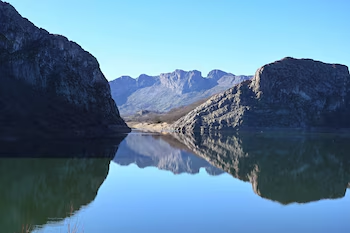
The Current Status of Water Reservoirs in Spain
According to the latest Peninsular Hydrological Bulletin from the Ministry for the Ecological Transition and the Democratic Challenge (Miteco), the current capacity of Spain’s water reservoirs stands at 83.54%.
This figure marks a slight increase over the past week, reflecting improved water management and efficiency in resource allocation. Staying informed about the capacity of reservoirs has emerged as a crucial element in managing water resources effectively in the country.
Detailed Capacity Analysis
As of Saturday, April 11, 2026, the total capacity registered is 56,043 hm³, with 46,821 hm³ currently impounded. This total represents a 0.24% increase from the previous week, translating to an additional 132 hm³ of stored water.
Notably, a year ago, the water level was significantly lower at 41,347 hm³, equating to just 73.78% of capacity. This year’s improvement underlines the effectiveness of ongoing conservation efforts and favorable weather conditions.
Regional Breakdown of Reservoirs
Different autonomous communities in Spain show varying levels of reservoir capacity:
- Andalusia: 86.40%
- Aragon: 83.99%
- Asturias: 86.40%
- Valencian Community: 58.03%
- Cantabria, Basque Country, La Rioja: 84.48%
- Castile-La Mancha: 71.26%
- Catalonia: 84.10%
- Castilla y León: 86.90%
- Extremadura: 86.29%
- Galicia: 88.45%
- Murcia: 34.46%
- Navarre: 86.36%
Water Conservation Tips for Home Gardens
Despite the positive capacity update, responsible water usage remains paramount. The Miteco has provided several tips for conserving water, especially for households with gardens, where water consumption can be significantly higher, sometimes 2 to 5 times more than in apartments.
Here are some effective strategies:
- Choose Drought-Resistant Plants: Opt for species that require minimal watering or can thrive on natural rainfall once established. This doesn’t require filling your garden with cacti; many Mediterranean plants are low-water alternatives.
- Limit Grass Areas: Reducing grass space can substantially lower water usage since grass is usually the largest water consumer in gardens.
- Utilize Natural Covers: Use materials like stones or gravel to cover soil, which minimizes water loss and enhances aesthetics.
- Install Drip Irrigation Systems: These provide targeted watering to plants at lower pressure, using only a fraction of the water needed by traditional sprinklers.
- Harvest Rainwater: Collect rain from roofs and patios in tanks for future irrigation. Positioning these tanks higher allows for gravity-fed watering.
- Water During Cooler Times: Watering in the early morning or late evening reduces evaporation and minimizes stress on plants.