
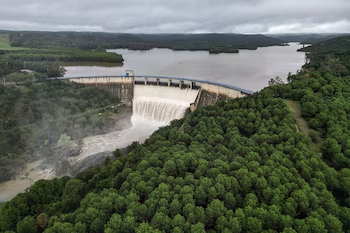
Current Status of Water Reservoirs in Spain
Spain currently reports its water reserves at 51.37% of total capacity as of November 16, 2025. This data was released in the latest Peninsular Hydrological Bulletin issued by the Ministry for the Ecological Transition and the Demographic Challenge (Miteco).
Trends and Weekly Updates
Recent statistics suggest an uptick in water levels compared to the previous week. This comes in a context characterized by fluctuating cycles of drought and heavy rainfall, making accurate forecasting crucial for optimizing water management in various sectors.
Data Overview
- Total capacity: 56,041 hm³
- Total impounded water: 28,786 hm³
- Percentage of impounded water: 51.37%
- Variation from last week: +38 hm³
- Weekly percentage change: +0.07%
- Water recorded a year ago: 28,952 hm³
- Percentage a year ago: 51.66%
This data not only highlights the often precarious position of Spain’s water reserves but also underscores the need for responsible management practices.
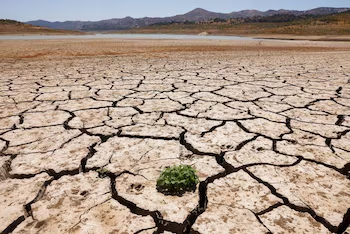
Regional Water Levels
The percentage of water reserves varies across different regions in Spain, with some areas showing more alarming figures:
- Andalusia: 42.57%
- Aragon: 51.63%
- Asturias: 55.48%
- Valencian Community: 39.78%
- Cantabria/P. Vasco/La Rioja: 36.21%
- Castile-La Mancha: 50.03%
- Catalonia: 71.38%
- Community of Castilla y León: 51.28%
- Extremadura: 57.32%
- Galicia: 54.69%
- Murcia: 23.65%
- Navarre: 31.11%
These disparities highlight the need for localized water resource management strategies tailored to the specific climatic and ecological conditions of each region.
Water Conservation Strategies
Despite the current reservoir levels, it is vital to approach water usage with a conservation mindset. To enhance efficiency, Miteco has published key tips for reducing water consumption, particularly in gardens, which typically consume 2 to 5 times more water than apartments.
Efficient Water Use in Gardens
Select Low-Water Plants: Opt for species that thrive with minimal irrigation once established. Mediterranean plants are generally low-maintenance and water-efficient.
Limit Grass Areas: Grass requires substantial amounts of water, making it the largest water consumer in gardens. Reducing its area can significantly lower overall water usage.
Use Ground Cover: Implement natural materials such as stones or bark to cover soil, which helps retain moisture and reduces evaporation.
Localized Irrigation Systems: Adopt “dripper” systems for targeted watering that minimizes waste, using only a fraction of traditional methods.
Rainwater Harvesting: Collect and utilize rainwater falling on roofs and patios. Store it in barrels or tanks to irrigate gardens.
Irrigation Timing: Water during the cooler hours of the day to reduce evaporation losses and enhance plant resilience against drought.
Implementing these strategies can conserve water and maintain a sustainable environment while balancing the needs of Spain’s diverse landscape.