
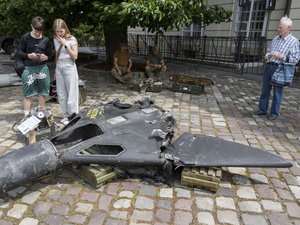
Russia, which has already deployed hordes of drones in Ukrainian territory for months, has introduced a new type of drone , resembling the Iranian-built Shahed models, utilizing components of Chinese origin .
The Emergence of New Drones
These drones, akin to the Shahed , are touted as technological assets for Moscow, capable of creating chaos and panic as they approach their targets. According to a report from Forbes Ukraine, by the end of 2025, Russia was producing approximately 2,700 drones of the “Shahed-136/Geran-2” variant each month.
Ukrainian military intelligence (HUR) has unveiled information regarding a new drone named CBTS.611000. This drone’s components provide insight into its mechanical and technological sophistication . The HUR successfully obtained two copies of this drone for analysis, highlighting its potential implications for both offensive and defensive strategies in the ongoing conflict.
Chinese Components in a Russian UAV
The new drone utilizes a Chinese Dle-60 twin-cylinder engine . The implications of such foreign components in a military drone are significant, raising concerns about the nature of international alliances . This drone reportedly includes a navigation system, flight controllers, and servomotors produced by multiple Chinese companies .
GUR Publishes Components of A New Russian UAV used as a decoy and for reconnaissance; it can also carry a warhead weighing up to 15 kg .
All components are of Chinese origin . This UAV is equipped with a Chinese Copy of Australian RFD900X Data Transmission … pic.twitter.com/evd7axbiea– maks 25 (@maks_nafo_fella) July 22, 2025
Operational Implications
The drone serves dual purposes: it functions as a reconnaissance tool and a deceptive asset, designed to confuse enemy defenses. Its capability to carry a 15-kilogram warhead elevates its threat level, allowing it to be used in both tactical and strategic operations, making it a versatile addition to Russia’s drone fleet.
China, while maintaining a stance of non-involvement in the conflict, remains a critical partner for Russia, providing not just drone components but also supporting oil purchases and other essential resources. This partnership highlights the interconnectedness of global geopolitical dynamics, where nations seek support from unlikely allies in times of need.
Conclusion
The deployment of these new drones underscores a significant trend in modern warfare, where technology and international partnerships play crucial roles in the effectiveness of military operations. Russia’s reliance on Chinese components for its drone capabilities illustrates the complexities of the conflict in Ukraine and the critical importance of technological innovation in military strategies. With the ongoing evolution of warfare, nations must adapt to the changing landscape, relying on diplomatic and technological collaborations to ensure their defense capabilities remain robust and effective.