
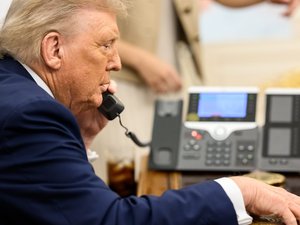
On Thursday, August 21, 2025, former President Donald Trump expressed optimistic sentiments regarding the possibility of peace negotiations between Russia and Ukraine . During a telephone interview, Trump stated he would have more clarity on the matter “in the next two weeks,” sparking discussions around the prospects of a meeting between Vladimir Putin and Volodymyr Zelensky aimed at achieving peace in Ukraine.
Trump, who has made peace in Ukraine a central theme of his political platform, suggested that if a meeting were to materialize, it could pave the way for resolving the conflict that has persisted since Russia’s invasion in February 2022. This renewed commitment to diplomacy comes as the war continues to evolve, and significant events unfold on the battlefield.
Trump’s Push for Diplomacy
In the same interview, Trump noted, “I would say that in the next two weeks we will know in one way or another. After that, we may have to adopt a different approach.” His remarks reflect a sense of urgency , emphasizing the need for decisive actions to foster dialogue between the two warring nations.
Last week, Trump met with Putin at a military base in Alaska and subsequently hosted Zelensky at the White House alongside several European leaders. His focus on facilitating communication highlights a departure from the more confrontational tactics employed by previous administrations, emphasizing his belief in the power of negotiations.
The Challenge of Bringing Leaders Together
Following his discussions with both leaders, Trump mentioned the prospect of a bilateral meeting involving Putin and Zelensky, potentially followed by a three-way summit that would include himself. However, skepticism remains about how feasible this initiative actually is, given the ongoing hostilities between Russia and Ukraine.
Ukrainian President Zelensky voiced his concerns, asserting, “Currently, the signals sent by Russia are simply indecent. They try to escape the need to organize a meeting.” His frustration underscores the difficulties that lie ahead in attempting to broker a peace deal, especially considering that Russia has ramped up its military actions in recent weeks.
Just prior to this discussion, on the night of August 21, Russian forces launched a massive attack on Ukraine, deploying 574 drones and 40 missiles, marking the most extensive offensive since mid-July. This aggressive maneuver raises questions about Russia’s true intentions regarding peace talks, leaving Zelensky and the Ukrainian government wary of any overtures that may appear disingenuous.
Russia’s Preparedness for Talks
Despite the escalating violence, there are indications that Vladimir Putin is willing to consider a meeting. Historically, he had been reticent about engaging in discussions with Ukrainian officials. However, sources indicate that he is now open to the idea, provided that the meeting is “prepared with the greatest care.” This suggests that while there may be a window for dialogue, both sides need to navigate the political landscape cautiously.
The precarious situation has bred an atmosphere of distrust and uncertainty. For Zelensky, the prospect of negotiating with a nation that has shown aggressive tendencies can be daunting. The stakes are incredibly high, and the potential consequences of any missteps could destabilize the region even further.
Public Reception and International Implications
The public’s response to Trump’s proposed negotiations has been mixed. Supporters see it as a pragmatic approach to a protracted conflict, advocating for peace over continued hostilities. On the other hand, critics argue that engaging with an adversary like Russia could undermine Ukraine’s sovereignty and embolden further aggression.
Internationally, this situation remains a focal point for nations monitoring the balance of power. European allies express caution , while also hoping for a resolution that restores stability to Ukraine and the broader region. The geopolitical ramifications of a successful negotiation could redefine relationships among major powers, setting the stage for a new era of diplomacy.
In conclusion, the next two weeks will be crucial in determining whether Trump’s efforts to broker peace between Russia and Ukraine can take shape. The dialogue opens up potential pathways for ending a conflict that has caused immense suffering. However, with both military actions and political maneuvering at play, the situation remains deeply complex, requiring careful navigation and genuine commitment from all involved parties.