
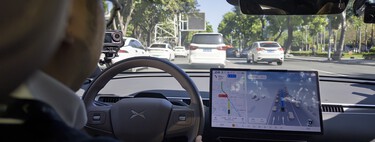
Volkswagen has recently announced a significant investment of over 200 million dollars to develop advanced chips in China. The new chips will provide processing power between 500 and 700 TOPS (trillions of operations per second), specifically designed to enhance semi-autonomous driving systems for the Chinese car market.
Technological Challenges and Market Position
Technological claudication. This initiative reflects Volkswagen’s admission of its struggles to compete independently in artificial intelligence and automotive software. The brand has experienced a sharp decline in sales within the world’s largest automotive market, dropping from over 4 million units in 2018 to approximately 2.75 million units in 2024. In 2023, Volkswagen lost its status as the top-selling brand in China to local competitor BYD.
Leveraging Chinese Expertise
Chinese technology as a life jacket. The chip development will occur through Carizon, a joint venture between Volkswagen’s software division, Cariad, and Horizon Robotics, a Chinese firm specializing in AI-driven integrated circuits. Frank Han, CEO of Cariad China, stated that the chips would utilize 3-4 nanometer technology, rivaling Nvidia’s Thor processor, which can achieve 700 TOPS. By 2030, Volkswagen aims for 80% of its vehicles sold in China to integrate this Chinese Electronic Architecture (CEA).
Navigating Regulatory Requirements
Production separation. As the demand for highly technological vehicles rises in China, Volkswagen is compelled to adapt its production processes. Unlike in the West, Chinese regulations prohibit the transfer of driving data outside its borders. This forces manufacturers to develop distinct production strategies tailored to Chinese market demands.
Collaborations and Competitiveness
Partnering for Success. Beyond semiconductors, Volkswagen’s adaptation extends to partnerships with local innovators. Notably, the company is set to become the first customer of Xpeng’s new semi-autonomous driving system, which has been claimed to outperform Tesla’s offering. Increased collaboration with Xpeng aims to create advanced electronic architectures for additional models in China.
Supply Chain Challenges
Survival in a fierce market. The geopolitical tensions between the U.S. and China have adversely affected semiconductor supply chains. Reports indicate that companies like Volkswagen, along with other major manufacturers, have confronted supply crises following export blockages by Beijing in response to geopolitical disputes.
Future Outlook
By developing its chips in China, Volkswagen aims to reduce reliance on external suppliers amidst a context of increasing global technological fragmentation. Two companies in one. Managing parallel technological ecosystems for China and the rest of the world presents challenges, including increased investment and the risk of losing synergies. However, Ralf Brandstätter, president and CEO of VW China, emphasizes that their strategy, “In China, for China,” signifies a shift towards mastering core technologies to shape the future of mobility.
Volkswagen’s strategy illustrates a critical pivot, one that recognizes the necessity of harnessing local technology rather than merely exporting foreign methods to succeed in the competitive Chinese automotive landscape.