
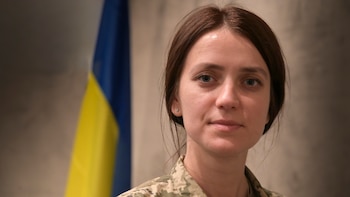
Ukrainian Colonel Inna Zavorotko: A Voice Amidst the Conflict
In a recent conversation with Colonel Inna Zavorotko, head of the International Humanitarian Law section at the Ministry of Defense of Ukraine, she condemned the ongoing human rights violations stemming from Russia’s military aggression. Since the illegal annexation of Crimea in March 2014, Zavorotko pointed out that the situation has deteriorated significantly, especially after the large-scale invasion that began in February 2022.
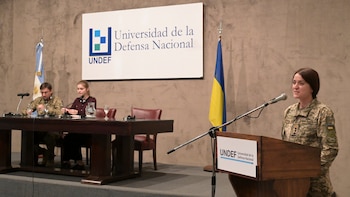
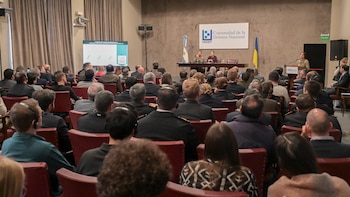
Zavorotko’s visit to Argentina sought to foster cooperation between the legal departments of the Ukrainian and Argentine Ministries of Defense. Amid her diplomatic endeavors, she expressed gratitude for Argentina being the only Latin American nation involved in the Ramstein Group, which supports Ukraine in its struggle against Russian attacks.
Objective of the Visit
Zavorotko explained that one of the primary goals of her visit was to enhance bilateral cooperation and to present an international humanitarian law report developed by her ministry. “This visit serves as an important avenue for sharing our experiences and garnering support for international humanitarian law,” Zavorotko emphasized.
Demographic Impact of the War
The war has had a profound demographic effect on Ukraine. Zavorotko highlighted that the most notable result has been the loss of many of Ukraine’s “best and brightest,” as young men are sent to defend their homeland. This has led to immense challenges for the displaced populace, particularly for women and children who are fleeing the country while their fathers remain on the front lines.
She explained, “Initially, many young couples hesitated to start families due to the uncertainty, but now they recognize the need for life to continue.” Thus, they are working towards establishing a semblance of normality even in these dire circumstances.
Ongoing Drone Attacks
Zavorotko described the incessant drone attacks targeting Ukrainian civilians. “These drones are deliberately used against the general public. Cities are attacked while civilians, according to the Geneva Conventions, should be protected.” She noted that Russia shows little regard for these laws, resulting in countless casualties, including over 700 children who have died.
The tactic of launching attacks at night when families are sleeping is designed to instill fear and create psychological turmoil among the population, she noted. “This approach aims to break the spirit of our people,” she added.
Conditions of Prisoners of War
Amid the conflict, the treatment of prisoners of war has become a focal point. Since the annexation of Crimea, Ukraine has established laws governing the treatment of prisoners of war. Zavorotko explained that Ukraine currently tracks the status of each captured soldier throughout their time in custody until they are exchanged.
“In Russia, the situation is starkly different,” she remarked, highlighting the lack of an organized system for prisoner treatment on their side. Reports reveal that Ukrainian POWs face torture and harsh conditions. “Many are subjected to sexual violence, which is a blatant violation of their rights,” she lamented.
Prisoner Exchanges
Regarding prisoner exchanges, Colonel Zavorotko specified that three significant exchanges have taken place since the conflict escalated. These negotiations, primarily held in Istanbul, saw approximately 1000 prisoners exchanged between both sides, as well as the return of fallen soldiers’ remains.
She noted the essential role of the International Red Cross in sharing information about prisoners of war, even though challenges remain due to Russia’s frequent violations of obligations to provide information regarding Ukrainian POWs.
Life in Occupied Territories
Zavorotko detailed the dire situation for those living under Russian occupation. Despite clear prohibitions in the Geneva Conventions, civilians are being coerced into serving in the Russian military. To work, maintain bank accounts, or purchase essentials like medications, many Ukrainians feel forced to accept Russian citizenship.
“This is a tragic situation where individuals are compelled to fight against their own countrymen,” she explained, highlighting the emotional toll on Ukrainian families caught in this struggle.
The Plight of Children
Since 2022, Russia has allegedly deported thousands of Ukrainian children from occupied territories, with estimates running up to 20,000. Zavorotko stressed the urgency of the situation, “It is crucial for the future of Ukraine. Children are not mere statistics but are central to our hope and identity.”
Ukraine has embarked on initiatives like “Bring Kids Back,” aiming to reconnect these children with their families and navigate the complexities presented by legal systems that often hinder repatriation efforts.
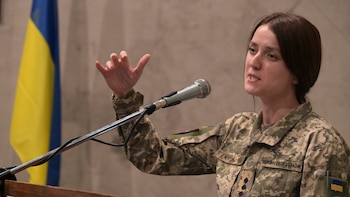
Zavorotko expressed concern about the psychological effects of Russian propaganda aimed at Ukrainian children, which she denounced as a part of genocide. “By stripping away their Ukrainian identity, Russia is engaging in acts intended to dismantle our nation.”
International Legal Proceedings
The establishment of a special tribunal to address Russia’s acts of aggression against Ukraine is a priority for her country. Zavorotko extolled the support received from Argentina and other nations, recognizing the importance of holding Russian leaders accountable.
She noted, “The prosecution of those responsible for acts of aggression is crucial for achieving lasting peace in Ukraine.”
The visit also served as an opportunity for Ukraine to share its experiences in applying international law in modern warfare, including potential cyber threats and the use of artificial intelligence. Zavorotko expressed hope that these discussions will encourage a broader commitment to uphold international law regarding military conduct across all levels.
The conversation with Colonel Zavorotko paints a vivid picture of the complexities and challenges facing Ukraine amid ongoing conflict. Her dedication to protecting human rights and pushing for international cooperation serves as a reminder of the moral imperatives inherent in today’s global landscape.