
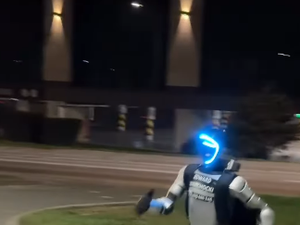
An improbable chase took place this Sunday, April 12 in the streets of Warsaw, where wild boars were hilariously pursued by a humanoid robot. This quirky scene has generated a mixed bag of reactions online, evoking both laughter and concern among viewers.
The Unusual Chase in Warsaw
In a rather surreal spectacle, wild boars were spotted sprinting through the city streets of Warsaw, not chased by hunters, but by the humanoid robot Edward Warchocki. This robot, affectionately dubbed the “influencer robot,” is no stranger to the Polish public, having already made headlines for its entertaining social media presence.
Comical yet Concerning
The imagery of three hefty wild boars racing away while being pursued by the relatively slow robot is both humorous and worrying. Social media users have responded in kind, sharing their thoughts and laughter about the unusual situation.
One user noted, “Plus, he waves,” highlighting the robotic automaton’s friendly gesture as it chased the animals, while another pointed out, “The robot seems exhausted.” Such lighthearted commentary captures the absurdity of the moment, where the predator becomes the hunted, albeit in a rather unthreatening manner.
Reactions from the Internet
The juxtaposition of robots and wildlife has led to various reactions online. Memorable comments include references to the dystopian series “Black Mirror,” reflecting fears about automation and its implications for our future interactions with nature. One savvy observer quipped, “Given its speed, I don’t know if we should worry about it at the moment,” perfectly encapsulating the humor that many are drawing from the scene.
The Bigger Picture
While the chase may appear amusing on the surface, it raises deeper questions about how technology interacts with wildlife. As cities expand and human activities encroach on animal habitats, encounters like this may become more frequent. Could this be an exaggerated glimpse into a future where robots are used to manage or monitor wildlife?
Should We Laugh or Worry?
The question remains: Should we find humor in this incident, or are there underlying issues we should be concerned about? Laughter often serves as a coping mechanism when confronting fears about the future, particularly as AI continues to evolve and enter our daily lives.
On one hand, the light-heartedness surrounding Edward Warchocki’s chase of the wild boars illustrates humanity’s tendency to embrace the bizarre aspects of modern life. On the other hand, we should remain vigilant about the implications of robotic technology in our interaction with the natural world.
Ultimately, laughter may often be the best response to such absurdities, yet it’s essential not to glaze over the important conversations that need to be had in the face of fast-approaching technological advancements.
In a world where animals and robots collide in such ludicrous fashion, perhaps the real task lies in ensuring a harmonious coexistence between nature and technology.