
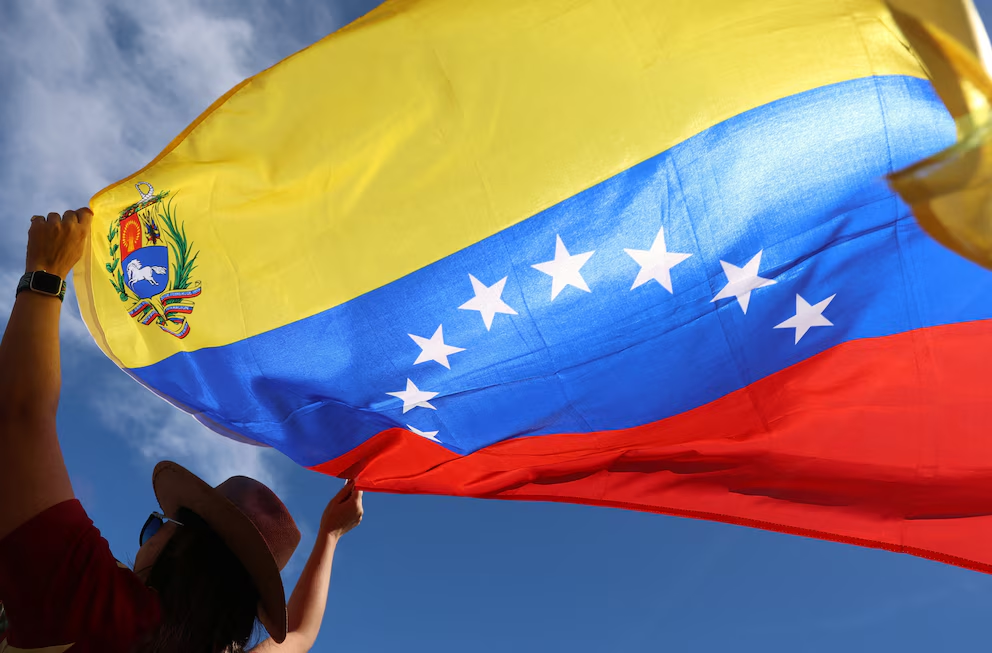
Venezuelans in Exile: Hope Amidst the Capture of Maduro Following U.S. Intervention
The recent military intervention in Venezuela, led by former President Donald Trump, has resulted in the capture of Nicolás Maduro and his wife, Cilia Flores. This bold operation is seen as a watershed moment in Venezuela’s long-standing crisis, which has ensnared millions in a web of despair and exile.
Reactions from the Venezuelan Diaspora
The announcement of the intervention ignited immediate reactions not only across international spheres but particularly among the Venezuelan diaspora. Many young Venezuelans who fled the country in search of better opportunities view these events with mixed emotions of relief, anticipation, and uncertainty. For a generation that has only known the grips of Maduro’s authoritarian rule, this intervention is felt to be unprecedented.
One young Venezuelan representative of this perspective remarked, “I support the American intervention despite the international criticism it has generated.” For many like him, the U.S. was seen as the only entity with the ability to feasibly intervene, given the dire conditions in Venezuela.
The Weight of History
Experiences shared by Venezuelans in exile reveal that their support for the intervention stems not from political affinity, but from years of living under repression. They have grown up devoid of alternative governance, and their aspirations have been stifled by violence and fear. The familiar narrative of governmental atrocities resonates profoundly within their collective consciousness.
Another exile echoed similar sentiments, acknowledging the concerns surrounding international law but emphasizing how the deterioration of their homeland pushed many to accept risks for a potential change.
Reasons for Support
As sentiments swell among the diaspora, several reasons underscore support for the intervention:
- Lack of Political Alternatives: More than a decade of stagnation and the absence of viable political dialogue fueled calls for intervention.
- Human Rights Violations: Reports of brutal repression of protests and human rights abuses have drawn international scrutiny.
- Economic Collapse: The loss of opportunities for young Venezuelans and the nation’s ongoing economic disintegration have spurred hope for change.
- Judicial Accountability: The indictments against Maduro’s inner circle in U.S. courts highlight the regime’s corruption and legal ramifications.
The Road Ahead
In the wake of Trump’s announcement, the Venezuelan government quickly condemned the operation and sought an urgent UN Security Council meeting. Responses from Maduro’s administration, notably from Foreign Minister Yvan Gil and Vice President Delcy Rodriguez, ranged from demands for proof of life to disavowing the operation outright.
Maduro’s ascent to power in 2013 has been marked by a significant erosion of democracy, pervasive political persecution, and rampant economic mismanagement. The involvement of the U.S. raises questions about the legitimacy and consequences of foreign intervention in sovereign nations, thus kicking off a broader discussion within international circles.
Conclusion: A Turning Point for Venezuelans
While the international community grapples with the legality and ethical implications of the U.S. intervention in Venezuela, many among the diaspora view it through a lens of hope. After years of exile and frustration, they see these developments as a potential break from the oppressive political cycle that has defined their lives.
In this tumultuous period, the indomitable spirit of Venezuelan youth shines through—a resilient force holding onto the hope of a brighter future in a free and democratic Venezuela.