
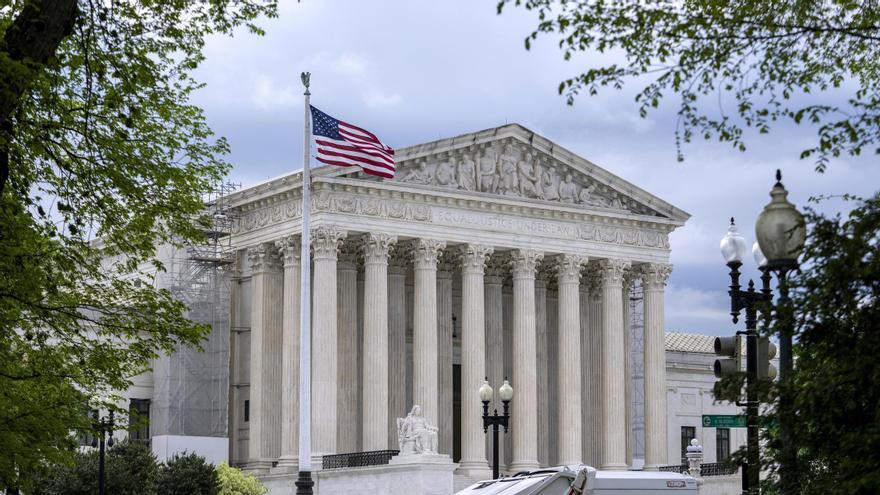
Supreme Court’s Ruling on Religious Schools: A Continued Separation of Church and State
The Supreme Court of the United States has recently reinforced the long-standing principle of the separation of church and state by declining to allow public funding for religious schools. The ruling, announced in a closely watched case, ended the efforts to establish a virtual Catholic school in Oklahoma, called the San Isidoro de Sevilla charter school, backed by the local archdiocese.
Background on the Case
In June 2023, a state education board approved the establishment of the San Isidoro de Sevilla, which was described as a “charter school”—a public educational institution managed independently. Its leaders intended for all its operations to be in line with the teachings of Jesus Christ. This ambitious plan, however, faced legal challenges spearheaded by the state’s attorney general, a Republican who asserted that this initiative was unconstitutional.
The attorney general argued that the charter school would violate the separation of church and state and contravene both state constitution and laws. Ultimately, the Oklahoma Supreme Court sided with his viewpoint, confirming that public funding for such religious-based education was impermissible.
The Supreme Court’s Deliberation
The case then escalated to the US Supreme Court, where an unexpected development occurred: Justice Amy Coney Barrett recused herself from the deliberations without detailed explanation. This recusal meant that only eight justices participated in the vote, resulting in a 4-4 split.
This tie essentially upheld the decision from the Oklahoma Supreme Court, but without a majority vote, there was no written opinion to substantiate the ruling. Consequently, this decision did not set a national precedent regarding whether religious schools should gain entry into the public charter school system—a contentious debate that continues across the nation.
Implications of the Ruling
The implications of this decision extend beyond Oklahoma. It raises critical questions about the role of religious institutions in the public education system, specifically concerning why funds from taxpayers should not support education grounded in religious doctrine. The ruling reflects a broader tension within the context of the First Amendment of the US Constitution, which prohibits the government from favoring one religion over another, while simultaneously ensuring freedom of religious practice.
Future Legal Battles
Looking ahead, potential future cases may arise, and Justice Barrett’s involvement could tilt the balance toward more conservatively inclined rulings. The judicial climate suggests that many in the conservative majority may lean towards favoring the free exercise of religion, complicating the legal landscape concerning educational funding.
This inclination to favor the second clause of the First Amendment, which protects religious freedom, often conflicts with the clause that mandates separation and neutrality concerning religion. The Supreme Court’s conservative majority could be pivotal in determining how these two fundamental principles will coexist in future cases concerning religious education.
The Role of Justice Barrett
Justice Barrett’s recusal has sparked speculation and concern regarding relationships influencing judicial decisions. Some analysts suggest her ties to Nicole Garnett, a law professor at Notre Dame who advised the charter school, could have played a role in her decision to withdraw from the case. This brings to light broader questions about the potential bias in judicial proceedings, especially when the justices have previous affiliations with the parties involved in cases presented.
Despite the current ruling, Barrett could still have substantial influence over future decisions, especially if she chooses not to recuse herself. Her vote could become a deciding factor in several upcoming cases that explore the nuances between religious education and government funding.
Public Reaction and Discussion
The public response to the ruling has been mixed. Advocates for secular education express relief that the Supreme Court upheld the separation of church and state, while supporters of funding religious schools maintain that such educational institutions provide valuable learning environments rooted in moral teaching. This ongoing debate reveals deep divisions in American society regarding the intersection of religion, education, and governance.
The broader implications of this decision may affect how legislators approach educational funding in the coming years, potentially leading to new policies that either further entrench the separation of church and state or bend towards accommodating religious institutions in public education.
Conclusion
The Supreme Court’s latest ruling against public funding for religious schools reinforces the essential principle of the separation of church and state in the United States. As debates surrounding the funding of religious educational institutions unfold, it remains to be seen how future legal actions will shape the educational landscape, either by preserving secular education or by opening the door to the inclusion of religiously affiliated schools within the public sphere. The balance struck between these competing interests will undoubtedly continue to resonate within the halls of judicial authority.