
## A Transformative Era in the Energy Market
The global and European energy market is undergoing a dramatic transformation. Just three years ago, concerns around scarcity loomed large; today, we find ourselves in a vastly different scenario. According to Bloomberg, a “record supply wave” is paving the way for a “buyers’ market” expected to persist until the end of the decade. Not only has the availability of gas increased, but the dynamics of how it’s traded have completely shifted—the once-slow-moving gas has now become a speedy financial asset.
### The Giants Are Awakening
The surge in supply has its key players. Bloomberg data indicates that global LNG production grew by 6% in 2025, with no signs of slowing down. This year, two megaprojects—Golden Pass in Texas and a massive expansion in Qatar—are projected to add an unprecedented 11% to total global exports upon reaching full capacity. Such developments are profoundly altering the European energy landscape. By 2025, the United States is projected to account for 77.53% of European imports, signifying a transition from scarcity to an “excess supply” market that is driving prices down. The narrowing margins between the JKM index in Asia and TTF in Europe further illustrate this shift.
### The End of Office Hours: Gas Goes “Hyperactive”
One of the most significant changes in trading dynamics is the extended operating hours for gas and electricity products. Traditionally, traders logged on at 8 am in Amsterdam to analyze inventories and weather updates. Today, the Intercontinental Exchange (ICE) allows trading for 22 hours a day, synchronizing with markets in the U.S. and Asia. While this shift enables near-instantaneous reactions to global events, it also raises the stakes for volatility as the speed of transactions increases.
### The Emergence of Hedge Funds
This newly heightened liquidity and the expanded trading hours have attracted hedge funds, which thrive on volatility rather than traditional physical assets like pipelines or ships. As highlighted by Bloomberg, these funds capitalize on arbitrage opportunities in a market that now “never sleeps,” making natural gas an asset class with characteristics akin to oil and currencies.
### Opportunities for Emerging Nations
The situation offers a silver lining for emerging economies like Vietnam, India, and Myanmar, which are re-entering the market following the price surges of 2022. With reduced costs, these nations are absorbing excess LNG to replace coal and fuel their growing electricity grids. This burgeoning Asian demand is crucial to preventing total market collapse under the weight of new American and Qatari supplies.
### The Geopolitical Landscape
Geopolitical tensions continue to complicate the scenario. Giants such as Shell and Exxon Mobil are grappling with a downturn in trading results, directly influenced by ongoing geopolitical maneuvers. As Donald Trump pressures oil companies to revitalize Venezuela, CEO Darren Woods calls the country “uninvestable,” adding to the complexities of surplus gas sales.
### Infrastructure Challenges in Europe
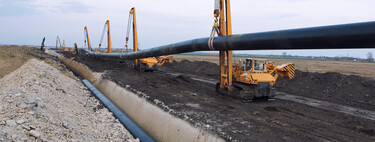
While gas supply is abundant, the real battleground lies in infrastructure. Europe’s reliance on floating regasification units (FSRUs) highlights the urgency of bridging the gap between supply and consumption. Spain serves as a prime example; it faces a disconnect between having resources on its shores and the technical limitations that hinder distribution across the continent, leading to record-high consumer prices.
### Future Outlook and Gas Demand
Despite the rise in renewable energy, projections indicate that global gas demand will increase by 26% by 2050, as noted in a McKinsey & Company report. This suggests that gas will not be eliminated but rather redefined as a crucial part of an electrical network that seeks stability.
As a Morgan Stanley report concludes, the energy landscape of 2026 will hinge less on political negotiations and more on agile trading strategies and the adaptation capabilities of infrastructure. While ample gas is on hand, there remain formidable obstacles to delivering this boon to consumers efficiently.