
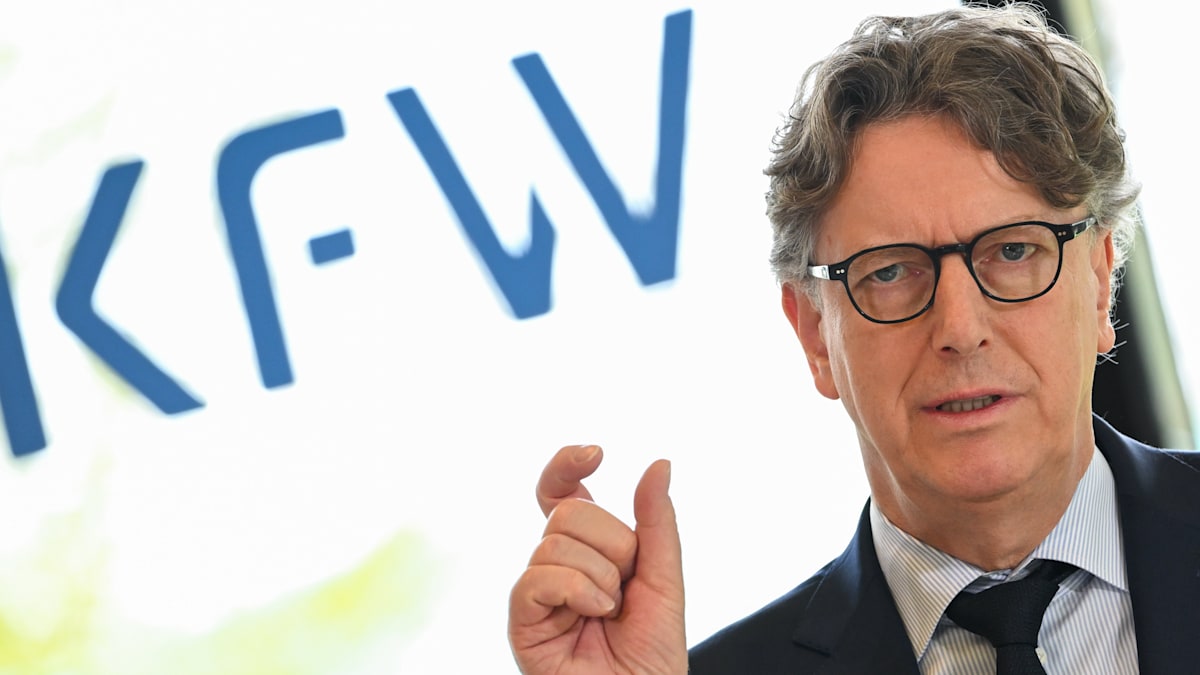
KfW-Chef Stefan Wintels registriert wachsendes Interesse globaler Investoren an Deutschland. Gerade jetzt sei der richtige Zeitpunkt, um Kapital aus dem Ausland zu gewinnen – etwa für Infrastruktur, Digitalisierung und Klimaschutz.
Growing Global Investor Interest in Germany
Recently, Stefan Wintels , the CEO of KfW, observed a remarkable increase in international investor interest in Germany. He emphasized that this is a particularly opportune moment to engage with large investors, as expressed in an interview with the Handelsblatt . According to Wintels, many institutional investors are overly invested in the United States and are eager to diversify their portfolios by increasing investments in Europe , particularly in Germany . His observations during roadshows in cities like New York , London , and Zürich reinforced this growing interest in the German market.
Significant Shift in Investor Sentiment
Wintels, who has spent over 30 years in the finance industry, stated, “I have never experienced such a rapid shift in sentiment.” He urged stakeholders to leverage this positive momentum for both Germany and Europe. The coalition agreement from the current government outlines several focal points that align well with international investor expectations, such as the modernization of infrastructure , reducing bureaucracy , digitalization , and commitments to qualified skilled workforce immigration . Furthermore, the government’s commitment to climate goals for 2045 assures investors of a stable and reliable environment.
The Call for Reliable Investments
For investors, reliability and stability are key factors. Wintels pointed out that the changing political landscape in the United States has unsettled markets, in contrast to the political stability that Germany offers. He emphasized the importance of nurturing this stability as a genuine asset. Currently, capital is needed from Asia , the Middle East , United Kingdom , United States , and Canada . Wintels believes that without international capital, it would be challenging to raise the substantial funds required in the forthcoming years.
The Financial Landscape and Market Sovereignty
Stefan Wintels highlighted the need for greater financial market sovereignty in both Germany and Europe. He hinted that this could be achieved through domestic efforts, given that there is an impressive €9 trillion in private financial assets in Germany and €30 trillion across Europe. However, Wintels was candid in stating that the financial sector in Europe is so tightly regulated that banks and insurers have effectively withdrawn from financing options that share characteristics with equity capital . His call to action was clear: “We should evaluate where regulations can be adjusted without jeopardizing the stability of the financial system.”
Reuters/ceb
Many believe that the time is ripe for foreign investment to flow into the country, especially in sectors focusing on sustainability, technology, and infrastructure. As institutions explore opportunities, the robust assets present in Germany make it an attractive destination. However, achieving this involves more than just numbers; it requires a global narrative that communicates Germany’s values and commitment to economic growth while embracing environmental responsibility.
In summary, with the current wave of interest from investors, there’s a substantial opportunity for Germany to consolidate its position as a prime investment hub in Europe. With the combination of political stability, strong industrial capabilities, and an engaged workforce, the potential for capital inflow can significantly contribute to the nation’s long-term growth and sustainable development. By ensuring the regulations encourage investments while protecting the integrity of the financial system, Germany stands to benefit from this heightened global attention.