
The Evolving Challenge of Detecting AI-Generated Images
Detecting images generated by artificial intelligence has turned into a relentless game of cat and mouse, becoming more intricate as technology advances. Initially, it was relatively easy to identify AI-generated images by observing simple mistakes, such as the number of fingers in rendered hands. However, as algorithms grow in precision, distinguishing between real and artificial images is no longer a straightforward task.
The Shift in Detection Techniques
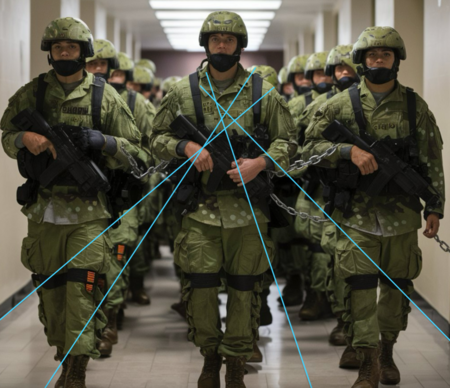
With the progress in AI image synthesis, traditional methods of detection have become outdated. Observations based on easily identifiable errors are now insufficient. Instead, experts recommend a deeper understanding of geometry, shadows, and perspective—essentially, the principles of technical drawing.
Expert Insight: Hany Farid’s Contributions
Hany Farid, a leading figure in digital forensics at the University of California, Berkeley, has dedicated over two decades to understanding image manipulation. Described as “the dean of digital forensics” by Santiago Lyon, Farid acknowledges that AI represents the biggest challenge he has encountered in his career.
The Crisis of Trust
This challenge raises critical questions about the reliability of visual information. As generative AI creates images that are nearly indistinguishable from reality, our ability to trust what we see diminishes. Farid discusses a “global war for truth,” indicating that nearly 50% of images on the Internet could be fabricated, exacerbated by loose regulations on social media.
Moving Beyond Pixels
Historically, detection methods relied heavily on analyzing the pixel noise characteristic of authentic photographs, a relic of capturing images with real cameras. Modern AI generators have learned to mimic these imperfections, complicating the detection landscape.
The Role of Technical Drawing
Farid suggests three fundamental principles from technical drawing to identify AI-generated images:
Vanishing Points: In real-world imagery, parallel lines converge to a single point as they recede. This essential principle is often ignored by AI when organizing spaces.
Shades: Light rays from the sun are nearly parallel when they reach Earth. Shadows should align with these light rays, but many AI-generated images fail to reflect this reality.
Highlights: When observing reflections, the lines should intersect at a consistent vanishing point. Any deviation from this principle signifies potentially artificial imagery.
Accumulating Clues
Farid emphasizes that no single detection technique is foolproof. Instead, a comprehensive method involves collecting multiple clues, akin to detective work. These may include suspicious noise patterns, incongruous vanishing points, and shadows that fail to meet basic geometric criteria.
Limits of Current Techniques
While Farid’s optimism is grounded in a belief that AI will struggle with complex physical simulations, experts warn that detection methods can quickly become obsolete. The rapid evolution of AI leads to a diminished lifespan for each technique, making ongoing adaptation crucial.
Path Forward: Solutions and Standards
To combat the challenge of misinformation, Farid’s team is creating forensic tools available to journalists and institutions. Additionally, initiatives for “content credentials” aim to ensure the authenticity of images at the point of creation, thus contributing to a broader solution. However, as Farid cautions, social media remains a hazardous environment for reliable information, rife with “AI slop.”
Concluding Thoughts
In an era where visual fidelity is increasingly deceptive, the fusion of technical drawing principles with forensic expertise provides a new frontier in detecting AI-generated images. As technology continues to evolve, so too will our methods to discern truth from fabrication.