
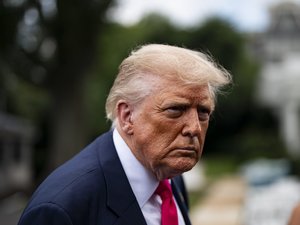
On July 15, Donald Trump made headlines by excluding the possibility of delivering long-range missiles to Ukraine. He concurrently announced a new shipment of military equipment funded by NATO’s European allies. The Kremlin swiftly condemned this decision, asserting that it would only serve to prolong the war while talks between Moscow and Kyiv remain stalled.
Key Points to Remember
Donald Trump is pressing for peace talks, threatening Russia with sanctions if a ceasefire is not reached within 50 days.
The Kremlin views Western military support as a catalyst for continued conflict, while Kyiv rejects Russian conditions for a ceasefire.
In Brussels, the EU is advocating for a “sharing of the burden” regarding military aid, but agreement on a new sanctions package remains elusive.
During a press conference, Trump emphasized that Kyiv should avoid targeting Moscow, contradicting claims that he encouraged Ukrainian President Volodymyr Zelensky to strike the Russian capital. “ No, he should not target Moscow ,” Trump stated, affirming that Washington would not supply Ukraine with long-range missiles.
The Kremlin reacted to Trump’s announcements through spokesperson Dmitri Peskov, who remarked, “This decision made in Washington, in NATO countries, and directly in Brussels will be perceived by Kyiv not as a signal in favor of peace, but as a signal for the continuation of the war.”
Putin’s Disappointment
Since returning to the White House in January, Trump has sought to mediate the conflict between Russia and Ukraine. He expressed disappointment in Putin, stating, “I thought we would have an agreement two months ago, but that does not seem to materialize.” He also warned that without a diplomatic resolution within 50 days, the U.S. would impose secondary customs duties against Moscow’s allies.
Russia’s primary trade partners include China, accounting for around 34% of its total trade, with India, Turkey, and Belarus also playing significant roles. Responding to Trump’s initiatives, Beijing condemned them as “coercive measures that do not lead anywhere.”
“Sharing the Burden”
Trump announced plans to send military equipment “ worth several billion dollars ,” including Patriot anti-aircraft defense systems, to Ukraine. This assistance will primarily be funded by European NATO members, with countries like Germany, the UK, Finland, Canada, Norway, Sweden, and Denmark coming together to support Ukraine’s defense efforts. Denmark and the Netherlands have also expressed willingness to participate in this initiative.
However, EU foreign policy chief Kaja Kallas urged the U.S. to “share the burden” concerning military aid. “While we welcome President Trump’s announcement, we would like to see a sharing of the burden,” she stated, emphasizing the need for collective responsibility among allied nations. Yet, discussions on the 18th sanctions package against Russia met with challenges, particularly due to Slovakia’s resistance.
Meanwhile, Russian Defense Ministry officials claimed advances, stating they had taken control of two villages in the northeastern Donetsk region. In recent weeks, Russian airstrikes have intensified, further complicating the situation on the ground. Peskov also mentioned the Kremlin’s readiness to negotiate but underscored that they await concrete proposals from Ukraine regarding a new round of discussions following two unsuccessful sessions in Istanbul.
Moscow’s demands include recognition of four regions gained during the conflict and a commitment from Ukraine to forgo NATO membership—requests that Kyiv and its allies deem unacceptable. Kyiv insists on a ceasefire lasting 30 days prior to negotiating terms for peace, along with a complete withdrawal of Russian troops from its territory.
A Political Chess Game
Residents of Moscow perceive Trump’s remarks as part of a broader political game . Svetlana, an aeronautics engineer, remarked, “It’s a game of chess.” She believes negotiations will continue and downplayed the significance of Trump’s ultimatum. Others, like a Ukrainian soldier identified as Shah, acknowledged gratitude for U.S. support but cautioned against over-reliance on promises, stating there is often a “ditch between promises and reality.”
Master, another soldier on the Ukrainian frontlines, echoed this sentiment, opining that the Patriot systems should have been delivered earlier to save lives. In contrast, Rouslan, a soldier with a positive outlook, stated, “Better late than never.” As the situation evolves, both military and diplomatic strategies continue to adapt as the international community watches closely.