
The Unseen Impact of Global Supply Chains in Modern Warfare
A recent report highlights the intricate web of global supply chains and their profound implications for modern warfare, particularly in the ongoing conflict between Ukraine and Russia. Ukrainian intelligence has meticulously analyzed the munitions used in Russian assaults, revealing an astonishing dependency on foreign-made components in military equipment. This research underscores a crucial paradox of contemporary warfare: despite strict international sanctions , the lifeblood of military offense continues to flow through civilian markets, allowing aggressors to sustain their operations.
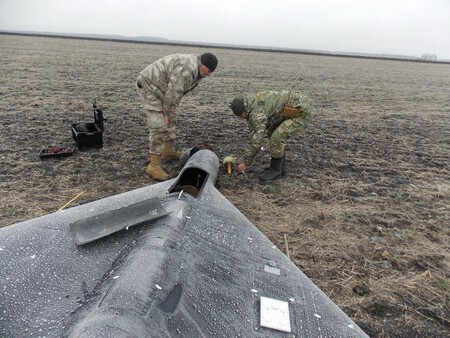
The recent massive attack on Ukraine, which involved 496 attack drones and 53 missiles, showcases this dependency in stark detail. Ukrainian officials meticulously cataloged over 102,785 foreign components embedded in these machines. The majority of these components—approximately 100,688 pieces —were found in drones like the Shahed type, with additional components found in Iskander, Kinzhal, and Kalibr missiles. President Zelensky has emphasized that the analysis not only aims to identify culprits but serves as a forensic exercise revealing how various parts from around the world enable the aggressor’s capabilities to persist under sanctions.
The Composition of Components
The investigation revealed that the identified components largely consist of products produced by the civil industry . These include converters, sensors, and microelectronics sourced from countries like the United States, United Kingdom, China, Taiwan, Germany, Switzerland, Japan, South Korea, and the Netherlands . Specific instances pointed out by the Ukrainian government include British microcomputers used for flight control and Swiss microcontrollers. The most significant volume of components, however, originates from China and Taiwan , emphasizing the inadequacy of advanced part restrictions in curbing technological proliferation that fuels military arsenals.
The Limitations of Sanctions
This situation provides a sharp critique of the effectiveness of sanctions : they reveal the challenges posed by complex global supply chains and the existence of dual-use technology that seamlessly transitions from civilian to military applications. Compliance with export control regulations, while necessary, proves insufficient due to the myriad of intermediary agents and the lax controls over re-exports. This loophole allows military manufacturers to thrive on the fine line between legitimate civilian manufacturing and illicit military weaponry.
The Political Implications
The Ukrainian leadership’s response has been both political and operational. They have begun transmitting data on the origins of these components to allied nations in a bid to galvanize further action. Zelensky demands an immediate closure of the flow of critical components and proposes additional restrictions, including more rigorous logistical blockades . Experts emphasize that without coordinated action at the G7 level , which addresses implementation gaps, the military threat will continue to loom large.
Ethical Considerations
The implications of this crisis extend beyond the battlefield; they raise ethical questions for companies involved in the supply chain. To what extent should businesses be held accountable for the end-use of their products? As supply chains grow more complex, companies face increasing pressure to invest in traceability , auditing, and third-party controls. Balancing the need for robust oversight without stifling critical civilian supply chains is a delicate challenge for governments and corporations alike.
The Industrialization of Conflict
The availability of foreign-made components has pivotal consequences for industrialized warfare . It accelerates the mass production of military drones and missiles and complicates the dismantling of military threats emanating from a globalized economy. Continuous waves of attacks distinguish the delineation between combatants and civilians, revealing that these components are far more than mere objects; they enhance the capability for mass destruction.
In sum, Ukraine’s battle extends beyond the traditional frontlines; it is also waged in the realm of diplomacy , economics , and technology . As the situation evolves, collaborative and innovative approaches to sanctions and supply chain management will significantly influence the outcome of this conflict. The effectiveness of Ukraine’s request for a comprehensive, multi-nation strategy will ultimately depend on the technical capacity to track and shut down these logistics routes .