
A Landmark Victory for Women’s Rights in the UK
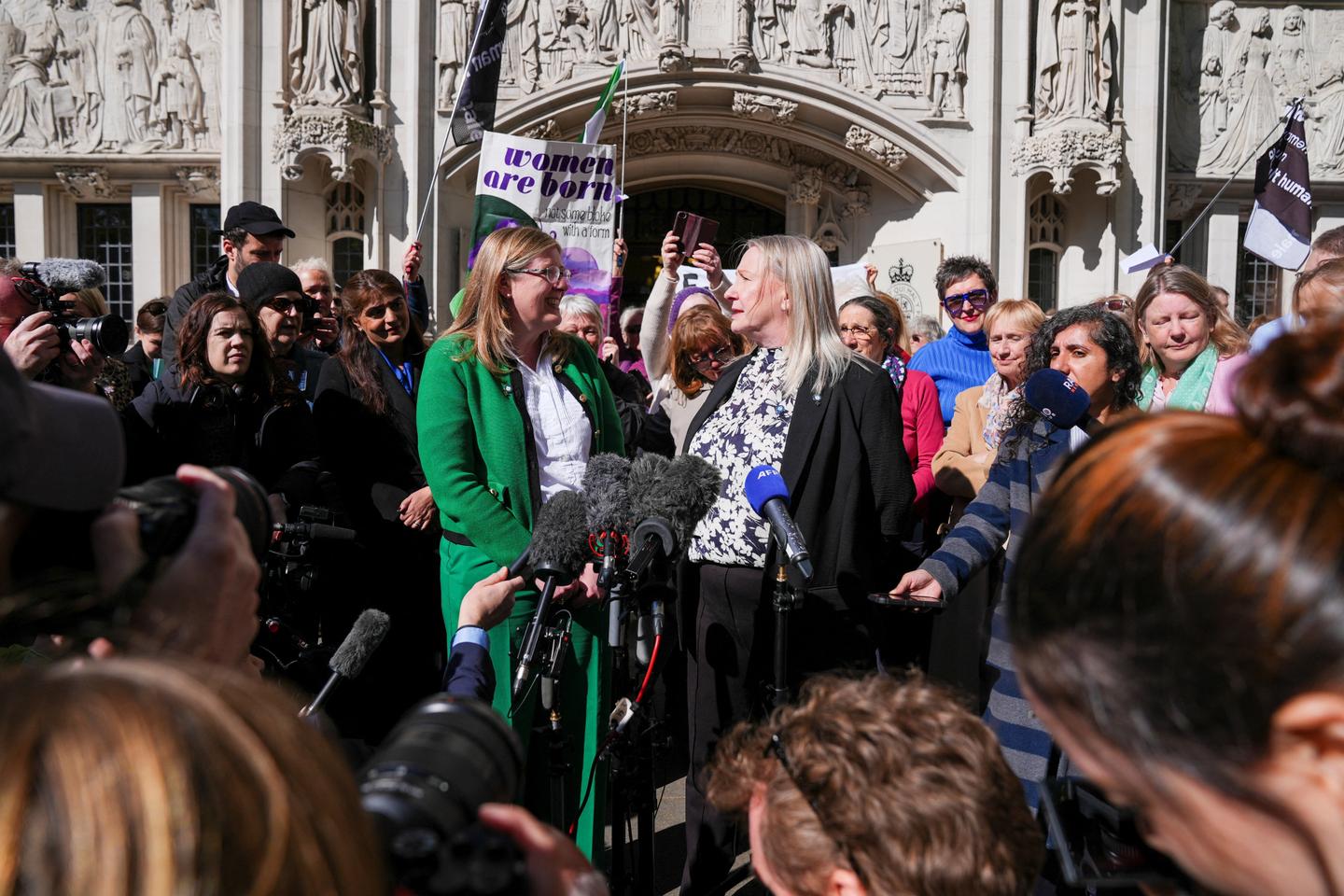
On April 16, 2025, a pivotal moment in the women’s rights movement unfolded outside the British Supreme Court in London. Founders of For Women Scotland, Susan Smith and Marion Calder, stood proudly before a throng of supporters, celebrating their hard-fought victory against the Scottish government regarding the legal definition of a woman. With radiant smiles and the Scottish anthem “Auld Lang Syne” echoing in the air, these activists embodied the spirit of perseverance and determination that characterized their five-year legal battle.
The Supreme Court’s Historic Ruling
The Supreme Court’s decision came as a significant shift in the ongoing debate about gender and biological sex. The court ruled that the legal definition of a woman is rooted in biological sex rather than gender identity. This ruling effectively overturned the previously accepted interpretation that allowed transgender women with gender recognition certificates to be classified as women, granting them access to women-only spaces, such as restrooms, changing rooms, and prisons.
The implications of the court’s decision are substantial. Critics of gender theory, including the founders of For Women Scotland, argue that biological realities must be acknowledged in discussions surrounding gender. Susan Smith articulated this sentiment: “We have shown that the distinction between gender identity and biological sex is not just a matter of opinion; it is a matter of law.”
The Background of the Legal Challenge
The legal challenge began years earlier, when activists from For Women Scotland sought clarity on the interpretation of the 2010 Equality Act. The act, which aimed to eliminate discrimination, had not explicitly defined what constituted a woman, leading to varying interpretations. The ambiguity allowed for contentious debates that divided public opinion and threatened the safety of women in single-sex spaces.
For the founders, the ruling was not merely a personal triumph but a critical stand for women’s rights. The decision is also considered a safeguard against what they believe are the misguided implications of a gender identity ideology that, in their view, undermines women’s rights and protections.
Public Reaction and Support
The reaction to the ruling has been mixed, reflecting the polarized views surrounding gender issues in modern society. Supporters, such as members of the suffragette movement, celebrated the decision as a victory for “common sense” and women’s rights. The colors of the suffragettes—purple and green—were prominently displayed at the celebration, symbolizing the ongoing struggle for women’s voices to be heard and respected.
However, opponents of the ruling, particularly within the LGBTQ+ community, expressed outrage and disappointment. Many believe that this decision could lead to increased discrimination against transgender individuals and further marginalization of their rights.
The Broader Implications for Gender and Identity
This ruling underlines a significant debate about the intersection of gender and identity in modern legislation. As society continues to evolve in its understanding of gender, the implications extend far beyond legal definitions. Many experts believe this ruling could have far-reaching consequences across various sectors, including healthcare, education, and public policy.
As discussions about gender identity intensify, it raises essential questions: Should biological sex have precedence over gender identity in defining rights? What are the implications for transgender individuals navigating laws that are increasingly at odds with their personal identities?
Looking Ahead: A Call for Rational Discourse
While the Supreme Court’s ruling provides clarity on the legal definition of a woman, it also underscores the importance of rational discourse in addressing complex issues. Moving forward, advocates from all sides must prioritize respectful dialogue, focusing on common ground and mutual understanding rather than division.
As advocates for women’s rights continue their fight for recognition, they must also remain cognizant of the rights and experiences of all individuals. The challenge lies not only in defining laws but in ensuring that human rights are upheld in a manner that is fair and just for everyone.
The Foundations of Advocacy
Susan Smith and Marion Calder’s victory serves as a reminder of the necessity for dedicated advocacy in the realm of women’s rights. Their relentless efforts have opened up avenues for further discussion and legislative action on the complexities surrounding gender and sex. Ultimately, such activism can pave the way for more inclusive dialogues that respect the dignity of all individuals.
As the conversation surrounding these pivotal issues continues, it’s crucial to remember that the essence of advocacy lies in its ability to adapt and respond to societal needs while remaining steadfast in the pursuit of justice and equality. Only through collaboration can a path forward be charted, one that honors both biological realities and the rich tapestry of human identity.