
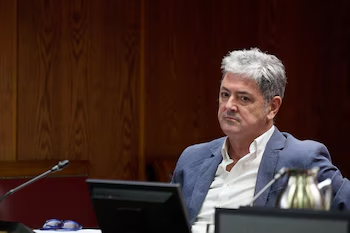
Overview of the UCO’s Investigation
The Central Operational Unit (UCO) of the Civil Guard has intensified its operations recently, leading to the arrest of Antxon Alonso, a businessman linked to Servinabar. This arrest is part of an ongoing investigation led by the National Court concerning alleged corrupt practices, particularly public works “bites” in the Koldo case. Alonso’s close ties to Santos Cerdán have drawn significant attention to the case.
Details of the Arrest
Alonso is the third individual taken into custody in a broader investigation that saw earlier arrests, including that of Leire Díez and Vicente Fernandez, the former head of the State Society of Industrial Participations (SEPI). These arrests were conducted following new developments within the case, which has garnered media coverage from outlets like ABC and the Basque newspaper.
According to reports, searches are being carried out in major cities such as Madrid, Seville, and Zaragoza, specifically targeting companies affiliated with Servinabar. The UCO has indicated that the integrity of public contracts is under scrutiny, though details about the case remain largely under wraps due to ongoing proceedings.
Legal Proceedings and Accusations
The investigation is spearheaded by the Central Court of Instruction No. 6, presided over by Judge Antonio Piña. The inquiry operates under summary secrecy, involving the Anti-Corruption Prosecutor’s Office to probe suspicious public contracts. The nature of the accusations primarily involves bribery and influence peddling, particularly concerning the actions of Leire Díez, who was reportedly involved in negotiations for judicial advantages in exchange for sensitive information.
The Wider Implications of the Case
Significantly, the investigation is not isolated. It is part of a larger framework scrutinizing potentially corrupt practices involving high-profile political figures. The Madrid Provincial Prosecutor’s Office has requested that additional investigations take place, particularly concerning possible attempted bribery involving prosecutors known to have a history with corruption cases.
The focus on Díez’s alleged coordinated efforts to gather compromising data on judicial investigators raises concerns about systemic corruption and the potential for obstruction of justice. The implications of these revelations could extend beyond individual accountability, affecting public trust in governmental and judicial institutions.
Conclusions
As the UCO continues its investigation, the outcome may have lasting repercussions for the individuals involved and the broader landscape of public governance. The ongoing nature of the case means that further developments are eagerly anticipated by both the public and media, highlighting the critical importance of transparency in addressing corruption. The simultaneous investigations underscore a growing demand for accountability and ethical standards within both businesses and public offices.
This evolving story will undoubtedly remain in the public eye as new information becomes available.