
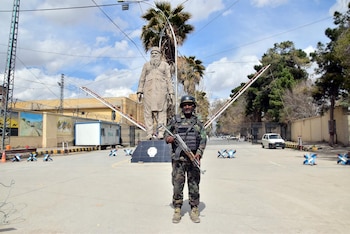
At least two soldiers have lost their lives during a military operation targeting alleged terrorists in Mastung district , located in the province of Baluchistan , Pakistan. This area, close to the border with Afghanistan , has been under heightened tension due to increasing security threats.
According to the Inter-Services Public Relations (ISPR) , the military’s media wing, security forces initiated operations in the region following intelligence reports indicating the presence of terrorists affiliated with an Indian group . In a fierce confrontation, the troops engaged the “position” of the attackers, succeeding in eliminating three terrorists . However, this operation came at a steep cost: two soldiers, aged 31 and 22 , were killed, including a commander who played a significant leadership role.
The military’s statement conveyed condolences to the families of the fallen soldiers, while emphasizing ongoing anti-terror efforts in the region. “We are currently conducting a cleaning operation to eradicate any remaining terrorists sponsored by India in the area,” the communiqué asserted. The message was clear: Pakistan’s military is unwavering in its commitment to combat terrorism and restore stability.
The recent spike in violence in Pakistan, particularly in Baluchistan, has raised alarms. Various groups, including the Tehrik-i-Taliban Pakistan (TTP) , known as the Pakistani Taliban, as well as separatist factions such as the Baloch Liberation Army (BLA) , have been responsible for numerous attacks. These groups are primarily fighting for greater autonomy or complete independence for the province, thereby complicating the security landscape.
The Balochistan region has always been a complex area marked by ethnic tensions, a quest for autonomy, and competition for resources. Pakistan has been striving to maintain security amidst these challenges. Government forces have been actively engaged in military operations against various militant groups, but the ongoing confrontations lead to losses on both sides.
Baluchistan is rich in natural resources and has strategic importance for Pakistan due to its geographical location. However, these assets have often been a source of conflict, not just with separatist groups but also concerning the interests of foreign nations. The international community has been closely monitoring developments in Baluchistan, as events in this region may have far-reaching implications for wider regional stability, especially given the Afghanistan border proximity.
The Pakistani government’s strategy has included not only military action but also socio-economic initiatives aimed at addressing the root causes of discontent among the local population. Investment in education, healthcare, and infrastructure is critically needed to promote stability. However, the immediate threat posed by militant groups often overshadows these long-term efforts.
The international community is also watching closely as Pakistan navigates its complex security landscape. Political analysts suggest that continued instability in Baluchistan might lead to an increase in violence in other areas of Pakistan or could potentially draw foreign intervention. Countries allied with Pakistan have called for a concerted effort to stabilize the region, but challenges remain daunting.
As the nation mourns the loss of its soldiers, the Pakistani military remains steadfast in its resolve to guard against the rising tide of terrorism . The commitment to improving security in Baluchistan is paramount, not just for the sake of national integrity but also for ensuring a better future for its residents. During times of adversity, unity becomes crucial, and the sacrifices made by the military personnel remind the nation of the ongoing fight against extremism.
With crucial operations underway, the onus lies on both the authorities and the local communities to engage collaboratively in restoring peace and stability. Future success hinges on addressing the underlying grievances alongside strict security measures, as this multifaceted approach is essential in securing a safer environment for all.