
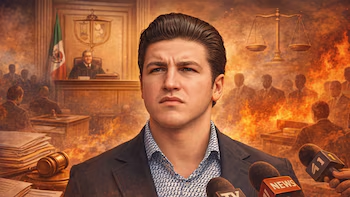
Reactivation of Political Trials Against Samuel García
The Anti-Corruption Commission of Nuevo León is set to reactivate two political trials against Governor Samuel García after over a year of stagnation in the local congress. This decision is based on resolutions from the Electoral Tribunal of the Judicial Branch of the Federation (TEPJF) and aims to resume processes suspended due to political disagreements.
Background of the Trials
The files concerning the political trials were initially analyzed in November 2024 and revisited in February 2025, only to be frozen subsequently. Armida Serrato Flores, the president of the Anti-Corruption Commission, believes that the current political climate allows for the continuation of these processes. A session has been scheduled for Monday at 1:00 p.m. to advance legislative opinions regarding the trials.
Details of the Accusations
The trials focus on two primary allegations:
Misuse of Power in the Electoral Process: This includes Governor García’s alleged interventions during the federal electoral process, which the TEPJF ruled as conferring an undue advantage to candidates Luis Donaldo Colosio Riojas and Martha Herrera.
Promotion of a Controversial Raffle: The second trial concerns the promotion of a Cybertruck raffle, allegedly tied to the presidential campaign of Jorge Álvarez Máynez.
Serrato Flores confirmed that both cases have received prior electoral authority resolutions and are now proceeding under the guidelines set out by the State Impeachment Law.
Current Landscape of Investigations
Currently, there are 19 impeachment files against Governor García, with the Anti-Corruption Commission indicating that only two are ready to advance. Concurrently, the Attorney General’s Office (FGR) is investigating allegations of operations involving illicit resources connected to Garcia, suggesting a much broader scope of scrutiny against him.
Political Reactions
The political climate surrounding these trials is highly charged. Legislators from the Morena party have expressed their support for the investigations led by the FGR. They have indicated a willingness to pursue impeachment not only against García but also against his wife, Mariana Rodríguez, if substantial evidence emerges.
Conversely, leaders from the Citizen Movement party, including Sandra Pamanes, have dismissed the allegations as lacking sufficient material to move forward. She described the situation as a “media show,” questioning the motivations of political adversaries in pursuing the trials.
Conclusion
As the Congress of Nuevo León braces for potential legislative disputes surrounding Samuel García, the pressure mounts amid ongoing federal investigations and escalating allegations of corruption. The reactivation of these political trials serves as a pivotal moment in the intersection of law and politics in the region, igniting discussions about accountability, governance, and the role of political motivations in legislative actions.
With the political landscape rapidly evolving, the outcomes of these trials could have significant implications for the governance of Nuevo León and set a precedent for how political accountability is managed in the state.