
The Impact of U.S. Tariffs on Global Economic Growth
The tariffs imposed by former President Donald Trump on various international partners have far-reaching consequences for both American and global economies. The Organisation for Economic Co-operation and Development (OECD) recently warned that these trade sanctions will significantly hamper growth in the United States and worldwide. This commentary came during a recent conference held in Paris, where ongoing trade negotiations between American and European representatives also took center stage.
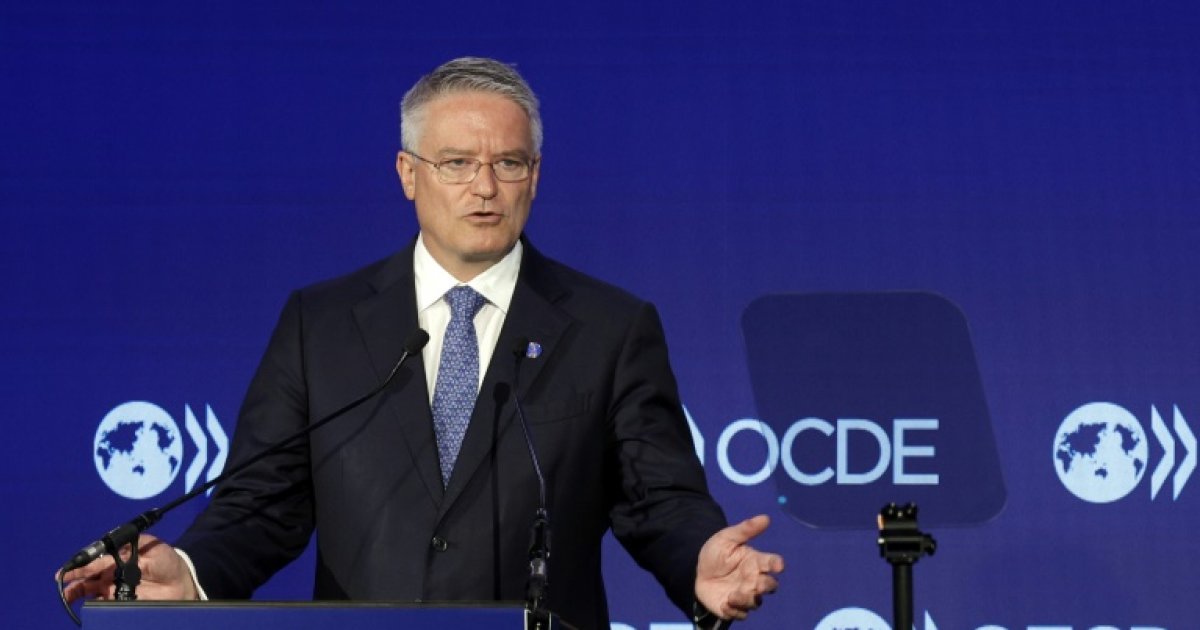
At a press conference, OECD Secretary-General Mathias Cormann acknowledged that the global economic environment has become significantly more challenging. "We have revised downward the growth forecasts for nearly every economy in the world," said Alvaro Pereira, the chief economist of the OECD. The organization, which comprises 38 advanced economies, is keenly aware of how the tariffs are reshaping trade dynamics.
Recent Developments in Trade Negotiations
On the agenda for this week is a series of ministerial meetings in Paris, where American Trade Representative Jamieson Greer and European Trade Commissioner Maros Sefcovic are expected to engage in discussions about the existing tariffs. It’s pivotal for both sides to reach an agreement, particularly with a potential doubling of U.S. tariffs on imported steel and aluminum looming on the horizon. Katherina Reiche, Germany’s Minister of Economy, emphasized the urgency of finding negotiated solutions, noting that "time is of the essence" given the circumstances.
The Ripple Effects of U.S. Trade Policies
Upon returning to the White House in January, this administration initiated a drastic overhaul of trade policies, characterized by inconsistent announcements and abrupt changes. This has fostered a climate of uncertainty that has left businesses uncertain of their next moves. As noted by the OECD, the economic activity had experienced a brief surge at the end of 2024 and early 2025 as companies scrambled to stockpile supplies before these tariffs took effect. However, caution is now advised as concerning signs emerge regarding future economic performance. A sharp drop in maritime shipping rates between Shanghai and the U.S. serves as one of the indicators of an impending economic downturn.
The effective tariff rate on imported goods in the U.S. rose significantly, climbing from 2% to 15.4% in May—the highest it has been since 1938, according to the OECD. This change indicates a substantial shift in American trade policy that could have lasting effects on global markets.
Projected Economic Growth and Challenges Ahead
The OECD forecasts a slowdown in global growth, expecting it to increase by just 2.9% this year and next, which represents a decline from previous estimates. Such growth rates would mark the lowest annual growth since the onset of the global Covid-19 pandemic. Simultaneously, U.S. growth is anticipated to "significantly slow," with GDP projections for 2025 dropping from 2.2% to 1.6%—a trend likely to continue into 2026.
Minister Laurent Saint-Martin, the French delegate for foreign trade, reiterated the sentiment that the implemented tariffs do not serve the interests of anyone, particularly not the American economy. According to the OECD, not only is the trade war a significant concern, but factors such as a decrease in net immigration and an impending reduction in federal government personnel could further undermine American economic performance.
The Domestic Vantage Point of Tariffs
Despite widespread concerns, President Trump proclaimed on his social media platform that "our economy is booming thanks to tariffs." This sentiment starkly contrasts with the warnings issued by economic experts and institutions like the OECD. They predict that inflation in the United States will remain elevated, with estimates set at 3.2% for this year and 2.8% for the following year—approximately one percentage point higher than that of the Eurozone.
The current trade landscape highlights a tension between political discourses that celebrate America’s economic independence and the palpable reactions from the global market, where partnerships are being strained under the weight of tariffs. As the world watches keenly, the hope remains that negotiated solutions can be found in the near future, curtailing the negative impact projected by the OECD and restoring a more stable economic environment.
In conclusion, the ongoing trade negotiations and the impact of tariffs are crucial issues shaping the future economic landscape. Both American and global stakeholders must find a path toward cooperation to mitigate the adverse effects of these policies. As economic indicators suggest challenging times ahead, the need for strategic dialogue has never been more pressing.