
Trump’s Middle East Controversy: A Deeper Look
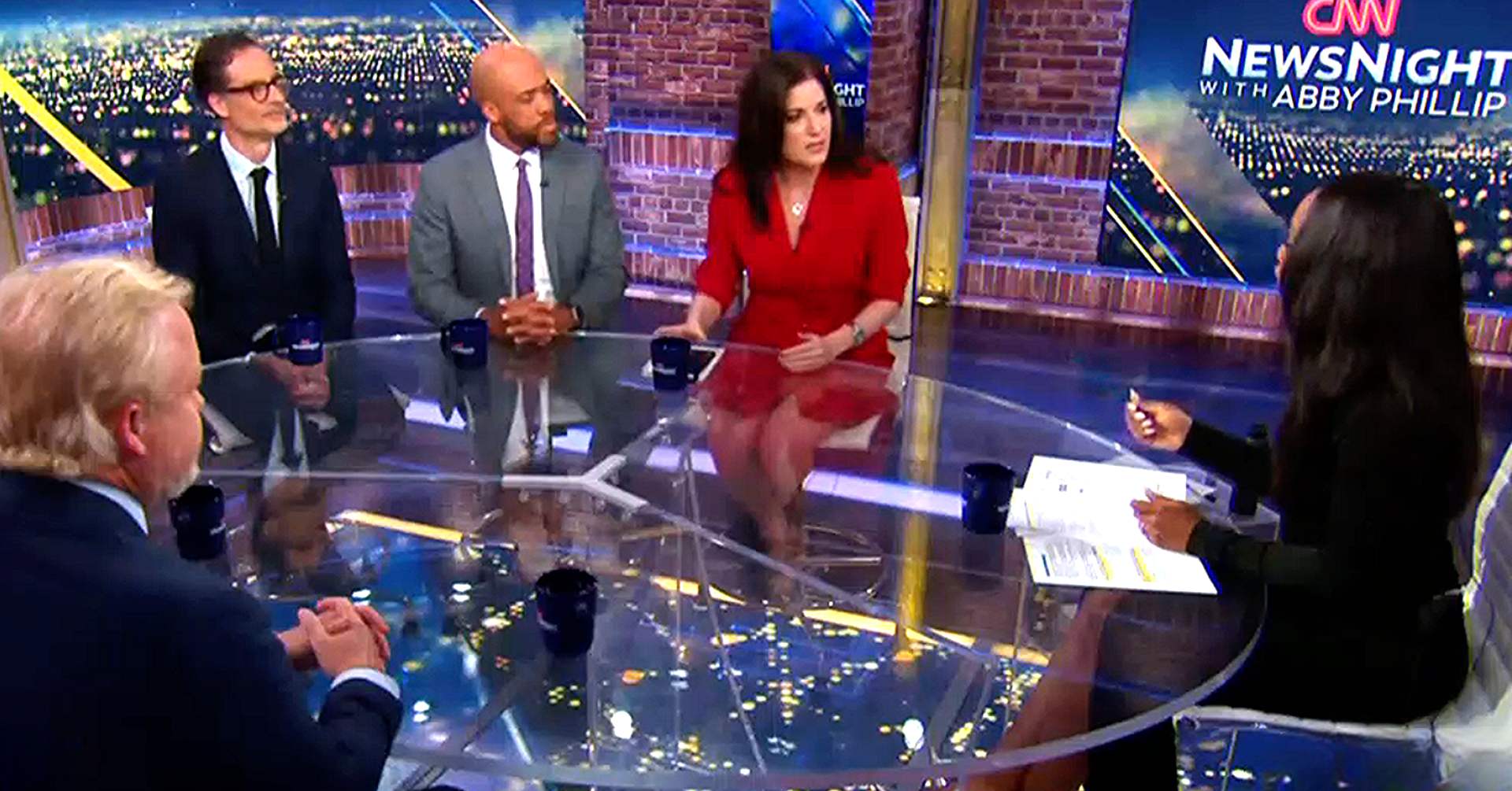
Recent remarks by prominent Trump supporter Batya Ungar-Sargon have sparked discussions surrounding President Donald Trump’s controversial dealings, including a reported $400 million gift in the form of a lavish jet. During a recent episode of CNN NewsNight, Ungar-Sargon referred to this jet as a “bribe,” raising eyebrows and questions about the implications of such a statement.
The $400 Million Gift Jet: A Symbol of Corruption?
As Trump embarks on a four-day tour through the Persian Gulf, including stops in Saudi Arabia, Qatar, and the United Arab Emirates, controversy continues to swirl around the so-called “flying palace” from Qatar, designed to function as Air Force One. This extravagant gift has raised questions about the ethics and potential conflicts of interest associated with such a luxurious acceptance by a sitting president.
On the show, Ungar-Sargon made the bold claim, stating, “I don’t think there’s such a thing as a $400 million gift. It’s a bribe.” She further noted that while she does not believe Trump would act in exchange for this lavish present, she implied that the Qatari government expects returns on their investment, thus framing it as a clear-cut case of corruption.
Defending the Crypto Deal: Double Standards Unveiled
In stark contrast, Ungar-Sargon’s defense of a separate $2 billion cryptocurrency deal involving Trump’s family business, World Liberty Financial, leaves many puzzled. The company recently saw its USD1 currency selected by the state-owned MGX of the UAE for a significant investment in the digital currency exchange Binance.
While addressing the cryptocurrency deal, she attempted to connect it to unproven allegations against former President Joe Biden. When moderated by CNN’s Abby Phillip, Ungar-Sargon asserted that “politicians have a certain level of corruption across the board.” She implied that such behaviors are normalized within the political landscape, thus rationalizing Trump’s actions.
Corruption in American Politics: A Bipartisan Reality
Throughout the discussion, a central theme was the normalization of corruption in American politics. Ungar-Sargon challenged the panel to scrutinize their biases, suggesting that both sides of the political aisle have differing standards when evaluating unethical behavior. She outright rejected the notion that Trump’s approach to governance was qualitatively worse than that of the Biden administration.
When pressed about her feelings regarding Trump’s actions with the jet, Ungar-Sargon stated she was “very mad about the plane” but showed a surprising lack of concern over the implications of the cryptocurrency deal. This inconsistency highlights the complexities and potential double standards that often exist among political supporters.
Political Polarization and Public Perception
The dialogue on CNN unveiled a stark reality: the public’s perception of political corruption tends to vary, contingent upon party affiliation. Supporters, regardless of their party loyalty, often display a psychological bias that protects their favored politicians while harshly critiquing their opponents. Ungar-Sargon’s comments encapsulated this phenomenon.
When asked directly about her feelings towards Trump’s actions, she resisted attributing any personal outrage to his crypto dealings. Instead, she insisted that political corruption is something Americans have come to accept as part of the systemic landscape. This acknowledgment raises important questions about accountability in governance and the ease with which people can overlook ethical breaches, depending on their political beliefs.
The Broader Implications of Trump’s Actions
The implications of both the $400 million jet and the cryptocurrency deal extend beyond just financial transactions. They raise vital ethical questions about the influence of foreign money in American politics and the standards to which politicians should be held. As the landscape changes rapidly, ensuring transparency and ethical governance remains crucial for maintaining public trust.
Critics have pointed out that Trump’s administration has blurred lines that should clearly delineate between personal gain and public service. The concerns surrounding foreign influences and the ethical implications tied to wealth accumulation cannot be understated and directly impact the foundation of American democracy.
Engaging in the Future of Political Accountability
As discussions like those on CNN NewsNight continue, they underline the necessity for an informed and engaged electorate. It is crucial for citizens to hold their leaders accountable, regardless of political affiliation. The discourse surrounding Trump’s actions serves as a reminder that ethical governance should not be a partisan issue.
Moving forward, it is essential for political commentators, journalists, and voters to critically examine how we define corruption and our responses to it. The financial dealings of political figures must be scrutinized to maintain the integrity of democratic institutions.