
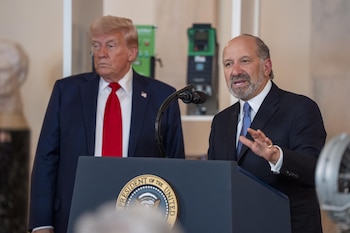
The president of the United States, Donald Trump , has recently made headlines by threatening countries that align with what he describes as “anti-American policies” of the BRICS nations. The leaders of Brazil, Russia, India, China, and South Africa convened in Rio de Janeiro, Brazil, and have collectively condemned the use of sanctions and tariffs as political tools.
In his announcement, Trump stated, “Any country that is aligned with the BRICS anti-state policies must pay an additional 10% tariff . There will be no exceptions to this policy.” This declaration underscores the increasing tension between the United States and these emerging economies, as they seek to bolster their influence in the global arena.
The leaders of the BRICS nations have voiced concerns that such measures risk dipping the global economy into recession or prolonging weak growth. The statement reflects a growing unease among countries that have long held differing views on international trade and economic policies. Furthermore, BRICS members emphasize their refusal to support sanctions that lack authorization from the UN Security Council .
Prior to these statements, Trump had previously issued threats of imposing tariffs as high as 100% on BRICS countries should they abandon the U.S. dollar as the reference for international trade. This threat was not seriously entertained by the BRICS leaders during their meetings in Rio.
In a bid to reinforce his tariff strategy, Trump also announced that he would dispatch tariff letters to several nations. This announcement comes just 48 hours before the expiration of a 90-day extension related to the “reciprocal taxes” imposed by his administration as part of pre-trade negotiations.
In his social media posts, Trump expressed confidence that “most countries will have reached an agreement before July 9.” He also noted, “We have also made deals, so we will have a combination of letters and some agreements have been made,” as reported by Bloomberg news agency. This gives an indication of the U.S. administration’s ambivalence towards its allies and the overall economic landscape.
Further details emerged as U.S. Secretary of Commerce Howard Lutnick confirmed that these tariffs would take effect on August 1. This announcement has created a stir among U.S. partners, suggesting a significant shift in tariffs—creating uncertainty in global markets. According to Lutnick, “Tariffs enter into force on August 1, but the president is establishing rates and agreements at this time.”
Moreover, U.S. Treasury Secretary Scott Besent remarked during a CNN interview that the “next 72 hours will be agitated.” He added that countries receiving the letters will be informed of the implications if they fail to expedite negotiations. “On August 1, you will return to its tariff level on April 2,” he explained, emphasizing the seriousness of the situation.
The U.S. administration’s confrontational stance towards BRICS signals a pivotal moment in international relations, particularly regarding trade and economic policies . As nations navigate these turbulent waters, the implications of these tariffs could resonate far beyond the immediate parties involved.
With increasing globalization , the intricate web of interdependence among nations makes it imperative for leaders to engage in constructive dialogue rather than resorting to punitive measures. The repercussions of failing to foster international cooperation may lead to adverse effects that ripple through economies worldwide.
Ultimately, the evolving dynamics between the United States and the BRICS nations will serve as a litmus test for diplomacy in an increasingly fragmented global order. The decisions made in the coming weeks will not only affect bilateral relationships but also the broader economic landscape, influencing markets and trade patterns globally. The world watches closely as these nations navigate complex trade relationships that may redefine global economics for years to come.