
Trump’s Leadership Style: A Comparison to Alcoholism
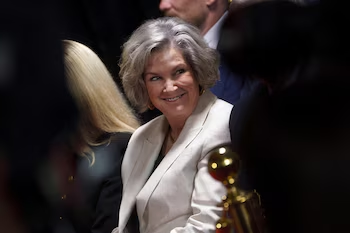
In recent revelations, Susie Wiles, a key figure in Donald Trump’s administration, has likened the former president’s personality to that of an alcoholic. This comparison not only shapes perceptions of Trump’s leadership but also raises crucial concerns about governance during his presidency.
Attention on Official Records and Bad Practices
Recent official records have documented at least 90 deaths related to operations supervised by the U.S. government in Latin America. This alarming figure has galvanized public attention and calls for a thorough review of intervention strategies. Wiles has advocated for independent audits to evaluate the effectiveness and transparency of these anti-drug operations. Her push for transparency showcases a critical debate around the legitimacy of U.S. policies in Latin America.
The Impact of Wiles’ Claims
Wiles’ controversial statements, particularly the analogy linking Trump to alcoholism, have opened a Pandora’s box of discussions regarding his leadership capabilities. Drawing from her personal experiences with addiction in her family, Wiles has highlighted concerns about the internal management of the Trump administration. Her observations have intensified scrutiny not only of Trump but also of the executive competence of those surrounding him, raising doubts about the overall stability of his leadership.
Immigration Policy and Public Trust
Wiles’ influence extended beyond international affairs; she also played a significant role in shaping immigration policy. Reports indicate she pushed for reforms in the deportation protocols for detainees, advocating for a system that prioritizes those with verified criminal histories. Wiles warned that mismanagement in this area could undercut public trust and damage the federal government’s credibility, amplifying her concerns about governance during Trump’s tenure.
Internal Tensions and Governance Challenges
Vanity Fair’s analysis reveals an administration marked by internal turmoil and strategic disagreements. Wiles’ proposals often led to intense cabinet discussions, particularly regarding sensitive subjects such as immigration and international security. The friction within Team Trump has exposed fundamental questions about the effectiveness of decision-making processes, potentially compromising the administration’s ability to govern efficiently.
Broader Implications of Wiles’ Observations
While Wiles drew attention to Trump, her critique extended to other administration officials. Her assessments of figures like JD Vance and Russell Vought reveal insights into the ideological divides within the White House. Furthermore, Wiles expressed concerns over Elon Musk’s alleged drug use, emphasizing the challenges in maintaining coordination among executive officials.
Trump’s Response and Public Perception
In response to Wiles’ claims, Trump acknowledged a propensity at times to exhibit behaviors associated with addiction. His statement, “I don’t drink alcohol, but if I did, I’d be very likely to be an alcoholic,” has been interpreted as an unintentional affirmation of Wiles’ comparison. This confession has deepened public inquiries into Trump’s psychological profile and emotional health during his presidency.
Conclusion: The Legacy of Trump’s Administration
The revelations surrounding Wiles’ statements and the ensuing controversies shed light on the internal dynamics of Trump’s administration. Calls for audits and transparent practices highlight a growing demand for accountability in governance. As opinions continue to evolve regarding the effectiveness and ethical implications of Trump’s policies, the discussion remains relevant in the context of his administration’s lasting legacy.
The interplay of personal experiences, public policies, and internal relationships offers a nuanced understanding of the complexities involved in leading a nation, with Wiles’ observations serving as a critical lens into Trump’s presidency.