
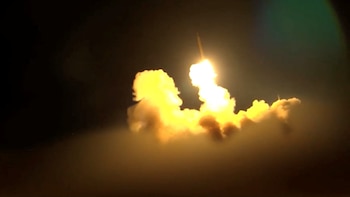
The High-Stakes Nuclear Negotiations: An Analysis of U.S.-Iran-Israel Dynamics
(Desde Jerusalén, Israel) At the epicenter of escalating tensions in the Middle East, the U.S. , Israel , and Iran are engaged in a complex web of diplomatic maneuvering, military posturing, and nuclear negotiations. Donald Trump and Benjamín Netanyahu are collaborating closely, aiming to thwart Iran’s nuclear ambitions while navigating an increasingly hostile geopolitical landscape.
The Iranian regime remains adamant about maintaining its uranium enrichment capability , which it argues is essential for developing a nuclear bomb. “Enrichment to zero is impossible,” stated Abbas Araqchi , Iran’s Foreign Minister, reinforcing Tehran’s determination. He declared this capability not merely scientific but also a source of national pride .
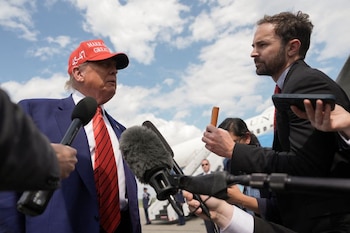
These statements complicate the fragile negotiation framework that President Trump has put forth, offering a ceasefire in exchange for renewed dialogue. “Iran must abandon its aspirations to continue enriching uranium,” Trump asserted at an informal press conference, further emphasizing skepticism about Iran’s claims of pursuing nuclear energy for peaceful purposes . He questioned, “They are sitting on one of the largest oil reserves in the world. I simply do not understand why they need (uranium) for civilian use.”
The media confrontation between Araqchi’s remarks and Trump’s statements underscores the current stalemate in U.S.-Iranian diplomatic relations, primarily as there appears to be a lack of common ground between Tehran’s objectives and Washington’s strategic ambitions.
Additionally, a challenging military offensive by Israel against Iran adds another layer of complexity to these negotiations. For over a week, Israeli forces have targeted key assets in Iran, with the Pentagon providing intelligence, fuel supplies, and naval support in the Persian Gulf .
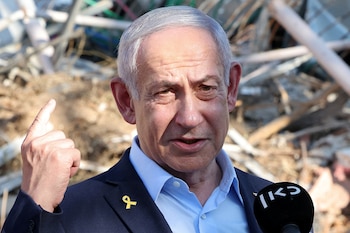
Netanyahu has orchestrated this military offensive , which Trump supports. Araqchi has stated that Iran will not engage in any negotiations until Israel halts its aerial assaults. “Iran is willing to consider diplomacy again, but only after the aggression stops and the aggressor is held accountable for its crimes,” he emphasized.
In effect, Iran is seeking a tacit cessation of hostilities with Israel to foster negotiations that, at present, do not align with U.S. and Israeli expectations. In response to Araqchi’s declaration, Trump dismissed Iran’s demands, stating, “I think it is very difficult to make that request right now if someone is winning.” He further articulated that “it’s hard to stop when you look at the situation: Israel is doing well in terms of warfare. Iran is doing less well, and it’s tough to get someone to stop.”
Shortly after Trump and Araqchi exchanged statements, the Israeli Defense Forces (IDF) launched a direct attack on Iranian positions to solidify their geopolitical stance on dismantling the nuclear project led by the ayatollahs.
This offensive was supported by Pentagon intelligence and fuel supplies for Israeli aircraft, which have traveled 2,100 kilometers to launch airstrikes on Iranian territory. As dawn broke in the Middle East, nearly 50 Israeli fighter jets targeted the nuclear facilities in Isfahan , eliminating Aminpour Joudaki , a commander of the Iranian Revolutionary Guard leading the second brigade of unmanned aerial vehicles (UAV) .
In the backdrop of these developments, Washington and Jerusalem remain coordinated in their actions, leaving Iran with few options beyond seeking diplomatic recourse to influence decisions emerging from the Trump-Netanyahu alliance. Araqchi recently met with counterparts from France, the United Kingdom , and Germany in Geneva, in a bid to find a way out of the geopolitical encirclement the U.S. and Israel have created.
The meeting yielded minimal results, with Trump asserting, “Europe won’t be able to help in this.” Following this, Araqchi headed to Istanbul (Turkey) to engage with ministers from the Arab League , where he aims to reiterate a diplomatic position previously rejected by both Trump and Netanyahu.
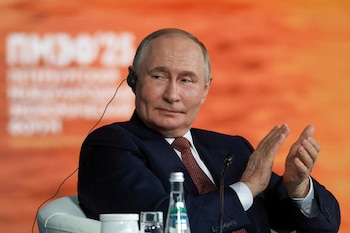
The unfolding narrative continues as Araqchi prepares for a trip to Moscow to meet with Vladimir Putin . The Russian President, in communication with both Trump and Netanyahu, understands how the U.S. and Israel are navigating the complexities surrounding Iran’s nuclear initiative.
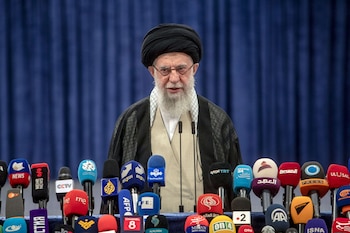
The diplomatic and military coordination between Trump and Netanyahu indicates that Iran should accept a negotiation table to terminate its nuclear initiative. Meanwhile, the Israeli Defense Forces are set to continue striking Iran’s nuclear facilities, disrupting its military-industrial system. If Ali Khamenei , Iran’s religious leader, does not concede to dismantling his nuclear initiative within 12 days, it is likely that the Pentagon will deploy B-2 bombers and bunker-busting bombs to destroy the Fordow facilities.
Fordow, situated 90 meters beneath the mountains, represents a critical hub for Iran’s uranium enrichment program, aimed at developing at least ten nuclear bombs. For Tehran, the options are stark: negotiate with the White House to dismantle its nuclear initiative or risk a combined airstrike from the U.S. and Israel aiming to obliterate the nuclear threat posed by the ayatollahs.