
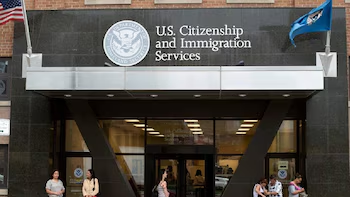
Trump Administration Lawsuit over DACA Renewal Delays
The Trump administration is currently facing a lawsuit regarding delays in the renewal of the Deferred Action for Childhood Arrivals (DACA) program. These delays have left many beneficiaries without work permits, effectively making them unemployed and increasing their vulnerability to deportation.
Understanding DACA
The United States Citizenship and Immigration Services (USCIS) states that DACA is designed for individuals who migrated to the U.S. as children, allowing them to request deferred action for a duration of two years, with the option for renewal. However, recent data reveals that the average processing time for renewals has surged, reflecting significant delays that have impacted thousands of recipients.
The Lawsuit Details
Filed on June 25 in the Northern District of California, the legal action targets both Immigration and Customs Enforcement (ICE) and USCIS. The Justice Action Center, along with the East Bay Sanctuary Covenant and the Immigration Institute of the Bay Area, initiated the suit due to persistent delays that have left many beneficiaries in limbo.
Organizations behind the lawsuit raised concerns after submitting information requests on May 7, seeking to understand the reasons behind the unprocessed renewals from October and November. Having received no responses by June 5, they moved forward with the lawsuit to compel the federal government to provide clarifications.
Rising Processing Times
The median processing time for DACA renewals has ballooned to 2.7 months in 2026, a stark increase from 0.5 months in 2025, 1.8 months in 2024, and 1 month in 2023. Beneficiaries express their frustration, as the renewal process that used to take less than six weeks now involves waits of several months.
Impacts on Recipients
The ramifications of these delays are severe. Many DACA recipients, particularly those in critical professions, are unable to work while waiting for their renewal. Shiori Akimoto, who heads the immigration legal services program at East Bay Sanctuary Covenant, notes that the once-predictable renewal pattern has become “totally arbitrary.”
Hillary Li, a lawyer with the Justice Action Center, emphasized the profound effects these delays have on immigration status, job security, and family support. With some beneficiaries losing their protection against deportation, the stakes are exceptionally high.
The Role of the Department of Homeland Security
In a statement, the Department of Homeland Security (DHS) clarified that DACA beneficiaries are not automatically protected from deportation. Instead, it has reiterated that DACA does not confer legal status, and beneficiaries can face arrest and deportation if they have committed any crimes.
Recent Court Rulings
Recent court rulings have allowed current DACA recipients to maintain their deportation protections and work authorizations, provided they continue to meet the requirements. Furthermore, a recent decision by the Board of Immigration Appeals has mandated that DACA status cannot be solely used as a reason to suspend deportation proceedings.
Individual Stories of Hardship
The lawsuit highlights specific cases of individuals affected by the government’s inaction. For instance, a 26-year-old medical graduate found himself unable to start his anesthesiology residency due to pending renewal. In another case, Angel Ortega, a physical education teacher, is facing the possibility of losing his job after submitting a renewal request 110 days prior to his permit’s expiration without receiving a response.
These narratives underline the tangible struggles faced by DACA recipients and the pressing need for a resolution to the rising delays in the renewal process. As the case unfolds, the implications for both recipients and broader immigration policy are profound.