
The Key Injuries to Maradona’s Organs
Diego Maradona’s health has been under scrutiny following his untimely death. A recent testimony revealed critical findings from the forensic study of Maradona’s organs, highlighting severe conditions that had been affecting his health for some time.
The Damage to Maradona’s Heart, Lung, and Kidney
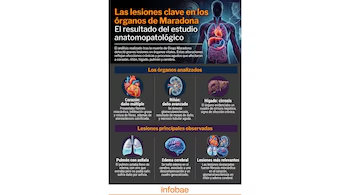
Piero’s witness provided crucial insights before the court regarding Maradona’s organ condition. He noted that the liver was suffering from cirrhosis, a serious liver disease. The kidney also showed significant damage, characterized by glomerulosclerosis, which develops slowly over months, and acute tubular necrosis, indicating rapid deterioration.
When discussing the heart, the expert stated that it exhibited several alarming conditions: fatty infiltration, rupture of myocardial fibers, and myocardial fibrosis—all chronic issues. Furthermore, he mentioned cholesterol deposits within the arteries and substantial changes in the heart’s electrical conduction system, indicating severe cardiovascular disease.
In terms of lung health, the expert described Maradona’s lung as a “lung of suffocation,” filled with edema preventing effective air exchange. Generalized edema in the brain was a further indication of severe health issues, suggesting a systematic failure of bodily functions.
The Analysis of Maradona’s Organs
The forensic examination was conducted by Silvana de Piero, who analyzed the extracted organ fragments. This meticulous study involved placing these samples in formaldehyde for detailed pathological examination. The analysis focused on vital organs, including the liver, kidney, lung, and heart, confirming numerous pathologies that contributed to Maradona’s deteriorating health.
The Time of Death
The coroner, Corasanitti, estimated that Maradona’s death likely occurred around midday on November 25, 2020. However, he acknowledged a margin of error of up to 12 hours, making precise determination challenging.
Maradona’s Heart Condition
During the examination of Maradona’s heart, the presence of intercavity clots was noted. These clots suggest prolonged agony and heart failure. Corasanitti explained that such clots develop over extended periods, indicating a lengthy decline in health leading to death.
The Cause of Death
The witness elaborated on multiple organ failures, mentioning bilateral effusion in the chest and various forms of edema throughout the body. He specifically pointed out that such generalized edema signifies heart failure, ultimately leading to Maradona’s demise.
“This Was Coming a Long Time Ago”
Corasanitti emphasized that signs of ascites, or fluid accumulation in the abdominal cavity, were present prior to Maradona’s death. He stated that the presence of more than three liters of ascites coupled with pericardial effusion was a long-standing issue, not something that could appear suddenly.
Forensic Insights into Maradona’s Abdomen
Additionally, Corasaniti insisted that the significant fluid observed postmortem was generated while Maradona was alive, contradicting claims that it was a result of postmortem changes. He outlined physical signs of edema that are uniquely indicative of certain conditions present in living individuals.
Through detailed forensic analysis, the picture of Maradona’s declining health is becoming clearer. The multiple organ failures not only highlight the severity of his medical condition but also the complex timeline leading to his tragic end.