

Overview of ICARUS
The ICARUS project, initiated by the Max Planck Institute, aims to monitor animal movements globally using satellite technology. After a hiatus due to geopolitical tensions related to the war in Ukraine, ICARUS recently made a significant leap forward by launching its own satellite, named RAVEN, into orbit. This development enhances the capacity to monitor wildlife more thoroughly, potentially yielding insights beneficial for understanding climate change and zoonotic diseases.
RAVEN Goes Into Action
RAVEN is the inaugural satellite of the ICARUS program. Previously, the project relied on a single receiver located on the Russian module of the International Space Station (ISS). The fallout in relations with Russia led to operations being halted. Instead of giving up, project leaders collaborated with TALOS, a New Space company, to miniaturize the system into a payload suitable for a CubeSat satellite.
In November 2025, an initial leap was made by placing the ICARUS receiver on a German satellite. Fast forward to May 2026, and they have further advanced by deploying their own satellite. This independent solution improves energy efficiency, utilizing only a fraction of the power that the ISS setup required.
A Legacy of Wildlife Observation
Historically, wildlife observation has evolved significantly. Initially, scientists would observe animals directly in their natural habitats. Then, camera traps revolutionized this field, although they had inherent limitations such as blind spots.
With advancements, transmitters that could be attached to animals were developed but required nearby antennas to capture their signals. Recognizing these limitations, scientists at the Max Planck Institute proposed using satellites for monitoring, allowing for extensive, simultaneous data collection globally.
The Upgradable Transmitter
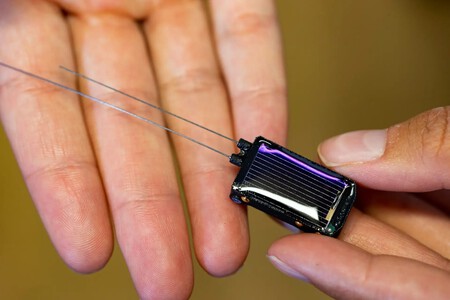
The ICARUS program employs two main technologies: animal-mounted transmitters and a space-based receiver. The transmitters currently in use weigh about 4 grams and are roughly the size of a euro cent coin. These solar-powered devices can withstand temperature fluctuations while remaining unobtrusive to the animals. However, scientists are striving to create even smaller, lighter transmitters for species like insects.
Evolution of the Receiver
The first ICARUS receiver was fitted onto the ISS in 2018, and it has undergone significant improvements since then. RAVEN represents a new era of satellite-based wildlife monitoring, providing a more efficient and effective way to gather data.
Diverse Applications
The implications of monitoring animal movements from space extend far beyond simply tracking migrations. Unusual shifts in migration patterns can indicate climate-related changes. Additionally, identifying the movement of animals associated with zoonotic diseases helps illustrate potential risk zones.
ICARUS is also leveraging its technology to combat poaching. If animals exhibit distress and flee unnaturally, it could indicate the presence of human threats. By training an algorithm, ICARUS scientists aim to preemptively detect poacher activity based on animal movement patterns.
Conclusion
The potential applications of ICARUS are vast, offering a unique and innovative approach to wildlife monitoring. With RAVEN in orbit, it stands as a silent guardian, continuously observing the world’s fauna without relying on traditional space station platforms.