
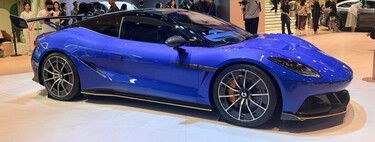
Electric Cars: The Future of Transportation
We are living in the future . The transition to electric cars and how this is being carried out will define our experiences in the coming years. In a rapidly changing political environment, stringent emissions regulations in Europe, and a Chinese market increasingly focused on domestic advancement, the investments made today and how we approach this future will be critical.
Predicting the design and evolution of traditional car brands over the next decade feels nothing short of risky. Stakeholders hold varying opinions on the trajectory of the automotive industry. Some argue that Tesla has reached its peak, while others contend that Chinese manufacturers are breaking new barriers — both economically and psychologically — for consumers. Meanwhile, Toyota , often seen as conservative, may be adopting the most prudent strategy moving forward.
On the flip side, advocates of Tesla fervently assert that the company has pioneered a revolutionary approach to vehicle design heavily reliant on software . Proponents of Chinese companies, like BYD, NIO, and Xpeng, believe it is only a matter of time before Europe embraces their offerings. This collection of differing opinions will ultimately shape our automotive landscape over the next decade and a half . The challenge, however, lies with companies like Toyota, who must navigate internal uncertainties and adopt new strategies to stay relevant.
Understanding the Software Dilemma
Recently, concerns have emerged within Toyota regarding its operational methodologies. During their collaboration with BYD in China, they realized that the latter company was making rapid advancements, implementing changes at a remarkable pace.
According to reports from Reuters, the effectiveness of Chinese companies lies in their practice of approving changes quickly, often before extensive testing has taken place. While European manufacturers traditionally require thousands of kilometers of testing before green-lighting modifications, their Chinese counterparts prefer to deploy innovations swiftly, making adjustments as necessary later in the development process.
This cultural disparity poses significant challenges for Toyota and other Japanese manufacturers. Consultants have warned that the traditional Kaizen approach — focusing on persistent improvement of existing vehicles — may no longer be effective in today’s fast-paced market.
Industry experts have advised Toyota to rethink their approach by designing electric vehicles from the ground up rather than merely converting internal combustion models into electric ones. This strategy could enable substantial savings and remove unnecessary components that do not translate into electric systems.
In a bid for innovation, Bloomberg reported that Toyota has engaged with Code Chrysalis, a tech startup based in Tokyo, to enhance its software capabilities. The company recognizes the paramount importance of software in future vehicle design, yet faces challenges in accelerating their transformation efforts.
Code Chrysalis is organizing intensive camps in Silicon Valley to improve the programming skills of Toyota employees
With announcements of new electric models and plug-in hybrids, Toyota confirmed that it is renewing its software infrastructure. The recent presentation of the Toyota RAV4 highlighted that it represents a significant step toward vehicles that are fully defined by software.
Reports in May from Financial Times showed Toyota’s increasing focus on software development, suggesting this element will become a critical purchasing factor, if it isn’t already. By closely observing innovations in China, Toyota aims to adapt and incorporate new ideas into their designs.
However, employees selected for these initiatives have expressed disappointment , feeling that the efforts may not be sufficient to match the pace of innovation required. The software development division has not been fully integrated into Toyota’s overall production chain, leaving many employees questioning the strategy’s effectiveness.
As highlighted in the reports from Bloomberg, the company appears to reward long-standing employees generously, adhering to a conservative philosophy that prioritizes labor harmony over calculated risks. This mindset has raised concerns about its adaptability in an increasingly electrified marketplace.

With a deeply engrained Kaizen philosophy , Toyota tends to be more conservative in its approach, emphasizing gradual improvements rather than new inventions. They consistently emphasize offering the right vehicle in the appropriate market, which has allowed them to maintain their position as the leading automotive manufacturer in terms of sales for over five consecutive years.
The looming question is whether, in a decade and a half, we will witness the first signs of Toyota’s stagnation or their strategic triumph in face of competitors who have rapidly embraced electric technology, often leaving themselves scrambling to adapt to new demands.
Photo | Toyota and BYD
In summary, the automotive industry is at a critical juncture. Companies like Toyota find themselves in a race not just against competitors but against time, requiring swift adaptation to thrive in an increasingly electric future.