
50 Years of Monarchy: A Divisive Commemoration
The 50th anniversary of the Spanish monarchy, marked by King Felipe VI’s leadership, has highlighted troubling schisms within both the Royal House and the Spanish political landscape. A significant absence looms large over the celebrations—Don Juan Carlos I, the previous monarch, notably distanced himself from official events, further strained by a boycott from two political parties: Vox and various partners of President Pedro Sánchez’s government.
Events of the Day
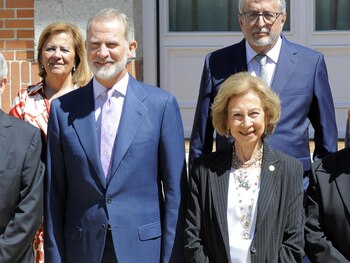
The commemoration unfolds in Madrid with two significant ceremonies: the imposition of the Order of the Golden Fleece at the Royal Palace and a discussion titled ’50 years later: the Crown in the transition to democracy’ in the Congress of Deputies. The initial ceremony took place in the Plaza de la Armería, where honorees were celebrated before the arrival of the royal family, including Queen Sofía, Queen Letizia, and the royal children’s presence. Prominent political figures, including Sánchez and other high-ranking officials, were also in attendance, symbolizing a mélange of institutional support despite underlying tensions.
The Order of the Golden Fleece Ceremony
The core of the Royal Palace festivities centered around the Order of the Golden Fleece, awarded solely to heads of state. During the event, King Felipe VI recognized Queen Sofía and former Prime Minister Felipe González, among others, acknowledging their contributions to Spain’s governance and democratic framework. This occasion also marked the fourth recognition of new members since Felipe VI assumed the throne.
Political Repercussions
The day’s events were underscored by the conspicuous absence of Vox and Sánchez’s parliamentary partners, including Sumar and Podemos. Vox’s refusal to participate stems from their ongoing strategy of opposing the current administration and disdain for the monarchy’s historical ties to Francoism. Allies of the government justified their absence as a rejection of the monarchy as a viable institution, embedding further divides between political factions regarding the Crown’s role in contemporary Spain.
Juan Carlos I: A Private Figure
In contrast to the public celebrations, sources from Zarzuela speculated that Juan Carlos I chose to forego institutional appearances intentionally, a stance he has maintained since 2019. His presence, now limited to private family matters, raises questions about the future of the monarchy in Spain and its relationship with the public, a relationship steeped in historical complexities.
Reflections on the Crown’s Legacy
The day’s events aimed not only to celebrate the 50 years since King Juan Carlos I’s proclamation but also to honor those integral to Spain’s transition to democracy. However, as the monarchy’s legacy continues to be scrutinized, the commemoration starkly reveals the contrasts between differing political ideologies and societal perceptions concerning the monarchy’s place in present-day Spain.