

The Transforming Landscape of Tipping: A Global Perspective
In Spain , the conversation surrounding tips has become more intricate as cultural attitudes shift. Previously viewed as an exotic customs , particularly in the United States, the practice of tipping has recently stirred debate in the Spanish hospitality sector. Conversely, in the U.S., McDonald’s has sparked discussions about the traditional tipping model, raising questions about its sustainability and fairness.
Understanding the Context
Historically, in the United States, tipping has been a norm , albeit an unofficial one; customers typically leave between 15-20% of their bill as a gratuity. This expectation partially stems from the federal minimum wage for tipped workers, which stands at $2.13 per hour —a figure that has remained unchanged since 1991. Consequently, for many servers, tips represent a crucial part of their income, leading to a system where customers bear the cost of their service staff.
This practice has its origins in Europe, with England reportedly being the source of tipping as early as the 16th century . While consumers in the U.S. now feel obligated to tip, particularly in larger groups where an automatic 18% is often added, such customs are beginning to be questioned. The viability of this tipping culture is being scrutinized as societal and economic landscapes evolve.
McDonald’s Challenges the Status Quo
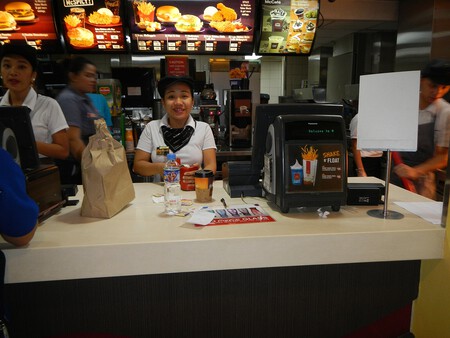
Recently, McDonald’s CEO Chris Kempczinski publicly criticized the tipping model during a television interview. He described a system that relies on customer tips as one that “transfers the responsibility of payment of the workforce to the client.” McDonald’s has a different approach: they do not permit tips, ensuring their employees receive a direct salary. Kempczinski’s stance highlights the disparity in pay structures, especially when some establishments depend on tips to meet the federal minimum wage of $7.25 an hour.
Following the approval of the “Big Beautiful Bill,” which exempts tips from taxes, Kempczinski argues that the current system creates *inequitable conditions* against establishments like McDonald’s that do not engage in such practices. This situation further complicates the debate surrounding the ethics and practicality of a tipping culture.
The Rise of Tipped Wages
The “tipped wages” system isn’t limited to restaurants; it permeates various sectors within the gig economy. Companies like Uber Eats and DoorDash depend on tips to boost their workers’ incomes, creating an expectation that the speed and quality of service hinge on consumer gratuity. This has led to practices like “tip baiting,” where customers promise a high tip to incentivize quick service but later retract it. These actions have sparked significant distrust and frustration among service workers.
A Vision for Change
Kempczinski proposed a significant shift: implementing a universal base minimum salary across the restaurant industry, one that wouldn’t rely on tips. States like California, Alaska, and Minnesota have already taken steps in this direction. This change, in Kempczinski’s view, could reduce poverty and stabilize employment rates while fostering healthier competition between fast-food chains and more traditional restaurants.
He describes the current economic climate as a “two-tier economy,” marked by stark contrasts between high-income consumers and those with lower earnings. The latter group is feeling the pinch, especially after inflation rose sharply in 2022. Many customers see fast food as a luxury rather than a daily meal option, prompting McDonald’s to readjust pricing strategies, including affordable $5 meal packages and aggressive promotions to attract budget-conscious consumers.
This price re-evaluation is critical, as franchisees worry about maintaining profit margins amid rising costs for labor and supplies. Nonetheless, Kempczinski claims a strong consensus exists among stakeholders to lower prices while ensuring quality and access.
A Cultural Clash in Tipping
This evolving debate also reflects a deep cultural divide. In the U.S., tipping has been historically seen as a form of supplemental income, but increasing digital platformization and economic pressures have put this model under scrutiny. Critics argue that relying on consumers to subsidize wages is fundamentally flawed and undermines the responsibilities of employers.
As McDonald’s takes a stand on this issue, it emphasizes the potential for large corporations to influence broader labor policies, bringing to light the critical conversation on wage justice and economic fairness in American society.
As this discussion unfolds, one thing is clear: the future of tipping—and the very fabric of the service industry—is at a pivotal crossroads. With both cultural and economic implications hanging in the balance, the resolution may redefine how societies approach compensation and fairness in labor.