
Understanding Death Through Experience: A Journalist’s Reflection
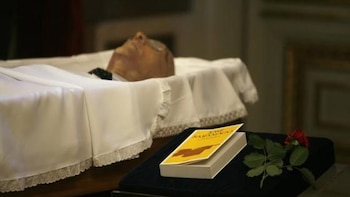
The first dead person I encountered was while I was working. As a journalist, I was assigned to cover the wake of the writer Osvaldo Soriano . I entered without forethought, unaware that I would be confronted with a corpse. There he was—someone I had previously interviewed in his living room in La Boca, with his cat wandering about, but now things were dramatically different.
Raised in a Jewish family , I had never seen a dead body before; Jewish customs dictate closed coffins. When I inquired about this practice, I was informed that it pertains to respect for the deceased. The belief is that exposing the dead is a breach of privacy, especially given that they no longer have consciousness or agency. Furthermore, this practice resonates with another Jewish idea: the necessity to separate the living from the dead . Hence, it is customary not to visit a cemetery until a month after someone has been buried. It signifies that no one physically lingers around a grave. What transpires in the heart, however, is far more complex.
Since that first encounter, I have seen several others—some cherished individuals. There was a musician whose life was abruptly cut short in an accident; I saw the terror in his brother’s eyes at the coffin: “Dude, what are you doing in there?”
I witnessed a friend pass away far too soon. She lived in the countryside, near the beach, over three hundred kilometers from my home. We received the late-night call, urging us to come as she was nearing the end. Despite the rain and fatigue of the day, we eventually set out at 5 in the morning but arrived too late. There she lay, in her dress, in her bed. Just a handful of friends gathered. We sat together on the bed, caressing her chilly foot as we drank coffee and talked, just as we had when she was alive. We honored her in death as we had in life. A few days later, we scattered her ashes in the sea, lighting a fire in the dunes that flickered out, a poignant metaphor for life. Her partner entered the water with the small box that contained her remains, her clothes getting wet as the ashes scattered. She submerged herself, cleansing her from my friend and forcing her to let go, thus separating the living from the dead .
I declined to see a highly respected teacher whom I admired. At the end of a long hallway, I squeezed through a crowd that had gathered to confirm the somber news. When I approached, I caught a glimpse of a color that was not hers, nothing familiar. It felt as if I was struck, and I instinctively moved back.
Why do we find this necessary? It appears that seeing the dead confronts us with the unthinkable: our own death. Everyone knows that we will all die, yet the notion of our mortality is something we struggle to comprehend. I often reflect on my mortality, pondering my existence. Cogito, ergo sum —I think, therefore I am.
Historian Philippe Ariès once stated that death , not sex, is the greatest taboo in the West. He observed that since the 1940s, death was increasingly viewed as shameful and taboo. Sickness and mortality are concealed from the healthy not out of compassion, but to shield them from the grim realities of dying. Often, people are sent to hospitals to die, frequently in solitude.
Thus, witnessing death transforms into an experience, a significant event.
However, the relationship with the deceased is often shaped by culture rather than being an intrinsic part of humanity. For instance, in Madagascar , a ceremony known as Famadihana involves exhuming the dead every seven years to celebrate their lives through music and dance. It signifies a connection to the ancestors until the body has completely decomposed. People maintain a close association with the remains, witnessing their gradual decline.
In Bali , the deceased are wrapped in a white cloth and shown to the family before cremation. In Tibet , the custom involves offering the body to the elements by placing it on a mountain for vultures. Here, death is recognized as merely the shell of existence.
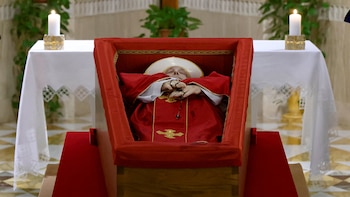
Do we find value or comfort in seeing those we loved after they die? It seems so. The magnitude of public mourning for beloved figures like Perón , José Saramago , and Pope Francis illustrates this need. We desire to witness, to grasp at remnants of what is no longer present, to reach out even if the coffin is closed, as seen in vigils for Maradona and Queen Elizabeth II .
Additionally, I visited another friend in her home when her husband called us early one morning. “She passed away,” he said. Despite being critically ill, she had organized a farewell party just days prior. Upon our arrival, she lay in a hospice bed. As a journalist, I offered to write her obituary. I stepped into her office, shut the door, opened her computer, and penned the piece celebrating her life.
Just last year, a youthful friend succumbed to illness. He surrounded himself with death in life, receiving comfort from a loving pet. The dog was brought to his still body, hesitantly inspecting him as if searching for familiarity, before finally turning away when it became apparent that he was no longer there.
The two most intimate deaths I have encountered were those of my parents. My mother passed away a little over seven years ago. She was already in a hospital, and we knew time was short. I stepped into the hallway to take a call and was delayed. Suddenly, my cousin came out, saying, “Pato, they need you.” There she was, exactly as I had left her, holding my father’s hand.
“She’s looking at me too intensely,” my father remarked. Being the eldest, I felt an obligation to do something—anything. I approached and, remembering the lessons from my youth, took my mother’s pulse. “I feel nothing,” I said. My cousin called a nurse, but it was too late. Using my right hand, the skilled one, I gently closed her eyes. We sat there a while, absorbing the moment, knowing we would never see her again. We gazed, hoping to capture something in those final minutes as if we could snatch a memory from oblivion.
The following day, while at the cemetery, I was called to identify her. A man pulled back the covering, revealing her head, adorned with a punk haircut and grey hairs that had replaced her once vibrant blonde from her vanity. I felt no repulsion, just love. Yet those fleeting moments—the shroud pulled back and her hair—haunted my nights for a long time.
Last March, my father passed away in the same hospital and cemetery. He suffered from a sudden strain of the flu and died unexpectedly within days. He fell asleep peacefully one afternoon, his face serene—perhaps a tranquility he had seldom possessed in life. The following day, my sister, niece, and I were called to identify him. He looked peaceful, as if he had never suffered the fate he had faced. In the depths of sorrow accompanying the loss of a loved one, that tranquil expression provided some solace.
I am uncomfortable with the simplistic phrase “death is part of life” or that it’s “natural.” Death is one of those harrowing aspects of existence. For individuals like myself who believe everything can be resolved, the finality of death is a challenging blow to accept. But since it is an inevitability, I often find myself preferring to confront it. This approach is not universal; everyone will forge their own relationship with death and the dead in their own way.