
Patrick Sammir Case: Key Developments in the Investigation
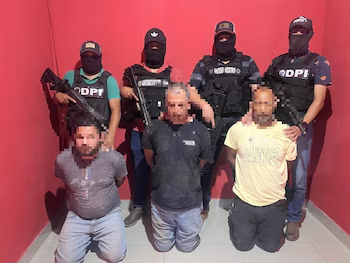
In a recent significant development, the Honduran authorities have transferred the three main suspects in the kidnapping of Patrick Sammir Girón Chávez to the Police Investigation Directorate (DPI). This crucial move initiates the next phase of the investigation, aimed at determining the suspects’ degree of involvement in the crime.
Arrest of Suspects
The capture operation was executed across multiple sectors, leading to the arrest of three individuals: Selvin Omar Martínez (initially reported as Bingomar Martínez), César David López, and Alex Josué Sánchez Suazo. Authorities suggest that Martínez is the ringleader of the group that orchestrated this heinous kidnapping.
The arrests occurred following a series of operations in the city of Siguatepeque, specifically after the transfer of the minor from Taulabé by his captors. While in custody, the three men denied any participation in the crime, with Martínez asserting, “I have nothing to do with it; I don’t know why they involve me. I don’t know the child’s relatives.”
The Kidnapping Incident
The alarming case of Patrick Sammir’s kidnapping in Taulabé has raised significant concern nationwide. The abduction itself was accompanied by a demand for five million lempiras (approximately $188,260) for the child’s release, triggering widespread outrage and urgent calls for public assistance in the search. The collective pressure from the community and the rapid response of law enforcement eventually led to the minor’s rescue on the evening of April 8.
A Community’s Response
The moment Patrick was safely reunited with his family stands as a beacon of hope and relief for the entire community. The heartwarming reunion, captured on video, spread quickly across social media, showing joyous interactions between the child and his family, reinforcing the significance of community solidarity during crises.
Ongoing Investigations
Authorities continue to pursue extensive investigations to gather further evidence and testimonials, focusing on the activities of the arrested suspects. The current operational phase at the DPI aims to compile a robust judicial file through the analysis of videos and enhanced testimonies.
The case has showcased the effective coordination and rapid response capabilities of the security forces while also eliciting profound community support for the victim’s family.
Conclusion: A Call for Awareness
Patrick’s experience serves as both a painful reminder and a clarion call for heightened vigilance against crime, particularly kidnapping and violence in Honduras. His family’s gratitude towards the police and the community’s overwhelming support highlight the importance of collective action in promoting safety and reform.
Going forward, this narrative not only emphasizes resilience against violence but also underscores the need for improved citizen surveillance and collaborative efforts within law enforcement to combat similar threats effectively.