

Connected glasses and augmented reality eyewear are steadily gaining traction as major players like Ray-Ban Meta and Apple Vision Pro consolidate their presence in the market. Although these brands are popular, the real growth appears to be happening in China, where a rapid evolution in the connected eyewear segment is underway. With numerous manufacturers making significant strides, China undeniably stands as a hub for this burgeoning industry.
While the Western markets , particularly the U.S., have seen only a handful of brands step into this arena, China’s landscape is dotted with competing companies, both giants like Xiaomi, Huawei, Alibaba, and Baidu, as well as smaller, specialized firms. This competition has sparked what is being referred to as the “War of the Hundred Lenses” (百镜大战).
Unlike the virtual reality market , which leans heavily towards gaming, the augmented reality segment is ambitious. It envisions a future where wearables serve as the ultimate extensions of our smartphones.
As China showcases its commitment to the sector, it’s essential to explore who’s who in this industry , what devices are available, and the challenges these manufacturers face. Let’s begin with the key players, many of whom are relatively unknown in Western markets but poised to make a significant impact.
Xiaomi
Xiaomi doesn’t need much introduction, given its varied technological ventures. Its new Xiaomi AI Glasses are in direct competition with Ray-Ban Meta , featuring impressive specs like the ability to continuously record video for up to 45 minutes and possess an impressive autonomy of 8.5 hours .
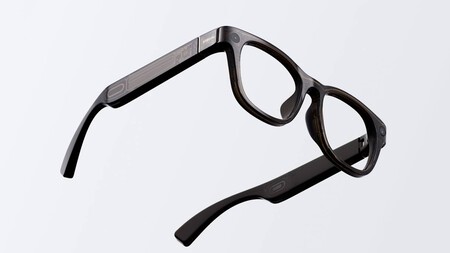
Xiaomi AI Glasses
Featuring touch controls on the temples, these glasses also allow users to adjust the tint of the lenses, transforming them into sunglasses at the user’s request. Besides capturing images and videos, they offer QR code payment functionalities, a method popularly used in China. With a price of €240 for the standard version, they are currently exclusive to the Chinese market.
Alibaba
Alibaba isn’t lagging behind in this competitive market. In late July, it unveiled its Quark AI Glasses , set to launch in China by the end of 2025, prominently featuring its highly reputable Open Source Qwen AI model .
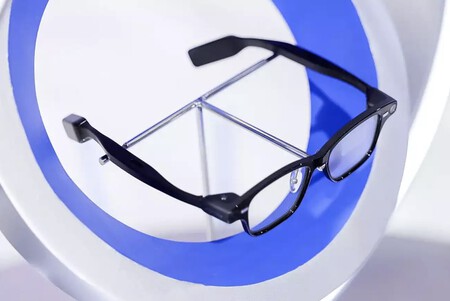
Alibaba Quark AI Glasses
While detailed specifications are scarce, we know they will include cameras for capturing images and videos, along with speakers and microphones for phone conversations or interaction with AI. Alibaba aims for these glasses to stand out through their proprietary AI model.
Huawei
Huawei, once the leader in mobile technology, has also been making waves in this sector. After releasing its HarmonyOS-powered Eyewear in 2021, Huawei is back with more sophisticated models tailored for the new era.
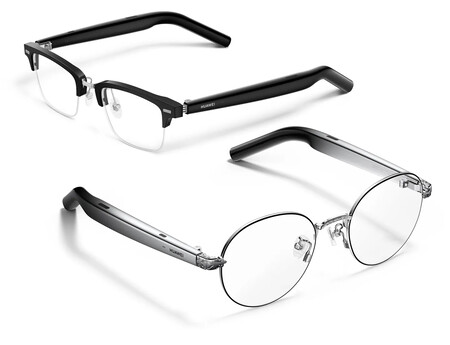
Huawei Eyewear 2
The Huawei Eyewear 2 focuses on audio rather than cameras, integrating speakers and microphones. They boast a lightweight design and an impressive 11-hour battery life , allowing users to enjoy music, podcasts, or real-time conversations with AI.
Baidu
Baidu has also entered this competitive field. At the Baidu World Conference in 2024, they launched the Xiaodu AI Glasses , which they claim are the first AI glasses designed natively in China.
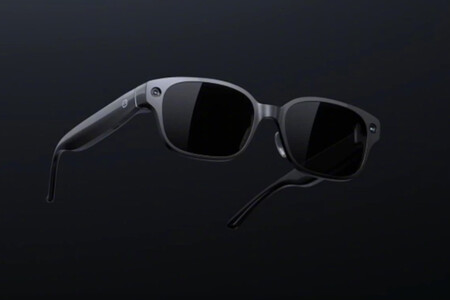
Baidu Xiaodu AI Glasses
These glasses are notable for using Ernie AI , and while they are promoted as rivals to Ray-Ban Meta , their actual availability remains uncertain.
XReal
XReal is a veteran in this market, showcasing their advancements in various events. Their Project Aura, expected to release in 2026, embodies one of the numerous models the company has offered over the years.
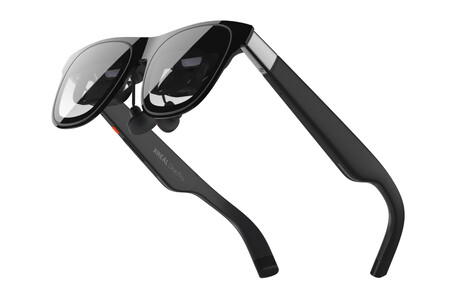
XReal Pro
The XReal Pro and related models offer augmented reality glasses that feature mini-displays showing various types of information. This design strikes a balance between products like Apple Vision Pro and Ray-Ban Meta while retaining an attractive form factor.
What sets XReal apart is their innovative approach. Unlike their competitors relying on Qualcomm Snapdragon processors, they have developed their own SoCs, the Real X1 , which reportedly outperform Apple Vision Pro in latency.

While their current models lack AI integration, the company has indicated plans for future incorporation. For CEO Xu Chi, the focus remains on enhancing user experience, which may prove beneficial in the long run.
Rokid
Rokid, a startup founded in Hangzhou in 2014, has raised almost $85 million in two investment rounds. Their collaboration with Alibaba for real-time translation using their Qwen AI model helps them stand out in this competitive landscape.
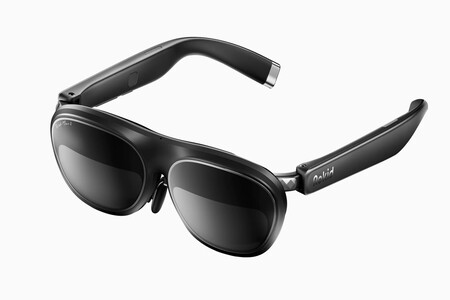
Rokid Max 2
While focused on business applications, Rokid is making strides in connected glasses, already securing agreements to develop specialized eyewear for the Chinese Space Station .
Although Rokid’s strategy seems B2B-oriented, their Rokid Max 2 glasses (priced at $429 ) offer mini-screen functions, enabling the projection of images, videos, and games.
Additionally, they come with a small external module, the Rokid Station , allowing users to control content without depending solely on a smartphone.
Thanks to their partnership with Alibaba, these glasses also integrate the Tongyi AI model for real-time translation capabilities.
Wigain
Wigain is developing Omnision XR Glasses , set to launch in early 2026, distinguished by their image projection technology, setting them apart from competing products.
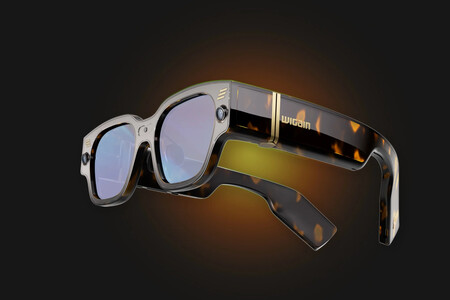
Wigain Omnision XR Glasses
The use of a diffractive waveguide for image projection distinguishes them from their rivals, providing an enhanced user experience.
Promising a 50-degree field of view , equivalent to watching a 100-inch screen from three meters away , with features like 900 nits brightness and Sony micro-OLED screens with superior color coverage, they aim for a blend of functionality and entertainment.
RayNeo
RayNeo, a subsidiary of TCL, has set its sights on international markets, focusing on establishing a presence beyond China. Their RayNeo Air 3s AR Glasses (priced at $269 ) illustrate this ambition.
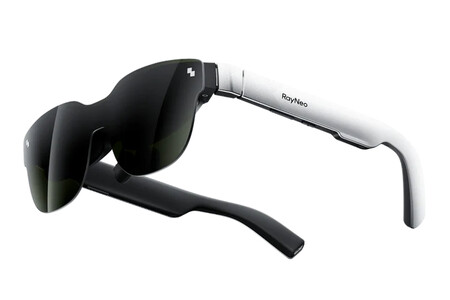
RayNeo Air 3s AR Glasses
With displays capable of producing images equivalent to a 201-inch screen , their design focuses on delivering compelling multimedia and gaming experiences.
Like Rokid, a small external module enhances functionality, reducing reliance on smartphones for operation.
INMO
INMO aims to capture a niche market with budget-friendly eyewear. Priced at $379 , the Inmo Go caters to users engaged in biking or note-taking during meetings.
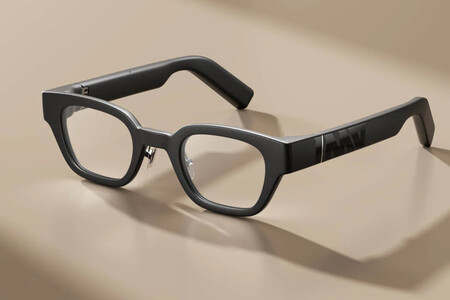
Inmo Go
This model incorporates AI—offering real-time translation in 11 languages courtesy of a ChatGPT-powered assistant. In collaboration with China Mobile , they integrate artificial intelligence models known as Jiutian .
Less well-known, INMO shows promise with models like the INMO Air3 , featuring 1080p displays . Although they are not yet available, their previous models, like the Inmo Go , highlight the potential of their technology.
Moreover, they aim to deliver Micro-OLED screens for multimedia consumption, whether for movies, games, or virtual office setups.

An interesting addition is the 3DoF Smart Ring for unconventional gesture control, enhancing user interaction.
Meizu
Meizu is diving into the AR glasses segment, leveraging its ties to Geely , the automotive conglomerate. Their eyewear may even integrate features for in-car use.
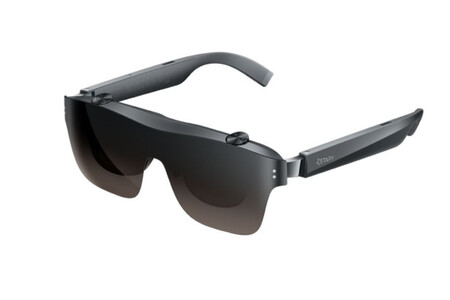
Meizu StarV View AR
Their Meizu StarV View AR glasses (priced at $460 ) are solid competitors against XReal’s offerings, featuring screens that can project virtual displays of up to 188 inches . Despite limited promotional activities, they remain key players in the sector.
Vivo
Vivo has opted for a slightly different route, producing mixed reality glasses, the Vivo Vision Discovery Edition , to rival Apple’s Vision Pro.
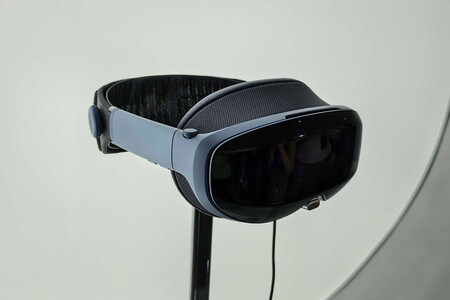
Vivo Vision
The Vivo Vision promises comparable experiences to Apple’s offering but in a more compact and lighter format.
This competitive market where Apple once held the fort is gradually transforming with a diverse range of products, including initiatives from Samsung and Google like the ongoing Project Moohan .
Connected Glasses of All Types
Currently, the standard-bearer for augmented reality glasses is Ray-Ban Meta , yet various categories exist based on functionality:
- Connected Glasses: These focus on audio interaction and lack cameras. They include speakers, microphones, batteries, and touch sensors for function control. Example: Huawei Eyewear 2 .
- Connected Glasses with Cameras: Offering image-capturing capabilities, they also serve as the “eyes” for integrated AI. Example: Ray-Ban Meta .
- Connected Glasses with Displays: These blend functionalities of the previous two categories, featuring Micro-OLED screens for dynamic information display. Example: XReal Pro, Rokid Max 2 .
- Mixed Reality Glasses: Combining augmented reality and traditional virtual reality, offering high-end features. Example: Vivo Vision .
The Importance of Screens
Chinese manufacturers leverage Micro-OLED technology developed by companies like Sony . These small-format screens are designed to fit seamlessly in front of connected glasses lenses, providing outstanding visual clarity and pixel density.
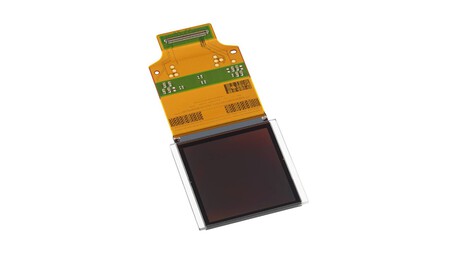
Micro-OLED Screens Source: Sony.
The resolution of Micro-OLED screens offers outstanding image quality, further enhancing experiences in devices like Apple’s Vision Pro and competing Chinese products that will likely be pivotal in this market’s growth.

Moreover, these display systems may incorporate waveguide technology , allowing images to appear on lenses while maintaining transparency to the real world, enabling a slim design.
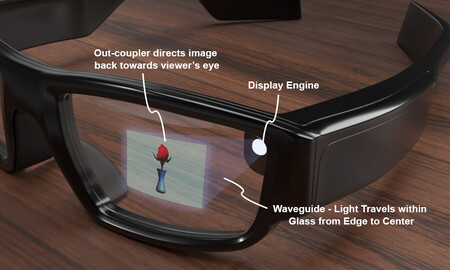
Waveguide systems start to emerge in connected glasses.
Unlike Apple’s Vision Pro, which employs traditional lenses for its Micro-OLED displays, waveguide technology can project augmented images without disrupting the surrounding view. This innovative approach allows for a lighter product design.
The “Five Small Dragons” and Industry Challenges
The AR and VR segments in China have raised $340 million in investments in 2024, particularly focused on the so-called “Five Small Dragons” of the AR industry: XReal, RayNeo, Rokid, Inmo, and Meizu .
This fierce competition has resulted in advantageous pricing for consumers, with many connected glasses with screens selling around $300 , matching the price of Ray-Ban Meta .
However, several challenges are impeding the arrival of definitive connected glasses. Current models are appealing, yet they still encounter significant obstacles .

Battery life is a prime concern; as devices offer increased functionality, their battery durations tend to decrease. Usability issues and response times also need addressing, as does comfort during prolonged wear.
Additionally, while the evolution of SoCs integral to these glasses is promising, many processors can be too bulky or power-hungry for practical use, compelling reliance on external devices for processing.
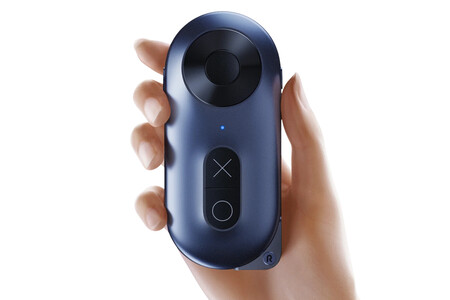
Rokid Station, a mini-PC for connected AR glasses.
Some manufacturers, such as Rokid and Inmo , have developed compact computing modules resembling remote controls, providing self-sufficient processing and battery power.
Small startups like XReal and Rokid may find it challenging to compete with industry giants such as Huawei and Alibaba , who have significant AI models and resources at their disposal.
Ultimately, China’s competitive landscape in connected eyewear is vibrant, providing benefits for end-users and a horizon filled with promise and challenges.