

The Earth has officially entered a grim new climate reality. According to a shocking new report, the relentless increase in heat in the oceans has pushed corals around the world beyond their limit, causing a unprecedented large reef mortality. This situation presents not just bad news for marine ecosystems, but a dire warning for humanity as well.
This event, according to scientists, marks the first climate tipping point we have passed as a planet, directly threatening the livelihoods of nearly a billion people .
The Report. This data has been compiled in the “Global Tipping Points Report 2025,” prepared by an international consortium of more than 200 researchers . The findings are disheartening; they suggest that even in the most optimistic scenario—where global warming does not exceed 1.5 degrees Celsius above pre-industrial levels—almost all warm-water coral reefs will exceed a point of no return .
This makes their loss one of the most pressing ecological crises facing humanity, although the disappearance of corals is only the tip of the iceberg .
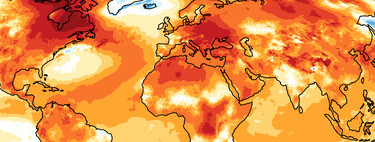
Experts emphasize that since 2023 , we have witnessed a significant temperature increase —more than 1.5 °C compared to the pre-industrial average. It now appears increasingly likely that we will exceed the 1.5 °C threshold by 2030 , driving our planet closer to a climate catastrophe .
What Are ‘Turning Points.’ These points represent critical thresholds. Once crossed, the climate system is pushed into a new paradigm, triggering a chain of negative consequences. Specifically, we refer to events such as the widespread death of the Amazon rainforest , the collapse of the Greenland ice sheets , or the breakdown of the Atlantic Meridional Overturning Circulation (AMOC).
Particularly concerning is the Amazon, now in a critical state . The report warns that it is not just warming affecting the forest. The combination of warming and deforestation poses a significant threat. With 1.5°C of warming, a mere 22% deforestation could lead to a point of no return, whereas the current rate is already alarmingly high at 17% .
All Is Not Lost. Despite the grim outlook, the report identifies a potential silver lining in the form of a paradigm shift that could lead to beneficial changes rather than destructive ones.
Since 2023 , there has been rapid progress in the adoption of clean technologies , particularly in two crucial areas: electric vehicles and photovoltaic solar energy . Coupled with a drastic decline in battery prices, these advancements are starting to fuel the energy transition in ways that few had anticipated.
The Problem. According to the report’s authors, the primary issue lies in our governance systems . From national policies to multinational agreements like the Paris Agreement, our frameworks are not designed to handle turning points . They are rather focused on managing gradual, linear changes rather than abrupt, cascading collapses across multiple fronts.
This makes the need for immediate action clear. Researchers urge nations to adopt the following measures:
- Reduce emissions of short-lived pollutants such as methane and black carbon .
- Accelerate efforts to remove carbon from the atmosphere.
- Make global supply chains sustainable .
- Develop mitigation strategies for climate impacts.
The message is both urgent and forceful: what we’ve done so far falls short. Researchers implore us to confront the reality of our climate crisis. As expert Milkoreit aptly states, “even having a reader have the courage to stay with the problem is work, and I want to recognize that work.”
In conclusion, the ramifications of climate change are profound and immediate. Without swift and decisive action, we risk crossing more tipping points that could irrevocably alter our planet’s future. Every individual has a role to play in mitigating this crisis, fostering collective responsibility for a more sustainable world. We must act not just for ourselves, but for future generations.