
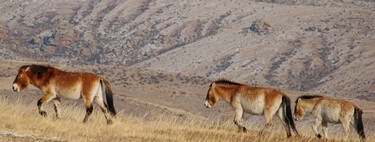
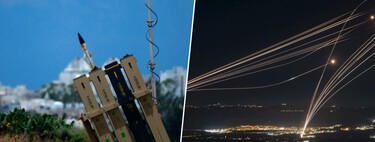
We are at a time when wars are disputed with drones , exchanges of missiles that impact “shields” on cities, and prepare maritime battles starring ‘ghosts’. The main world military power has made an announcement, and it has nothing to do with technology: the United States Army will begin to withdraw its war horses.
Even if they seem like a relic of the past , the U.S. was using horses in warfare until relatively recently.
Short Summary. Through a release, the U.S. Army has announced a reduction in its “Military Working Equid Program” (MWE). This program involved the use of horses, mules, and donkeys at military facilities. As of this month, equine operations will end in Fort Irwin (California), Fort Huachuca (Arizona), Fort Riley (Kansas), Fort Sill (Oklahoma), and Fort Hood (Texas).
Horses in Special Forces. While police forces continue to use horses for patrol and riot control, discussions about war horses draw us back to earlier eras. Although we often think of the United States cavalry’s historical battles against Native Americans, horses have seen use in modern conflicts.
During the American invasion of Afghanistan , the 5th Special Forces Group utilized war horses and mules as a means of transport in the rugged mountain terrains of northern Afghanistan. Vehicles proved ineffective, while horses could navigate the landscape more efficiently.
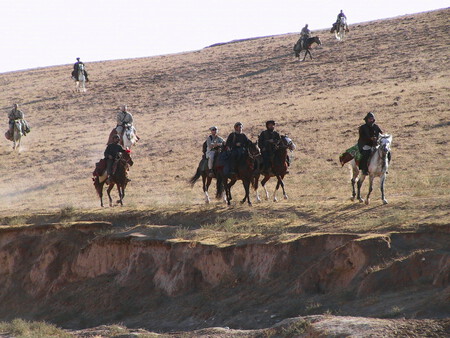
American soldiers on horseback in Afghanistan
Change of Priorities. The most recent documented instance of the U.S. Army utilizing cavalry stems from this conflict in Afghanistan. The decision to phase out these units reflects several factors. Firstly, there is a change in social sensitivity , with more emphasis on animal welfare and concerns regarding the care and wellbeing of horses at military bases. Sadly, cases of negligence for animal care occur outside the army as well, such as at the Seville Fair, where horses experienced significant stress.
Another factor is, of course, financial considerations . Recent news highlights funding directed towards advanced military capabilities such as anti-missile defenses, and maintaining horses contradicts the required military efficiency.
A Cost-Saving Measure. The Army has explicitly mentioned that this initiative “will save the army two million dollars annually,” allowing the funds and personnel previously dedicated to the MWE program to refocus on higher-priority preparations and combat efforts.
While two million dollars might seem negligible in the vast U.S. defense budget, it’s crucial to note that maintaining horses incurs significant costs. Diverting personnel to more productive military roles aligns with the Army’s overall strategic focus.
Future of the Horses. The military is committed to ensuring a smooth transition for these animals. They will have a year to facilitate adoption or donation, with the process supervised by veterinarians to ensure the horses’ welfare. Currently, 236 horses, donkeys, and mules are available for relocation to responsible new owners.
They Will Not Disappear Completely. However, the MWE program will not vanish altogether. The Army will retain some horses for ceremonial purposes, such as military parades and funerals, managed by specific units like The Old Guard in Washington D.C. and at a joint base in San Antonio, Texas.
Ultimately, while horses were often relegated to mountain missions or inaccessible terrains, the tradition of cavalry has been maintained in nomenclature among several nations, indicating its deep-rooted history. Though mechanized units may replace traditional cavalry, horses still serve specific roles within the U.S. armed forces , especially in border patrol in Texas and attached to mounted police and rescue units.
Images | Sgt. Chris Spence
In Xataka , it has been noted that for decades, horses have been a tourist attraction in Malaga. However, with changes in priorities, their days may be counted.