
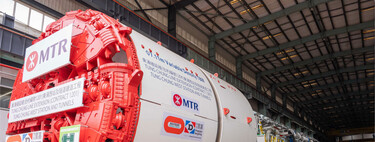
Every morning, Monica Kyrö starts her job like millions of others: in an office. However, the setup at her workstation is somewhat peculiar . Accompanying her two enormous curved monitors are two joysticks , which Monica quickly maneuvers as she embarks on her tasks. This employee of the Swedish company LKAB has an exceptionally unique job.
Monica is a miner but in a different capacity. She works as a remote operator of heavy mining machinery, controlling these massive machines from her advanced workstation rather than driving them in the conventional sense. This evolution illustrates the fascinating transformation occurring across various industries.
Miners Who Don’t Need to Go Underground
This type of remote operation system has gradually made its way into different industrial scenarios, and mining is undoubtedly a fitting application. This hazardous profession has adapted to modern times, where “going down the mine” is no longer strictly accurate. With these machines operated remotely by human operators, the work becomes not just more comfortable but infinitely safer .
Several firms specialize in this domain. For instance, Immersive Technologies showcases how its simulation solutions can mitigate risks to workers in environments like mining operations, where hazards are significant.
However, this shift does come with its set of challenges. By removing operators from the physical machines, issues may arise regarding visibility and the inability to fully perceive their surroundings. For instance, another employee may unexpectedly appear in the operational area, creating potential hazards that wouldn’t have occurred if the operator were physically present.
The impact on employment remains an open question, but currently, it does not appear that the traditional role of operating heavy machinery is in jeopardy. In fact, there seems to be an increasing demand for new professionals who might find these roles more appealing due to enhanced safety and comfort.
Remote-Controlled Trucks and Robots
Heavy machinery is gradually transitioning to autonomous and robotic operations, as explained by industry leaders like Azo Robotics . In Spain, companies such as Epiroc and Sandfire MATSA are incorporating these remote-controlled solutions in mining, but this technology also has applications in various other sectors.
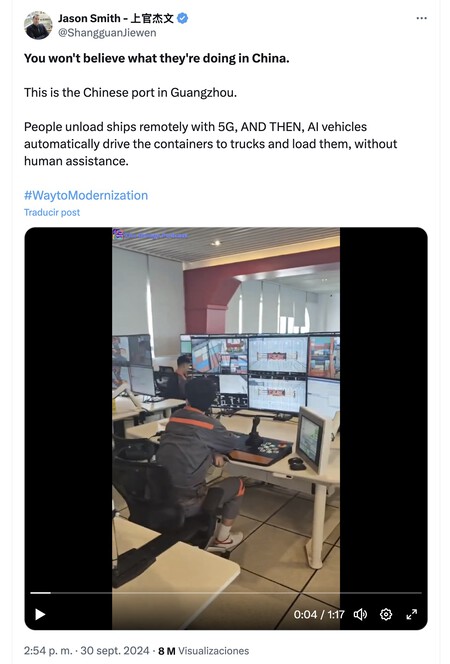
One notable example is the remote operation of machinery in commercial ports like Guangzhou in China. Recently, a viral video showcased remote operators working from offices, expertly controlling trucks and cranes to maneuver containers safely.
This arrangement minimizes human presence near heavy equipment, thereby avoiding significant risks while allowing operators to work from a much more comfortable and secure environment. It almost resembles playing a simulation video game , but it’s far from that; the operation is strikingly real.
Such solutions have been operational for years, albeit in highly specific environments due to job complexity. Companies like Husqvarna , a Swedish manufacturer of construction machinery, participated in the aftermath of the Fukushima nuclear disaster, where their remote-controlled robots aided in controlled demolitions .
Companies such as Steer , based in Norway, specialize in providing control systems for dangerous scenarios like underground operations, explosives handling, or other hazardous environments like avalanches.
Alongside human-operated remote solutions, there are also emerging autonomous vehicles designed for industrial applications. A prime example is autonomous tractors , which have gained traction not only in agriculture but also in sectors like mining. Caterpillar is a major player in this market with autonomous trucks that utilize LiDAR technology to navigate their environments effectively.
Nevertheless, these autonomous vehicles face challenges similar to autonomous cars, as the technology is still difficult to perfect, especially when considering the diversity of operational scenarios.
The High-Tech Joysticks That Aren’t Just for Gaming
The remote control of heavy machinery has led to the rise of specialized devices, such as industrial joysticks . Companies like Comtrium and JR Merritt are focusing on creating solutions tailored specifically for heavy machinery.
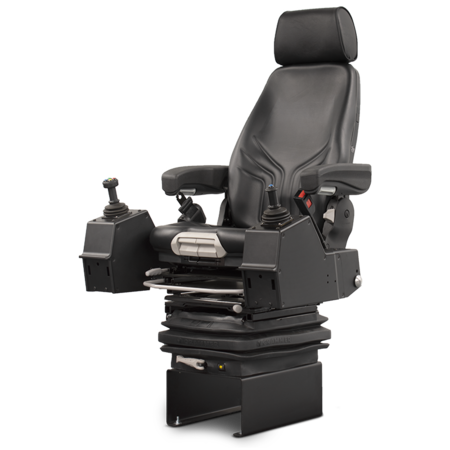
These models can be integrated into a wide range of heavy machinery and offer various designs tailored for specific applications. Some even feature buttons and precision systems controlled by the thumb, alongside dedicated operator chairs equipped for these tasks.
While these specialized peripherals might look like traditional gaming joysticks, they are fundamentally different. They must meet high durability requirements , capable of enduring vibrations, extreme temperatures, dust, moisture, and especially intensive use . Often crafted from stainless steel and robust materials, these devices serve critical functions in the field.
Precision components like mini-joysticks can be configured in various ways to suit specific heavy machinery. Some incorporate Hall Effect technology , popularly applied in keyboards, proving useful in these industrial contexts.
These joysticks utilize magnetic sensors to determine lever positions without physical contact between moving parts. This feature not only eliminates potential wear and tear but also provides exceptional precision in tracking operator movements.
Image | LKAB