
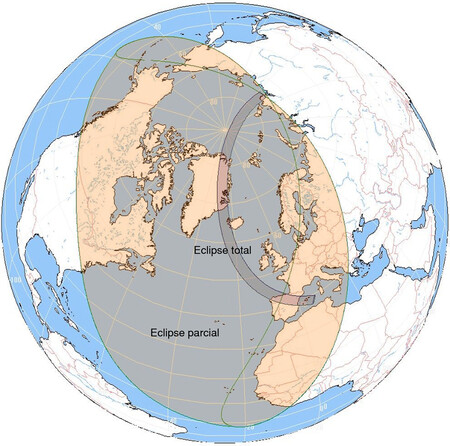
In 2026, enthusiasts of celestial events will have much to celebrate, as it marks the beginning of a thrilling period for astronomy. A total solar eclipse is set to occur on August 12, an extraordinary phenomenon that has not graced the Iberian Peninsula in over a century. However, only those within a specific narrow band will witness the eclipse as total, while others may only catch a partial glimpse.
The Importance of Dark Skies
The first rule for experiencing the solar eclipse, or any significant astronomical event, is to find a location with minimal light pollution. Urban areas, known for their abundant artificial light, can severely hinder visibility of celestial bodies. It is crucial to plan and choose a spot free from these disruptive lights.
Getting Prepared
If you’re eager to view the solar eclipse, preparation is key! Don’t leave your adventure to chance; utilize resources like the map provided by the National Geological Institute, as well as a reliable light pollution map to maximize your experience.
The Impact of Light Pollution
A single light bulb might seem trivial, but it contributes to a much larger issue of light pollution. When you approach a city at night, a noticeable glow envelops the sky, a phenomenon known as skyglow, caused by light reflecting off particles in the atmosphere. This oppressive glow obscures your view of celestial wonders.
The Bortle Scale
To measure the quality of night skies, astronomers use the Bortle Scale, which rates skies from 1 (darkest) to 9 (brightest urban skies). Unfortunately, most medium-sized cities fall between 7 and 9, making visibility of stars and planets nearly impossible.
Avoiding Light Pollution
Finding the ideal spot to view an eclipse or other astronomical events becomes even more crucial when considering that not just big cities, but also industrial zones, ports, and networked highways contribute to light pollution. The map created by cartographer Jacob Wasilkowski, named Earth at Night, illustrates this phenomenon beautifully.
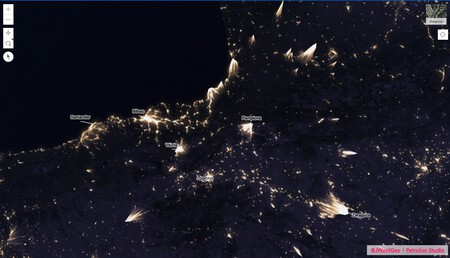
Earth at night. JWasilGeo & Petrichor Studio
The Innovative Map: Earth at Night
This innovative map utilizes nighttime images from NASA, converting luminosity into topographic reality. In this map, cities appear as mountains based on their brightness. When observing the Iberian Peninsula, destinations to avoid include major urban areas, especially around the Mediterranean and the central region of Spain.
Conclusion
As the excitement builds for the 2026 solar eclipse, being equipped with a good understanding of light pollution and available tools can enhance your viewing experience significantly. The map “Earth at Night” serves not only as an essential resource but also as a fascinating visualization of how human activity reshapes our world.
For anyone interested in astronomical events, this map and proper planning can drastically improve your chances of witnessing the wonders of the night sky.