
The Rise and Fall of Japanese Television Giants
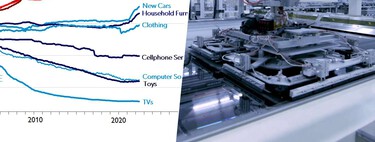
Not so many years ago, Japanese television brands like Sony, Sharp, Toshiba, and Panasonic were synonymous with excellence and quality in the market. Sony’s Trinitron technology, in particular, still garners admiration among retro video game enthusiasts. However, the landscape has dramatically shifted, with South Korean and Chinese brands dominating the industry.
Panasonic’s Shift to Skyworth
The Panasonic Case. Recently, Panasonic, once a heavyweight in the television manufacturing sector, announced a significant change: they will now partner with the Chinese company Skyworth for the production and sale of their televisions. During a recent catalog presentation, representatives from Panasonic revealed that Skyworth will handle sales, marketing, and logistics, allowing Panasonic to focus on providing expertise and quality assurance.
Despite this shift, Panasonic assured that the resulting products will still bear the “Panasonic” name, underscoring a commitment to quality even as the face of production changes.
Turning Towards China
The collaboration with Skyworth marks a complete loss of identity for Panasonic, which has been outsourcing its mid-range and entry-level models for some time. The company is eager to regain its footing in the European and U.S. markets, particularly following a similar partnership between Sony and TCL just weeks prior.
This partnership highlights a broader trend in which Japanese technology is increasingly overshadowed by advancements from South Korea, Taiwan, and, more recently, China. While TCL remains a household name, Skyworth is gradually making its mark in the Android TV sphere, leveraging its production capabilities to challenge established brands.
Innovative Synergies
It Makes… Sense. Panasonic and Skyworth have committed to jointly developing high-end OLED televisions, which could be advantageous for both parties. However, as with the Sony-TCL collaboration, the balance of power may favor the more robust Chinese partner.
Recent investments by Chinese firms in high-capacity plants for producing large-inch panels have set the stage for explosive growth in the TV market. These plants leverage “mother glass” technology that enables mass production of oversized televisions, allowing companies to offer competitive pricing. TCL has demonstrated this through its ability to sell larger models at attractive prices, further accelerating its market capture.
The End of an Era
Tears in the Rain. As we examine the broader implications of these changes, it’s evident that Panasonic has struggled to regain its innovative prowess, particularly in the face of competition from LG, Samsung, and various Chinese brands. What was once a stronghold of Japanese technology is increasingly being eroded.
Other giants like Sharp, Pioneer, and Toshiba have either succumbed or are under foreign control, with some being acquired by Chinese firms like Hisense. Panasonic’s long-held reliance on plasma technology ultimately hindered its agility, leaving it unprepared for the rapid advancements brought forth by LCD and OLED technologies.
Looking Forward
While the future remains uncertain for Panasonic, the company’s newfound partnership with Skyworth marks a critical juncture in its trajectory. With estimates suggesting that Chinese capital may soon dominate 50% of the Japanese market, the shift signals a growing reliance on partnerships to stay relevant. The last bastion of pride for Japan’s television industry now rests squarely in its ability to innovate and adapt in a landscape increasingly defined by Chinese technological advancements.