
The Resurgence of Lunar Exploration: A New Age for the Moon
The Moon is experiencing a renaissance after half a century of relative stillness in its exploration. This revival is not merely a race between a couple of nations; rather, it’s a commercial competition that involves both established and emerging space powers, as well as a multitude of private enterprises. The objective? To stake claims in lunar territory and harness the Moon’s resources.
The Lunar “Jam”. The resurgence in interest is striking; over the past two years, there have been 12 attempted lunar missions . This sudden “blitz” of moon landings has been spurred on by innovative public-private initiatives like NASA’s Commercial Lunar Payload Services (CLPS). While these ventures promise a fast and economical route to the Moon, they also present a chaotic landscape filled with challenges.
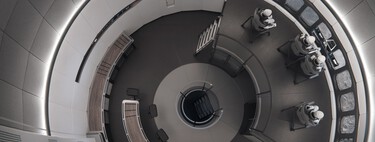
<img alt="If the question is how spacious the Starship will be, the answer is yes" width="375" height="142" src="https://i.blogs.es/4b90ff/10_28_25_cabin_06_30a49f27a3/375_142.jpeg"/>While the notion of “ traffic jams ” on the Moon might seem absurd, it’s worth noting that cislunar space—the region found between Earth’s geostationary orbit and the Moon—is enormous, measured at over 2,000 times larger than Earth’s orbital space.
If There is So Much Room, Where is the Problem? The quandary lies in the competition for specific locations . Just as vehicles on Earth crowd the highways, lunar missions seem to congregate around a select few stable orbits. The expansiveness of cislunar space can thus be misleading, as pointed out by experts in International Affairs and Aerospace Engineering from the Georgia Institute of Technology in a thought-provoking article for The Conversation.
To Make Matters Worse. Most of the government sensors designed to track satellites within Earth’s orbit aren’t equipped to monitor objects at such great distances. The Moon’s brilliance complicates tracking efforts, creating a challenge for organizations seeking to navigate this newfound complexity.
This uncertainty affects operational decisions directly. When there’s even a slight chance of a collision, agencies often prioritize safety, leading to costly and fuel-consuming evasive maneuvers. These interruptions not only complicate scientific missions but also shorten the operational lifespan of spacecraft.
50 Satellites Are Enough for Chaos. Research published in the Journal of Spacecraft and Rockets reveals that just 50 satellites in lunar orbit could necessitate an average of four maneuvers each year to avoid collisions. While this number may seem manageable, the current rate of launches suggests we could reach this threshold in less than a decade. This scenario is not some distant theoretical problem; it is already happening. For instance, the Indian orbiter Chandrayaan-2 had to perform evasive maneuvers three times between 2019 and 2023 to avert dangerously close encounters, one involving NASA’s Lunar Reconnaissance Orbiter (LRO). Remarkably, this occurred when only six operational spacecraft were circling the Moon.
The UN Wants to Bring Order. This burgeoning chaos invites the need for international diplomacy . In response, the United Nations Committee on the Peaceful Uses of Outer Space (COPUOS) has taken definitive steps. By early 2025, COPUOS plans to establish a new working group: the Action Team on Lunar Activities Consultation (ATLAC). Their mission? To develop a framework of space traffic regulations . They have until 2027 to formulate recommendations and establish mechanisms for international consultation.
Image | POT
In conclusion, the Moon’s revival as a hotspot for exploration and exploitation raises both opportunities and challenges. As more countries and private entities aim for lunar missions, the pressing need for structured regulations and cooperative international frameworks becomes crucial, ensuring a sustainable and safe future for lunar activities.