
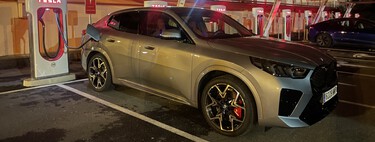
The Holy Week of 2024 witnessed a unique phenomenon: scores of Tesla vehicles queued at a Cañavate Atalaya charger in Cuenca, Spain. This scenario became viral, appearing in similar situations across other Spanish cities like Mérida and Albacete , where drivers reported wait times extending to 15 or even 20 minutes. While some might find humor in the long lines of electric vehicles, the underlying narrative reveals critical insights into the charging infrastructure available to electric car users.
Almost a year and a half later, the charging scene has noticeably transformed. Although significant improvement has occurred across both Spain and the United States , Tesla maintains its reputation for providing the best charging experience . This advantage remains a pivotal factor in its vehicle sales.
Tesla Chargers: A Class Apart
Recent findings from JD Power, a trusted name in automotive market analysis, echo a significant trend observed in the United States . Despite the rising number of chargers and improved service quality, Tesla consistently ranks highest in user satisfaction for electric vehicle charging. It’s essential to note that the U.S. still faces a compelling deficit of charging stations, particularly because of its vast distances, underscoring the need for an extensive and reliable network as the nation moves toward wider electric vehicle adoption.
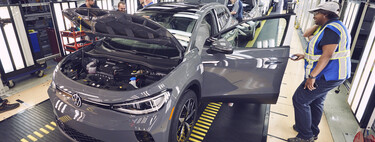
Interestingly, a considerable portion of that charging network falls under Tesla’s purview, with usage extending beyond Tesla owners. As reported by JD Power, there has been a noticeable decline in consumer satisfaction regarding prices and service quality, despite a drastic drop in the number of reported charger failures.
This situation poses a paradox: though the incidents of unreliable chargers have decreased to their lowest level in four years, general satisfaction has dipped. Other manufacturers have faced mounting pressure from their customers to adopt Tesla’s charging standards , even leading them to redesign their charging ports in accordance with Tesla’s specifications.
The Superior User Experience
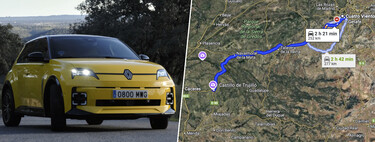
In Spain and much of Europe, most fast chargers adhere to the CCS2 standard, enabling compatibility among various manufacturers. However, Tesla continues to deliver a superior charging experience. Returning to the Holy Week scenario, the long queues observed in 2024 were notably less problematic compared to the previous year, possibly reflecting Tesla’s strategic positioning within its own ecosystem.
Since its inception, Tesla has made a calculated decision to establish its own network of charging stations, thereby ensuring customer confidence . Even though free charging has faded into the past, their pricing model remains competitive, leading Tesla owners to favor these stations for their daily charging needs. Yet, even on a busy travel day, drivers might opt to wait for a charging point rather than risk searching for an alternative that could malfunction.
Why do Tesla drivers face these long wait times? The answer lies in the reliability of Tesla’s charging network. During my experiences testing various electric vehicles, only Zunder offered a comparable experience. In contrast, most other manufacturers subjected me to various issues, highlighting the importance of a dependable charger when you’re low on battery.
It’s understandable that a Tesla driver, having depleted their vehicle’s battery, would hesitate to gamble on another brand’s charger that could potentially fail. The thought of calling a tow truck if their battery runs out is enough to sway decisions in favor of the Tesla supercharger, even on a packed day.
Moreover, Tesla has mastered the art of minimizing user friction . The seamless integration of their software and charging interface provides an unparalleled experience. Similar to Apple’s ecosystem, Tesla offers a type of user experience where everything just works together, easing the daily interactions for its users.
While non-Tesla drivers must contend with various apps and their registration processes for each unique charger, Tesla drivers simply plug in and let the system manage everything. The convenience of automatic detection and charging initiation is a game changer, especially when compared to navigating disparate systems spread across various manufacturers.
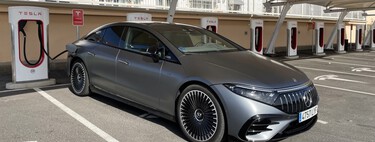
Ultimately, these conveniences contribute to Tesla’s robust brand image. Such a magnificent charging ecosystem not only makes the vehicles attractive to potential buyers but also builds lasting loyalty among its existing customer base. While it may seem minor, the small details—like the seamless communication between car and charger—create a significant difference when it comes to user satisfaction.